





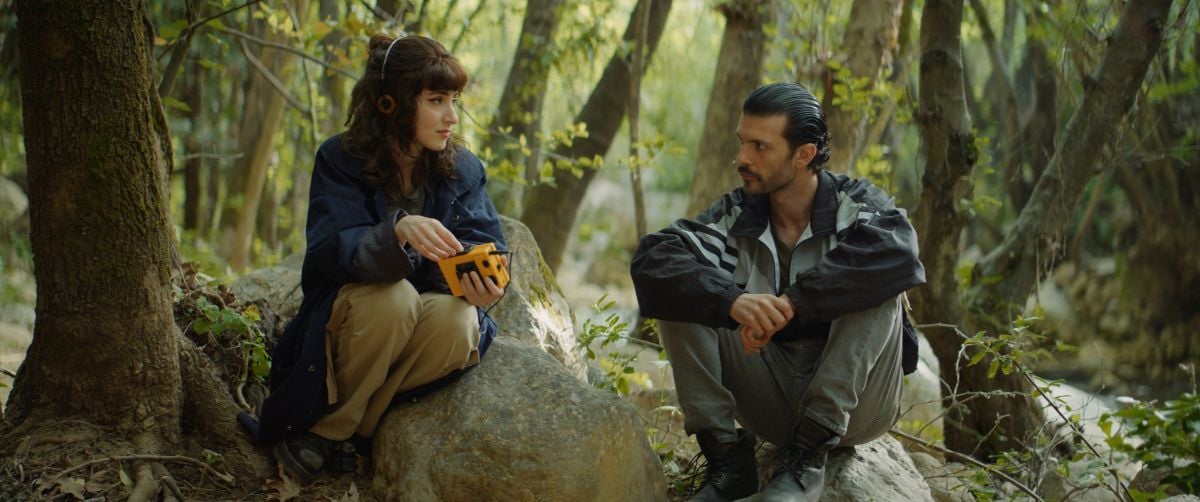
Rana (Maryline Naaman) and Tarek (Ziad Jallad) in "In This Darkness I See You" by Nadim Tabet. (Credit: Photo provided by the director)






An old stone building stands deep in the woods. A sign reads, “House happiness, a place to forget your worries.” That is the promise made by Salim, who lives in a mountainous Christian village and hires a handful of Syrian workers to renovate the house, whose owners met a tragic end during the civil war (1975-1990).So far, nothing out of the ordinary. The opening scene of Nadim Tabet's second feature, "In This Darkness I See You" (ورشة in Arabic), may seem familiar in Lebanon: a real-estate promoter selling dreams to compatriots still scarred by war while exploiting a workforce of refugees fleeing a neighboring conflict. Renovating the house threatens to erase an entire chapter of taboo history, feeding the collective amnesia in which Lebanese have cocooned themselves for decades to escape the traumas of their past. Unless...
An old stone building stands deep in the woods. A sign reads, “House happiness, a place to forget your worries.” That is the promise made by Salim, who lives in a mountainous Christian village and hires a handful of Syrian workers to renovate the house, whose owners met a tragic end during the civil war (1975-1990).So far, nothing out of the ordinary. The opening scene of Nadim Tabet's second feature, "In This Darkness I See You" (ورشة in Arabic), may seem familiar in Lebanon: a real-estate promoter selling dreams to compatriots still scarred by war while exploiting a workforce of refugees fleeing a neighboring conflict. Renovating the house threatens to erase an entire chapter of taboo history, feeding the collective amnesia in which Lebanese have cocooned themselves for decades to escape the traumas of their past....
