






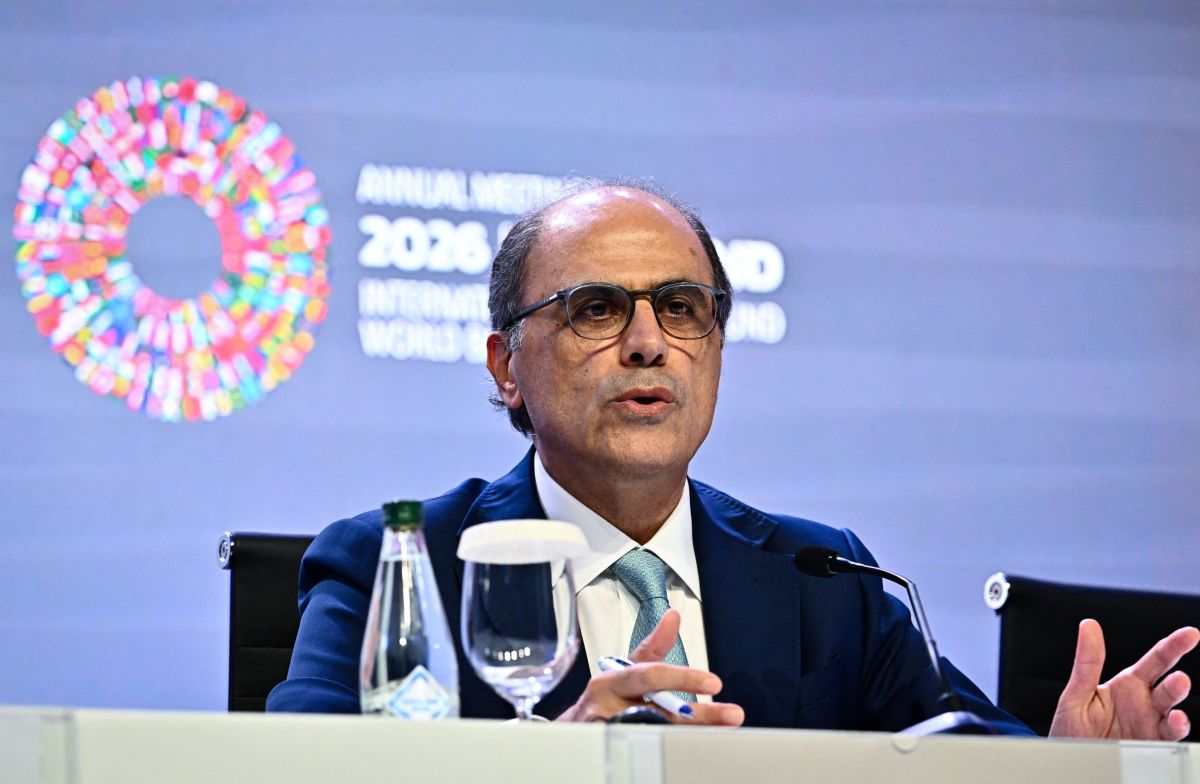
The Director of the Middle East and Central Asia Department of the International Monetary Fund, Jihad Azour, speaks at a press conference on the sidelines of the annual meetings of the IMF and the World Bank Group, in Bangkok, on Oct. 15, 2026. (Credit: Lillian Suwanrumpha / AFP)






BEIRUT — The International Monetary Fund (IMF) expects war-hit economies in the Middle East to rebound, but not in the medium term, one of its officials warned Thursday, as fighting involving Saudi Arabia and Yemen’s Houthis continues.
The IMF expects Gulf economies to contract broadly this year as the war between the United States and Iran has spread to Saudi Arabia and Yemen, continuing to disrupt hydrocarbon exports. Even a halt in hostilities would not lead to a quick return to pre-war conditions, the institution said. “We will not return to the pre-war trajectory in the medium term, because this shock will have a lasting impact on various sectors and will also affect a number of infrastructures, requiring additional spending to strengthen resilience,” IMF Middle East director Jihad Azour told reporters. He was speaking at a news conference on regional economic outlooks for the Middle East and Central Asia on the sidelines of the IMF and World Bank Group annual meetings at the Queen Sirikit National Convention Center in Bangkok.
The warning comes amid a deteriorating global outlook and soaring energy prices. During the annual meetings in Bangkok this week, the IMF updated its projections, forecasting that the Middle East and Central Asia region, directly exposed to the war in Iran, would see its economy contract by 0.3% in 2026.
Saudi Arabia, the region’s economic powerhouse, is among the hardest-hit countries, with its economy expected to contract by 3.3%. The forecast points to a rare recession for the kingdom, which has long been buoyed by its hydrocarbon exports. Elsewhere in the region, GDP is expected to fall even more sharply in 2026, by 16% in Iraq, nearly as much in Qatar, 16.7% in Kuwait and 11.3% in Bahrain. Iran’s economy is forecast to contract by 7.6%.
Azour did not provide projections for Lebanon. The World Bank has estimated since last August that Lebanon’s GDP would shrink by 6.4% in 2026, reflecting the combined effects of the regional war and the conflict between Hezbollah and Israel. The IMF’s regional economic outlook report for the Middle East and Central Asia is scheduled for release on Oct. 22.
The projected rebounds in 2027 remain highly uncertain and will depend on how the geopolitical situation develops. Ongoing attacks targeting Saudi Arabia could also affect people “everywhere in the world” by keeping energy prices high, IMF Managing Director Kristalina Georgieva warned Wednesday.
Clashes between the Saudi-led coalition and the Houthis in Yemen have intensified sharply in recent days, with deadly missile strikes targeting airports and energy installations, as well as the headquarters of Saudi state oil giant Aramco.

 1 p.m. recap: Qatari PM expected in Beirut; missile intercepted in Medina; Hezbollah seeks to recover its explosives seized in Dahr al-Baidar