


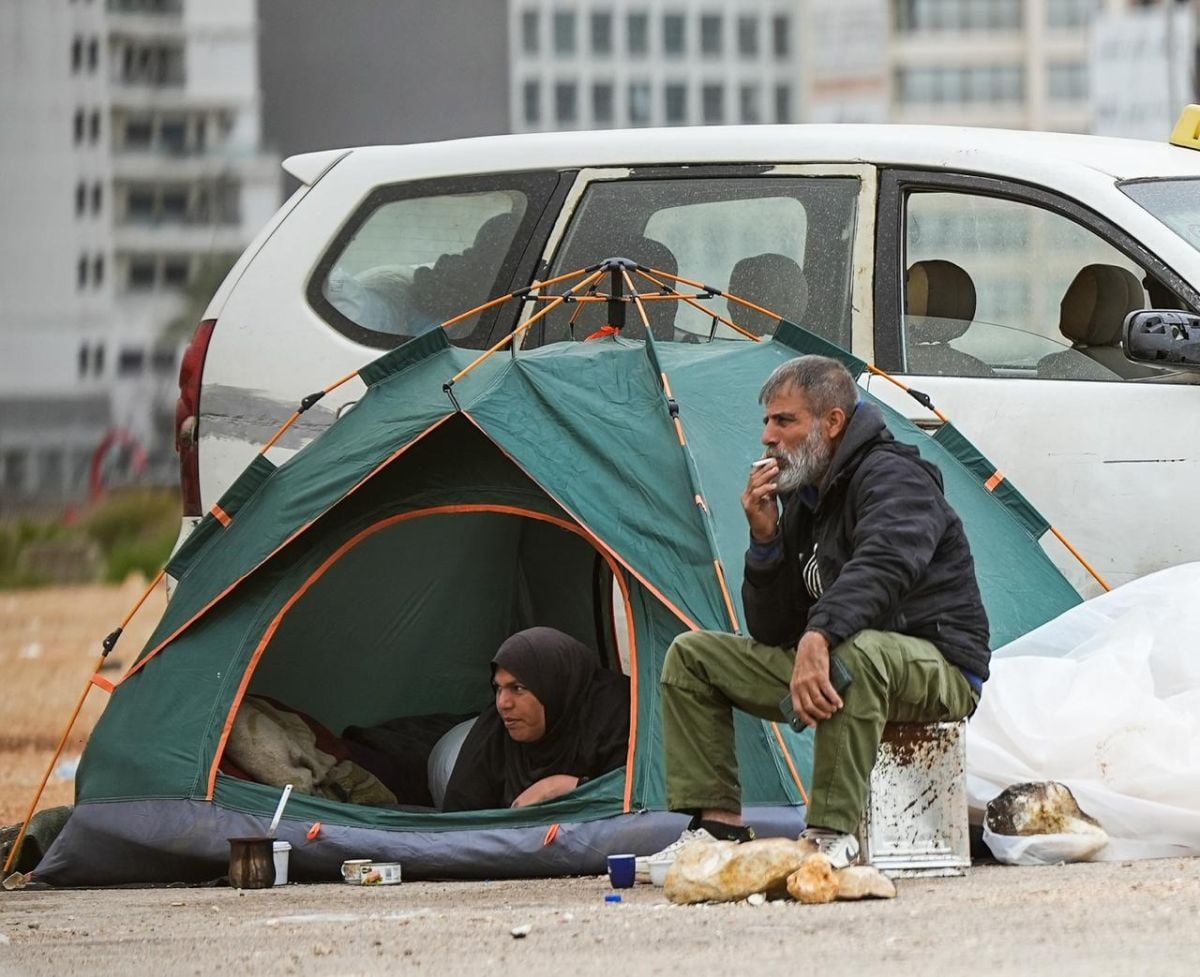
Displaced people in the streets of Beirut, after fleeing Israeli bombings in southern Lebanon, the Bekaa, and the southern suburbs of Beirut during the war in Lebanon, on March 14, 2026. (Credit: Mohammad Yassine/L'Orient-Le Jour)






Ali Mourad is a lawyer, teacher-researcher at the Arab University of Beirut and former candidate in the 2022 parliamentary elections in the South III constituency, in Bint Jbeil.
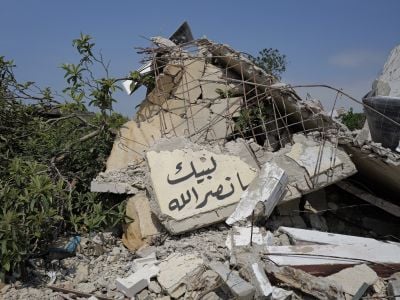
I am from the South. From Jabal Amel, as I like to call it. My roots, my memories, and my most cherished moments are there. Our family house in Aitaroun is destroyed. During our last visit, after clearing the rubble, we struggled to recognize the neighborhood. Even the mountain seemed closer: the houses that once separated us from it had disappeared. We used to know every turn of those streets. Now, we have to search for where they have gone.
Losing your home also means losing your routines. Neighbors disperse, friends drift away, relatives grow old elsewhere. Sometimes, the same family has lost several houses but also their land, their business, their job. You find a roof, you try to hang on. But the people and the places that made up your former life aren’t found at the new address. We are still discovering the extent of what has been taken from us.
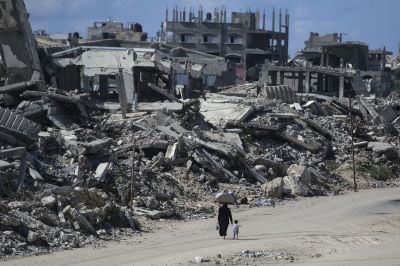
The Arabic word Nakba, catastrophe, expresses this uprooting. It will remain in the memory of the South for decades, perhaps longer. Our children will know our homes through photographs and our roads through our stories. We will tell them about the village without knowing when we will be able to show it to them. This uncertainty weighs on everything: a job to accept, a school to choose, a place to rent. We have to live elsewhere, but nothing allows us yet to think of this place as home.
The return will be neither simple nor quick. Reconstruction will be lengthy. That is precisely why it must become the priority, without delay and without promising what no one can guarantee. The goal of the state must be summed up in three R’s: withdrawal, return, reconstruction. Every decision must be judged by what it allows us to accomplish in order to recover our land and live on it sustainably.
Criticizing is not betrayal
Israel must answer for its crimes, its destruction, and its occupation. The families killed, the devastated villages, the inhabitants driven out and then prevented from returning demand justice and reparation. Amnesty International has classified forced displacement accompanied by the prohibition of return as a war crime. No security requirement gives the right to destroy a society or to empty a territory of its inhabitants over the long term. We refuse to let a "buffer zone" consecrate our exclusion from our villages.

Israeli barbarity does not release Hezbollah from responsibility for its choices. It cannot be used to close off discussion about the decisions that have involved Lebanon. Opposing the party’s weapons and hegemony does not mean absolving Israel; rejecting occupation does not oblige submission to Hezbollah. We have for too long been trapped in this dilemma. Being from the South, and even more being Shiite, imposed and still imposes loyalty, a complicity. Criticizing amounts to betrayal. No one should have to choose between their land and their freedom.
The fear of speaking out stems from a long history in Lebanon. The assassinations of intellectuals and activists in the 1980s, including Hussein Mroueh and Mahdi Amel, and those who have been killed since 2005, notably Samir Kassir and Gebran Tueni, have left their mark. Many have learned to measure their words, to keep their opinions to themselves. The assassination of Lokman Slim in February 2021 revives this ever-present fear.
Yet in October 2019, people spoke out in the streets, in Beirut as well as in the South. They challenged corruption and their own leaders and were attacked by supporters of Hezbollah and Amal. For those living in their strongholds, especially in the South, these attacks meant that protest was not tolerated. But our affiliation does not give any party the right to decide our opinions.
Today, the people of the South need answers about the military decisions made without their consent. In 2013, Hezbollah unilaterally decided to intervene in Syria alongside the criminal regime of Bashar al-Assad. On Oct. 8, 2023, it opened a front in support of Gaza. On the night of March 1 to 2, 2026, it attacked Israel, presenting its action as a response to the death of Iranian Supreme Leader Ali Khamenei.
Broken promises
Each time, Hezbollah made the decision and the entire country had to bear the consequences of its choices. Since Israel’s withdrawal in 2000, it has accumulated considerable power, weighed on institutions, and extended its regional role. It has kept military decisions outside state control.
The party had promised to protect and deter. Today it refuses to question its actions or take responsibility for them. It continues to defend its choices, admitting only limited errors in how it executed its plan. Our homes were not destroyed by a tactical error. Our uprooting is not partial. Hezbollah must explain what was miscalculated, acknowledge broken promises, and change course. Charging ahead on the same path will inevitably delay withdrawal, return, and reconstruction, and the cycle of destruction will continue even more intensely.
The priority is to save the South. The interests of its residents and those of Hezbollah now contradict each other. Hezbollah tries to keep its weapons, its regional role, and its power in Lebanon, thereby undermining any beginning of a solution. Its members and supporters are also affected. Their future is not synonymous with maintaining Hezbollah's power. The party must adapt its strategy to the needs of the residents, instead of asking them to keep paying the price.
Without humiliation or vengeance
Invoking the state’s failures does not answer this need. The party participated in the system that produced these failures and helped limit the authority of institutions. It cannot decide outside them, then ask them to repair the consequences and denounce their inability to do so. This does not absolve other leaders of their own faults in this regard.
Only the state should hold arms and the power to decide on war and peace. Its government must negotiate on behalf of the country and be accountable for its choices. Those who believed Hezbollah would protect them have the right to the same future as all other Lebanese, without humiliation or vengeance.
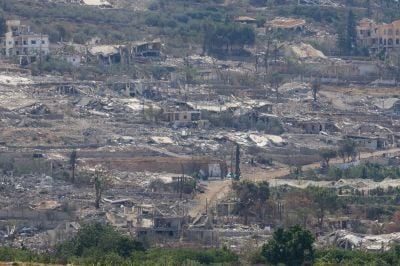
Our international partners must also place withdrawal, return, and reconstruction at the heart of their action. On a map, a "security zone" may seem like a solution. On the ground, it covers homes, fields, schools, and cemeteries. A lull that keeps residents away from these places for good enshrines injustice. Displaced people must be supported now. The difficulty of the path does not justify abandoning them.
Being from the South today is living with this absence. The people have already paid the price for decisions taken without them. They must be able to recover their land, rebuild their lives, and decide their future. No other priority comes before this.