






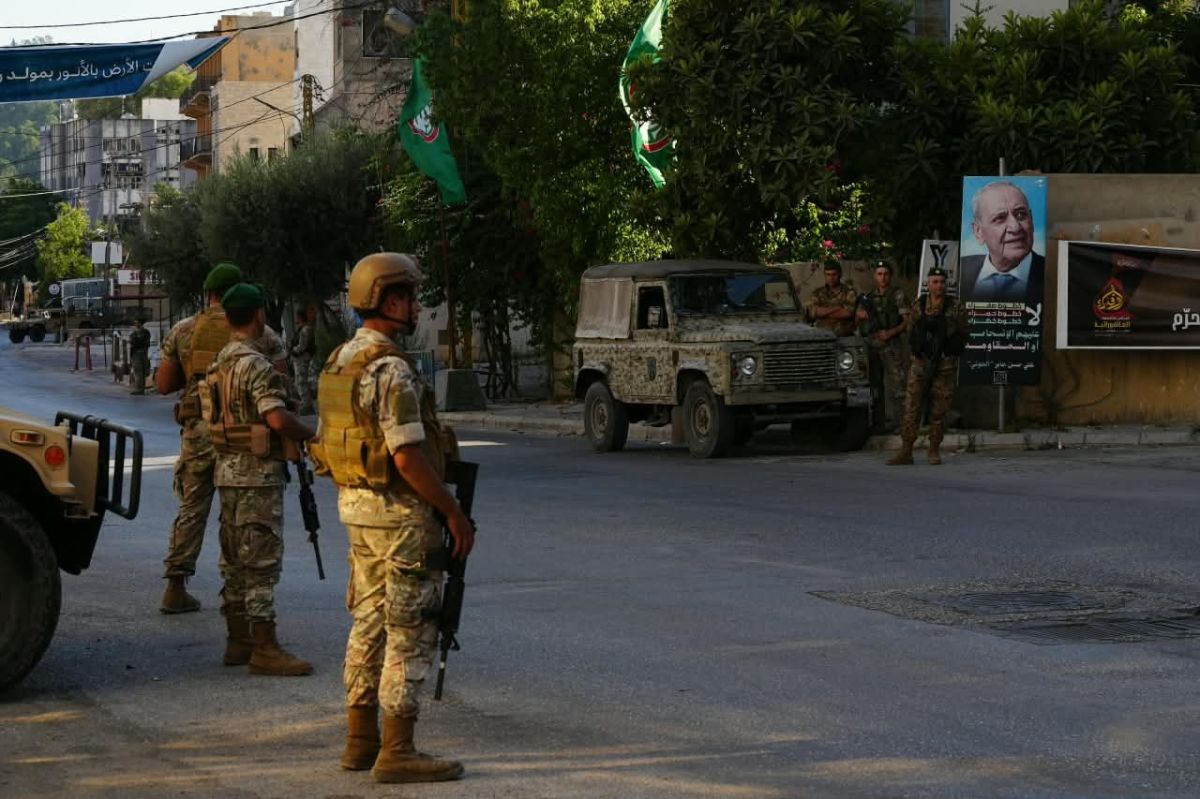
The Lebanese Army reinforced its presence in Nabatieh on Sept. 8, 2026. (Credit: Mohammad Yassine/L'Orient Today)






BEIRUT — Residents of the city of Nabatieh reported a sudden deployment of the Lebanese Army, with more than 12 military vehicles deployed on its main streets, particularly Mahmoud Fakih Street, according to our correspondent in the South. However, a security source downplayed the deployment to L'Orient Today, saying that "the Lebanese Army has always been present in Nabatieh" and there is "nothing new."
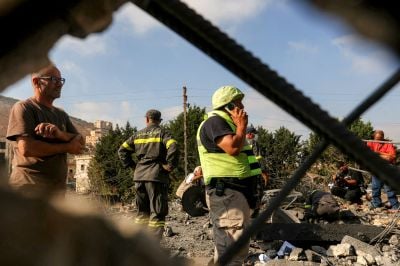
According to our correspondent, the move was widely welcomed by residents, particularly amid the escalation in the area over the past two nights, which included heavy Israeli airstrikes that caused extensive destruction and killed dozens, mainly in Kfar Roummane.
Sources monitoring the situation, cited by our correspondent, said that the Lebanese Army will maintain its presence in Nabatieh by conducting regular patrols in the city’s neighborhoods and along its main roads, as part of efforts to strengthen security measures and reassure residents. It was not immediately clear whether the move was linked to political developments or was simply a routine measure.
On Monday, two MPs from the 2019 protest movement, Marc Daou (Aley) and Firas Hamdan (Hasbaya), called on Lebanese authorities on Monday to “save Nabatieh” by deploying the army there and declaring it “free of weapons,” as the Israeli army launched a deadly escalation in the area following the fall of the strategic Ali Taher area.
Security sources told our correspondent in the South that the Lebanese Army will be conducting daily patrols in Nabatieh. The force will be based in the Zahrani area and will not carry out inspections or searches for the time being.
Israel insists that the Lebanese Army should inspect residents' homes to dismantle Hezbollah's arsenal. Meanwhile, the army has been avoiding it for several reasons, including security imperatives, constitutional safeguards, and fears of provoking tensions with the local population.
This reinforcement comes as south Lebanon has seen renewed escalation over the past two nights, marked by intense Israeli strikes that have killed dozens of people and caused significant destruction. On Tuesday, hundreds of people attended the funerals of the 13 victims of Israeli strikes carried out Monday night. Most belonged to the same family.
“There are 13 martyrs, including a grandfather, a grandmother, two couples and their children, among them a 3-month-old baby,” Kfar Roummane Deputy Mayor Noureddine Noureddine told AFP. “This crime occurred at night, while they were sleeping. There was no military activity, nothing at all,” he said.
Within this context, residents of Arab Salim (Nabatieh district) released a joint statement calling on the Lebanese Army to establish checkpoints and inspection points at the entrances and exits of the village to prevent any activities that "could threaten security and civil peace."
A source at the Arab Salim municipality told our correspondent in the South that the municipality has no information regarding the circulated statement, saying that, "to its knowledge, it was not issued by the municipality or the residents." According to the source, it may have been issued by a group of people. The source added that the army is present in Arab Salim and enters the town whenever it wishes.
"Out of concern for the security of our town and the safety of its residents, and in light of the current circumstances and the fears and concerns among residents, we call on the Lebanese Army to go to the Arab Salim municipality, coordinate with the municipal and security authorities, and take the necessary measures to preserve security and stability," the statement read.
"We also call for the establishment of checkpoints and inspection points at the entrances and exits of the town, which would help regulate movement in and out, reassure residents, and prevent any activities that could threaten security and civil peace," it added.
Elsewhere in the South
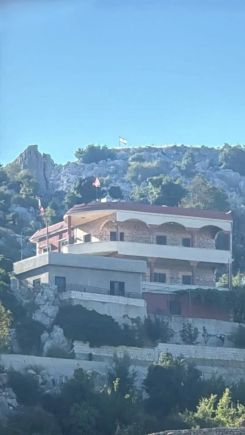
An image from southern Lebanon on Tuesday showed an Israeli flag planted on a hill in Kfar Shuba, in the Hasbaya district. The mostly Sunni border village has remained inhabited in recent months despite the occupation, according to our correspondent. Israeli forces entered the village overnight. They first entered Kfar Shuba on Aug. 29 and also raised an Israeli flag on a house.
Residents of Mansouri, in the Sour district, heard four massive Israeli explosions Tuesday morning, after more than 15 explosions the previous day. Israeli forces have carried out extensive home demolitions there for several days, and also bombarded the village several times overnight.
The Israeli army also carried out a demolition near Beni Hayan in the Marjayoun district. According to information from our correspondent, Israeli forces used artillery and machine-gun fire, as well as a Merkava tank, to target the outskirts of Zawtar Sharqieh near Mayfadoun in the Nabatieh district.
Despite the intensity of the previous days, Israeli attacks remained sporadic overnight, according to our correspondent. They consisted mainly of artillery fire and automatic-weapons fire in several border villages. Israeli forces fired from Beit Yahoun toward the outskirts of Aita al-Jabal, maintained sustained fire toward Khiam and Beit Yahoun, and shelled the Dabshe area in Kfar Roummane.
At midnight, Israeli forces opened fire toward the outskirts of Braasheet, while artillery targeted the area between Braasheet and Beit Yahoun. The shooting then spread to the outskirts of both villages and continued toward the vicinity of Aita al-Jabal.
On Monday, Israeli airstrikes hit seven villages in southern Lebanon, while drone strikes hit three others. Intense artillery fire also hit seven villages. Israeli forces also set homes ablaze in Mansouri and another village.
Additonal reporting contributed by Mountasser Abdallah.

 US strike on Iran this weekend? ‘Absolutely,’ says Barrack; ‘I have no idea,’ says Trump