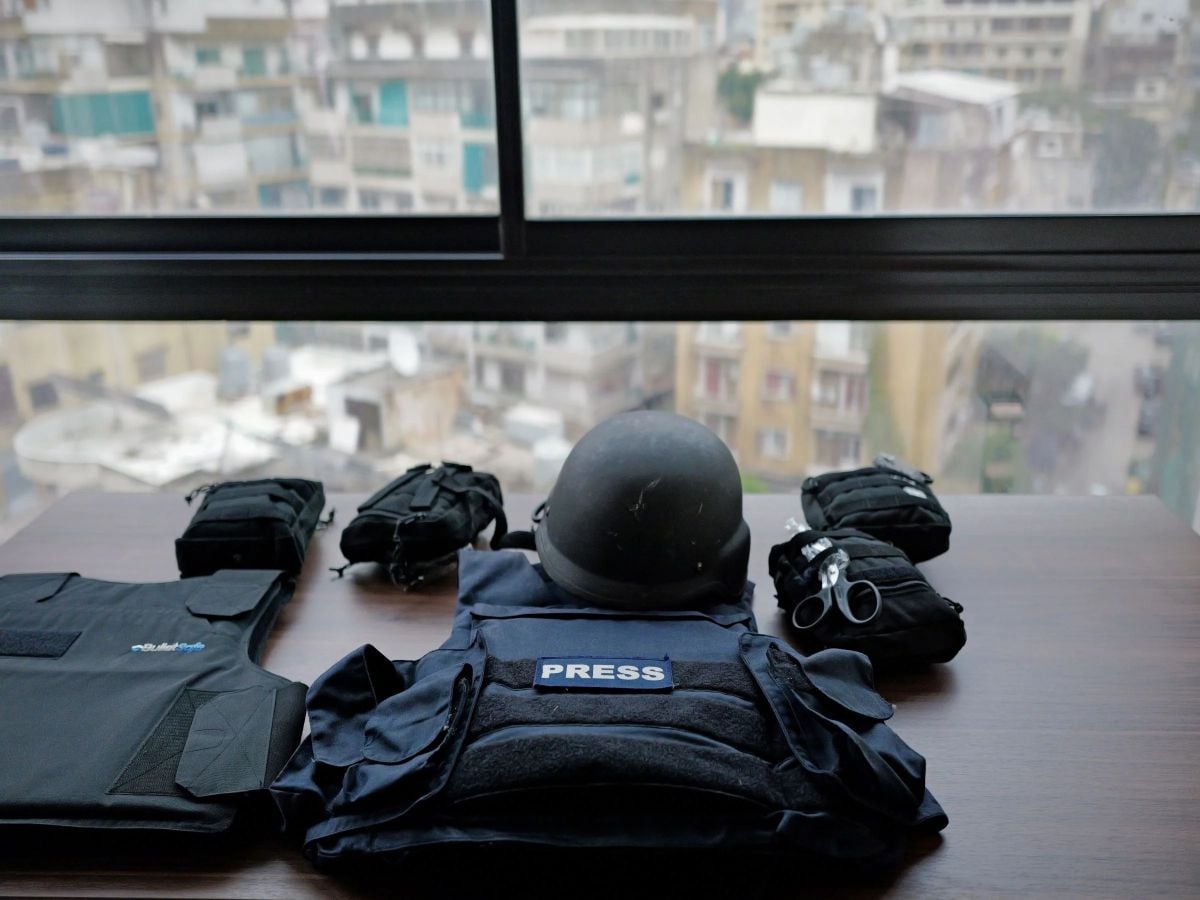
A helmet, first aid kits, and a press vest. (Archive photo: Matthieu Karam/L'Orient-Le Jour)






BEIRUT — Adopted Tuesday by Parliament, the new media law was welcomed in political and diplomatic circles as well as by civil society actors, who nevertheless called for improvements to the text, notably to address the retention of Article 104, which strengthens the repressive arsenal against journalists.
Awaited for years to modernize a sector in crisis and to reinforce protections for those in the business of providing information, the new legislation risks, on the contrary, further weakening their freedom. By maintaining, notably through Article 104, the possibility of imprisoning journalists for practicing their profession, MPs opted for repression over protection, despite the mobilization of unions in the sector. A reform that was supposed to be a step forward is instead turning into a serious step backward.
Information Minister Paul Morcos said, following a meeting at the Presidential Palace in Baabda with President Joseph Aoun, that "the new media law is a cornerstone of the development of the media sector. We have been waiting for this law for many years. However, its implementation remains incomplete due to necessary amendments that still need to be finalized. Public and press freedoms are enshrined in the Constitution, and the law must guarantee these freedoms. I will strive to ensure the required amendments succeed, as any law can evolve and be changed."
The European Union also welcomed a law "long-awaited, which introduces several important reforms aimed at strengthening press freedom and guaranteeing freedom of expression." According to a statement from the European diplomatic mission, "once implemented, these reforms should strengthen the protection of journalists, decriminalize offenses related to publishing, establish clearer criteria for hate speech that may be prosecuted, and increase transparency regarding media ownership and their sources of funding."
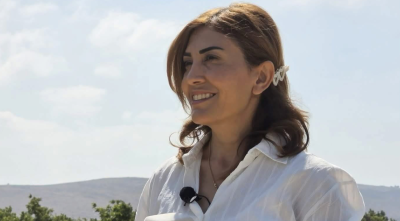
The Samir Kassir Center for Media and Cultural Freedom (SKeyes) welcomed the adoption of the law, which it considers "a framework for reform that can be enriched and developed. Despite certain shortcomings that need clarification or amendments, adopting a comprehensive text was preferable to introducing piecemeal amendments." According to SKeyes, "it is absolutely necessary, in the next stage, to submit a bill or a proposal to correct and fill these gaps, notably Article 104 in its current form, since it contains vague language that could pave the way for pressure and prosecution against journalists and the restriction of freedom of expression."
Governed by a 60-year-old law (1962), the information sector had been awaiting for 16 years the adoption by Parliament of a draft law written in 2010 by MP Ghassan Moukheiber, in collaboration with the NGO Maharat, which fights for freedom of expression. But the text in question, the result of a process involving other NGOs, professional stakeholders and lawmakers, was significantly altered during the years by parliamentary committees and subcommittees. "After 16 years of work, the new information law has become a reality. We welcome this reform and its achievements, and we affirm that efforts will continue to protect the progress made and guarantee the enforcement of the law in its reforming spirit," Maharat commented.