






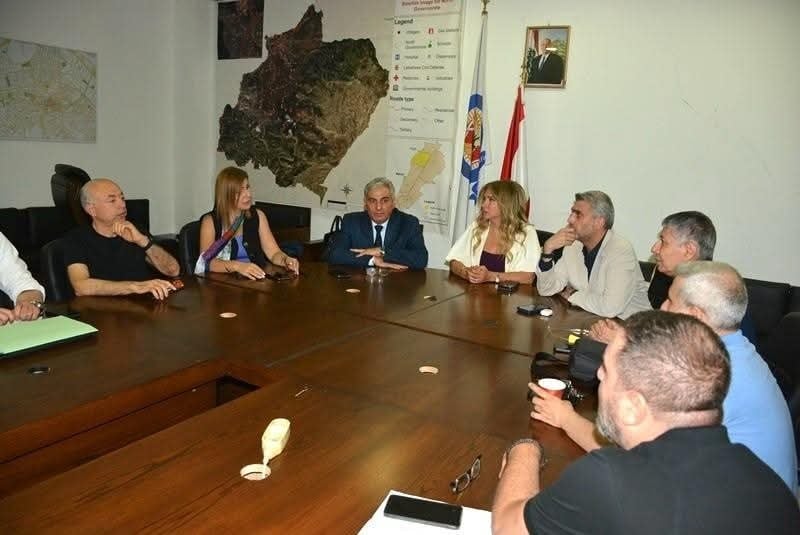
The governor of north Lebanon met on Tuesday with several local officials at the Serail of Tripoli. (Credit: Michel Hallak)






NORTH LEBANON — North Lebanon’s acting governor, Iman Rafehi, chaired an expanded meeting Tuesday after reports of several jaundice cases, particularly in Tripoli’s Bab al-Tabbaneh neighborhood, as well as parts of Akkar and elsewhere in the north.
These cases are linked to the bottling and sale of contaminated water at certain stations, centers and factories operating in violation of health regulations and without the required permits, according to our north Lebanon correspondent.
Several municipal leaders from the region, including the head of the Tripoli municipality, Abdel Hamid Kreimeh, the director of the North Lebanon Water Office, Khaled Obeid, doctors and representatives of the health ministry, the Lebanese Red Cross and UNICEF, attended the meeting.
The participants reviewed the current situation of the reported cases and discussed the necessary measures to limit the spread of the disease and protect public health.
"The water distributed in Tripoli and its surroundings, which comes from the north Lebanon Water Office, is safe, clean, and drinkable, according to laboratory analysis results on samples," a statement said.
The governor also insisted on "the need to inspect water sources, reservoirs and private wells, and to implement the necessary water disinfection procedures, in accordance with established health standards, to prevent any new infections." She also addressed the issue of water bottling and distribution centers, particularly those that are not authorized.
Rafehi also emphasized "the importance of regular monitoring and coordination between the Ministry of Health, municipalities, the Red Cross, UNICEF and all other competent authorities to monitor water quality, detect any new cases and intervene quickly if necessary."
In this context, she announced the publication of a circular requiring water bottling and distribution centers to carry out periodic laboratory tests, threatening to close any center that does not comply or sells contaminated water.
Reporting contributed by our regional correspondent, Michel Hallak.

 8 p.m. recap: Israel again threatens Beirut’s south suburbs; 2 ships hit near Hormuz; Riyadh football matches canceled