







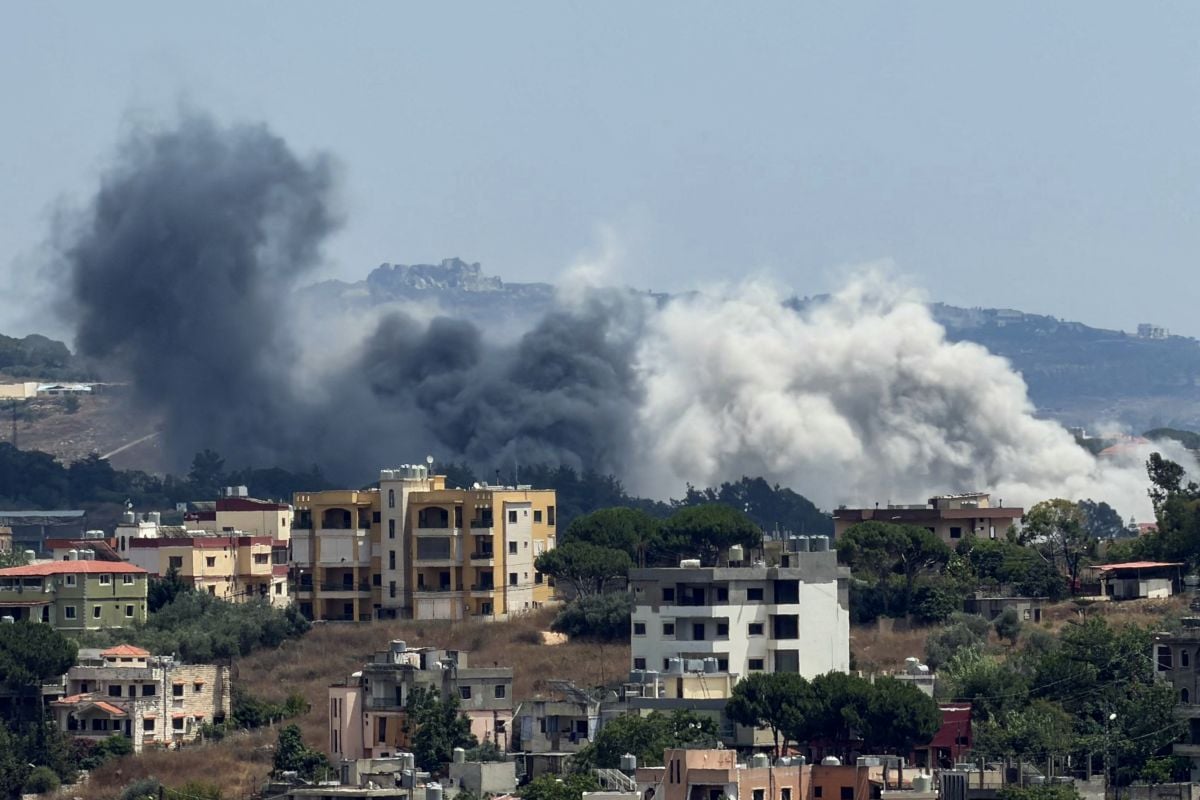
Smoke rises after an Israeli raid on Nabatiyeh el-Faouqa, in southern Lebanon, which killed two people, on July 16, 2026. Photo Abbas Fakih / AFP This photograph taken from the southern city of Nabatieh shows smoke rising from the site of an Israeli airstrike that targeted the nearby village of Nabatieh Fawqa on July 16, 2026. (Credit: Abbas Fakih / AFP)






BEIRUT — As Lebanon and Israel move toward implementing “pilot zones” in southern Lebanon, the Lebanese Army has begun strengthening its presence in several of the affected villages, including Froun and Ghandourieh (Bint Jbeil district), where it is conducting patrols and setting up roadblocks and observation posts, a security source told L’Orient-Le Jour.
The two villages, which are not currently occupied by the Israeli army, are among the areas where Lebanese forces are expected to gradually deploy as part of a framework agreement aimed, among other objectives, at dismantling Hezbollah’s arsenal.
According to the source, the measures taken by the Lebanese Army concern villages that are not occupied by the Israeli army. In the other “pilot zones” where Israeli troops remain deployed, the Lebanese Army’s deployment will have to wait until Israel withdraws.
The developments come as Lebanon and Israel concluded their sixth round of negotiations on Wednesday over the establishment of “pilot zones.” A virtual military meeting is scheduled for Friday to discuss implementation details. Following Wednesday’s talks, the U.S. Embassy in Lebanon said in a statement that the negotiations had been “positive” and that the implementation process would begin “in the coming days.”
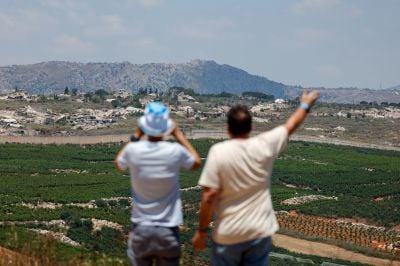
The new round of talks has not halted Israel’s destruction campaign in southern Lebanon. Israeli forces have expanded demolition operations, particularly in the districts of Bint Jbeil, Nabatieh, and Sour, according to L’Orient-Le Jour correspondent, Mountasser Abdallah. The outskirts of Braasheet, Kounin, Zawtar Gharbieh, Mayfadoun, Haddatha, Majdal Zoun, Tallousseh, and Kfar Tibnit were affected by the demolitions. Other homes were also set on fire in Beit Yahoun.
The Israeli air force also bombed Nabatieh Fawqa, one of the localities expected to be included in the “pilot zones” under discussion. In these areas, Israel has committed to withdrawing to allow the Lebanese Army to deploy and disarm Hezbollah.
Hezbollah, for its part, continues to reject the framework agreement reached in previous rounds of direct negotiations, as well as the concept of “pilot zones.” Its MP Hassan Fadlallah reiterated on Thursday that Israel would not succeed in imposing its will on those who oppose it.
Earlier in the day, Israeli Defense Minister Israel Katz told his U.S. counterpart Pete Hegseth that Israel was determined to maintain its forces in the “security zones” it has established inside Lebanon, Syria, and the Gaza Strip. The statement raised questions over Israel’s willingness to withdraw from the Lebanese “pilot zones.”
Israeli report from Bint Jbeil
Another development unlikely to encourage Hezbollah — which buried 25 of its fighters in Shaqra on Thursday — to soften its position was a report aired by Israeli daily Yedioth Ahronoth and filmed from Bint Jbeil’s municipal stadium in southern Lebanon.
The city, like dozens of other towns in southern Lebanon, has been occupied by Israel since the start of the war on March 2. The stadium carries particular symbolism: it was where former Hezbollah Secretary-General Hassan Nasrallah delivered his “victory speech” following Israel’s unilateral withdrawal from Lebanon in 2000.
"The ruined stands of what was once the local stadium are the symbol of collapse," the report said, referring to the destruction caused by the Israeli army at the site. According to Yedioth Ahronoth, Israeli forces have already destroyed 40% of the town and plan to demolish another 30% of homes in Bint Jbeil in the coming weeks.
Elsewhere, Israeli artillery strikes hit the outskirts of Braasheet, Rshaf, and Beni Hayan. An unexploded ordnance also detonated in Khirbet Silm (Bint Jbeil district), causing no casualties.