


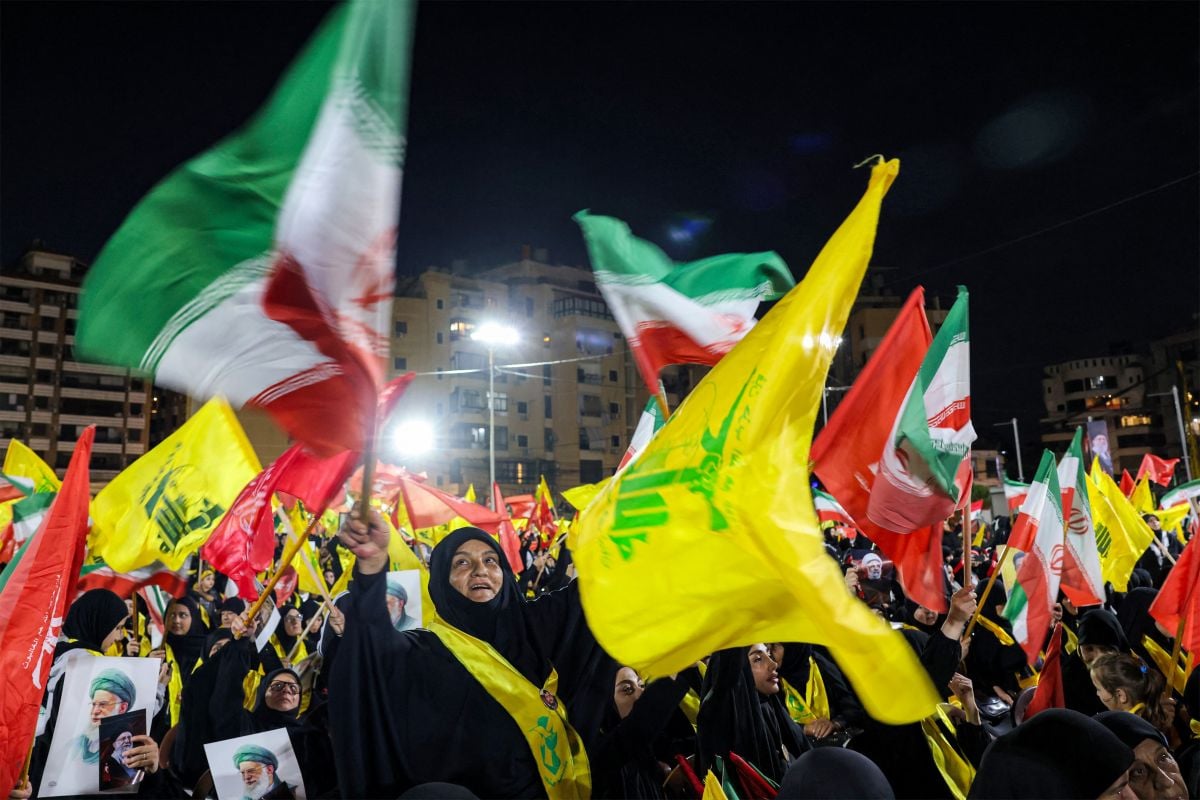
Hezbollah supporters attend a commemorative ceremony in tribute to Iranian Supreme Leader Ali Khamenei in the southern suburbs of Beirut on July 8, 2026. (Credit: Anwar Amro/AFP)






Iraq placed Hezbollah and entities linked to the group on its “banking sanctions” list, following the latest U.S. sanctions targeting the party, according to a leaked document published by Lebanese and Iraqi media on Wednesday.
In a letter signed by the Iraqi Fund for External Development, Iraqi authorities said the decision was made in accordance with the amended U.S. Executive Order 13224, a 2001 measure targeting terrorism financing.
The move came a day after Iraqi Prime Minister Ali Zaidi visited Washington, where he met with U.S. President Donald Trump. During the meeting, Trump discussed sanctions against Hezbollah with reporters.
The Iraqi document was addressed to ministries, banks, government agencies and companies affiliated with the Foreign Affairs Ministry. It referred to decisions issued on June 18 and June 22, 2026, by the U.S. Treasury Department’s Office of Foreign Assets Control (OFAC), which administers U.S. financial sanctions.
“OFAC announced sanctions against three individuals and six entities in Europe, the Middle East and West Africa for facilitating financial transfers for Daesh (the Arabic acronym for the Islamic State),” Iraqi authorities said. They added that OFAC had also sanctioned several individuals and entities linked to Hezbollah “to continue targeting the party’s financial and logistical support networks.”
Baghdad’s decision refers to the latest round of U.S. sanctions announced in June against Marada Movement leader Sleiman Frangieh, Hezbollah Deputy Political Bureau Chief Mahmoud Qomati and Wael Constantine, an individual with ties to Baghdad and Beirut.
OFAC accused Frangieh of using “his strategic alliance with Hezbollah to serve his own political ambitions.” It designated him for providing, directly or indirectly, financial, material, or technological support, or goods and services, to Hezbollah.
The U.S. Treasury Department said Qomati “coordinates smuggling of cash from Iran for Hezbollah and defends the interests of Hezbollah in Lebanon.” It designated him for acting, or claiming to act, “for or on behalf of Hezbollah, directly or indirectly.” Several companies linked to the group were also targeted.
Iraq is considered an important source of revenue for Hezbollah, particularly following the fall of Bashar al-Assad’s regime in Syria. The Iraqi decision could therefore affect the group’s financial networks.
In early December 2025, Iraq’s Committee for the Freezing of Terrorist Assets reversed a decision that had placed Hezbollah and Yemen’s Houthi movement, alongside 24 other entities, on a list of terrorist organizations. The committee had initially ordered the freezing of their financial assets in accordance with United Nations Security Council requirements.
