


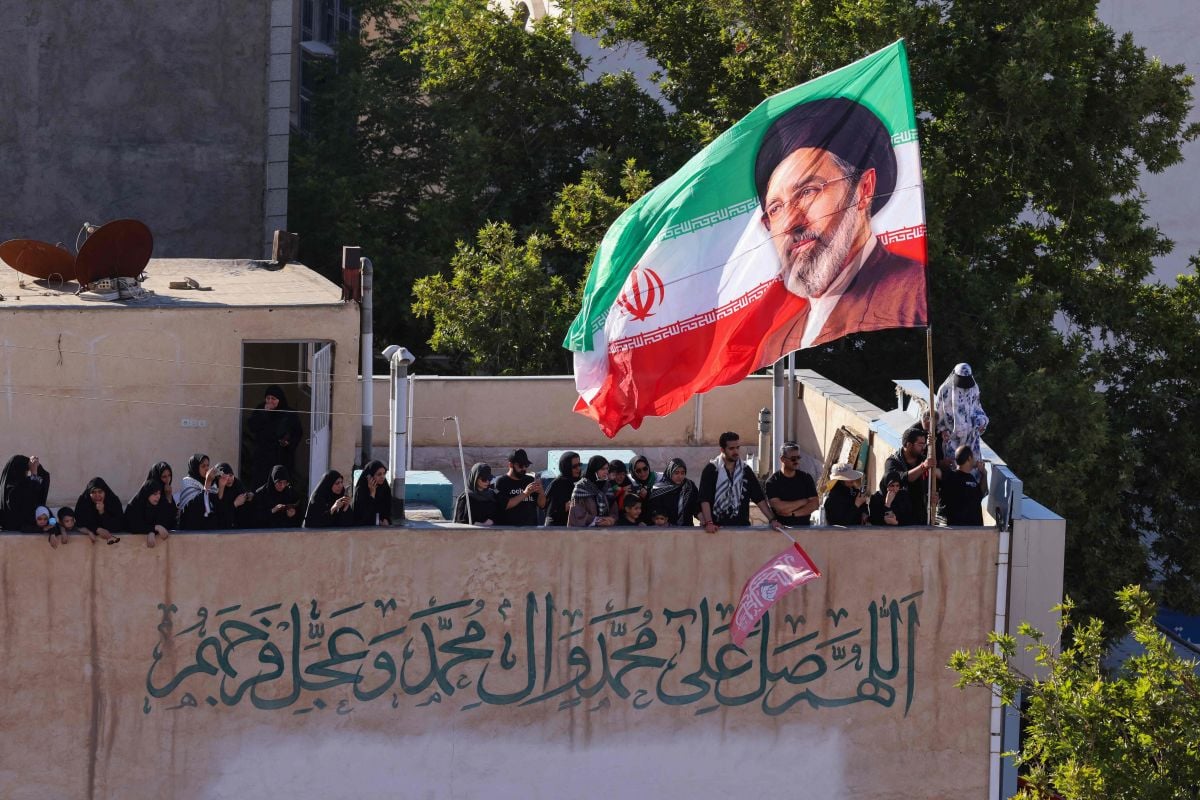
A flag of Iran bearing the image of Iran's current supreme leader Mojtaba Khamenei is seen on top of a building as people watch mourners take part in a funeral procession for Iran's slain supreme leader Ali Khamenei and members of his family, before he is buried at the Shrine of Imam Reza, Iran's most revered place of worship, in Mashhad on July 9, 2026. (Credit: Atta Kenare / AFP)






Barely a month after Iran and the United States signed a fragile memorandum of understanding which was intended to pave the way toward a lasting agreement, the Middle East has plunged back into a spiral of escalation, raising fears of a wider regional war. Even as Donald Trump said again Monday evening that an agreement with Tehran remained "possible," exchanges of strikes have continued unabated. On Monday night, Washington again carried out a wave of strikes in southern Iran, while the Islamic Republic targeted Jordan, Bahrain and ships in the Strait of Hormuz. The Iranian army's spokesperson reiterated that Tehran would not allow the full reopening of this strategic maritime route as long as "American aggression and war" continued. Meanwhile, the U.S. president announced he was reinstating a blockade on Iranian...
Barely a month after Iran and the United States signed a fragile memorandum of understanding which was intended to pave the way toward a lasting agreement, the Middle East has plunged back into a spiral of escalation, raising fears of a wider regional war. Even as Donald Trump said again Monday evening that an agreement with Tehran remained "possible," exchanges of strikes have continued unabated. On Monday night, Washington again carried out a wave of strikes in southern Iran, while the Islamic Republic targeted Jordan, Bahrain and ships in the Strait of Hormuz. The Iranian army's spokesperson reiterated that Tehran would not allow the full reopening of this strategic maritime route as long as "American aggression and war" continued. Meanwhile, the U.S. president announced he was reinstating a blockade on...

 7 p.m. recap: 1 person killed near border with Lebanon; 200 kilos of explosives carried by mules; Riyadh shuts its airspace