







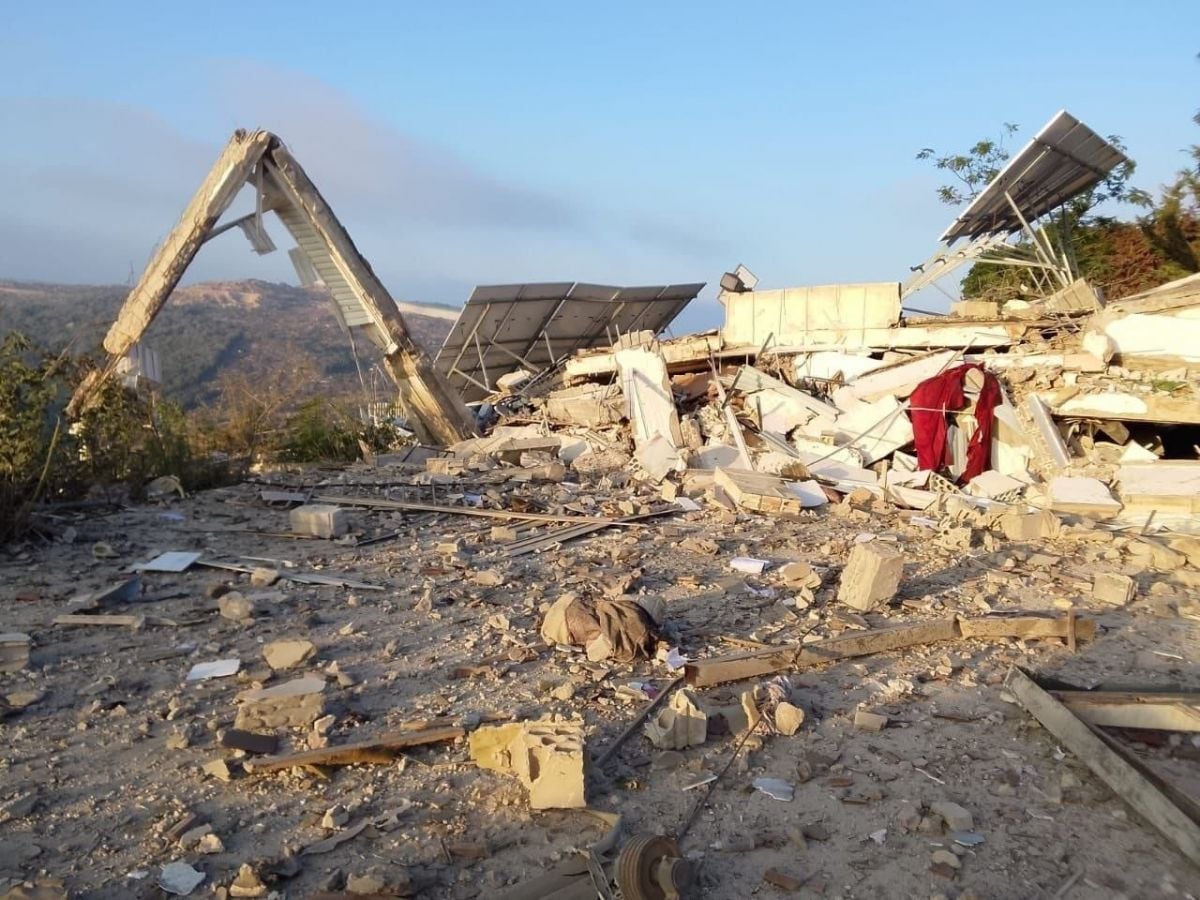
A school for children with disabilities in the village of Aita al-Shaab, destroyed by the Israeli army, is seen in this photo taken Sept. 11, 2025. (Credit: Image shared on social media by social development minister)






UNICEF warned that at least 100,000 Lebanese students may not be able to attend school next term if urgent action is not taken before September to rehabilitate schools damaged by the war.
The U.N. agency cited a survey by the Education Ministry that recorded 340 damaged buildings belonging to public, private and technical institutions, including 17 that were completely destroyed in the latest war between Hezbollah and Israel since March 2.
The assessment was developed with technical support from UNICEF through the Transition and Resilience Education Fund, backed by the European Union, Germany, France and Switzerland, according to a statement issued Thursday evening.
The most recent war between Hezbollah and Israel began on March 2, initiated by the party in support of Iran, which has been under Israeli-American fire since Feb. 28.
The consequences of the conflict, especially in southern Lebanon, have been far more disastrous than in 2023-2024, during the Gaza support front. They have resulted in a new Israeli occupation of a large portion of southern Lebanon, the displacement of more than 1 million people, and the systematic destruction of dozens of villages, which continues despite successive fragile cease-fires.
UNICEF also highlighted damage in several governorates affected by the wars, including Nabatieh, southern Lebanon, the Bekaa and Baalbeck-Hermel.
"While some schools have suffered minor damage, others require extensive rehabilitation or complete reconstruction before they can safely accommodate students and teachers," the statement said.
UNICEF calls for 'greater investment' in school rehabilitation
The statement notes that Lebanese students have long faced repeated disruptions to the school year because of successive crises and conflicts.
"For many children, a further prolonged interruption of learning would have lasting consequences on their education, well-being, mental health, and future prospects," UNICEF said. "Lack of access to education also increases their vulnerability to protection risks such as early marriage and child labor."
"Schools are much more than just buildings," said Marcoluigi Corsi, UNICEF's representative in Lebanon. "They are places where children learn, feel safe, and begin to recover from the crisis. This assessment provides the first comprehensive overview of the extent of the damage to the Lebanese education system. As the school year approaches, urgent investments are needed to rehabilitate damaged schools and allow children to resume their learning without delay."
UNICEF said it is working with the Education Ministry, donors and partners to support school rehabilitation, ensure continuity of learning and help restore the education sector across Lebanon.
"While TREF donors have significantly supported the education sector for years, the scale of destruction requires a much greater investment to restore safe learning environments before the start of the next school year," the statement said.

 8 p.m. recap: Israel again threatens Beirut’s south suburbs; 2 ships hit near Hormuz; Riyadh football matches canceled