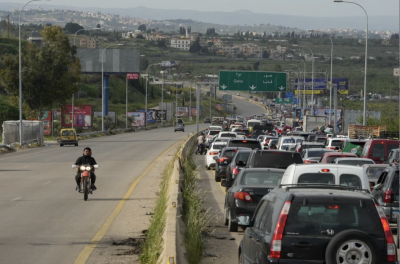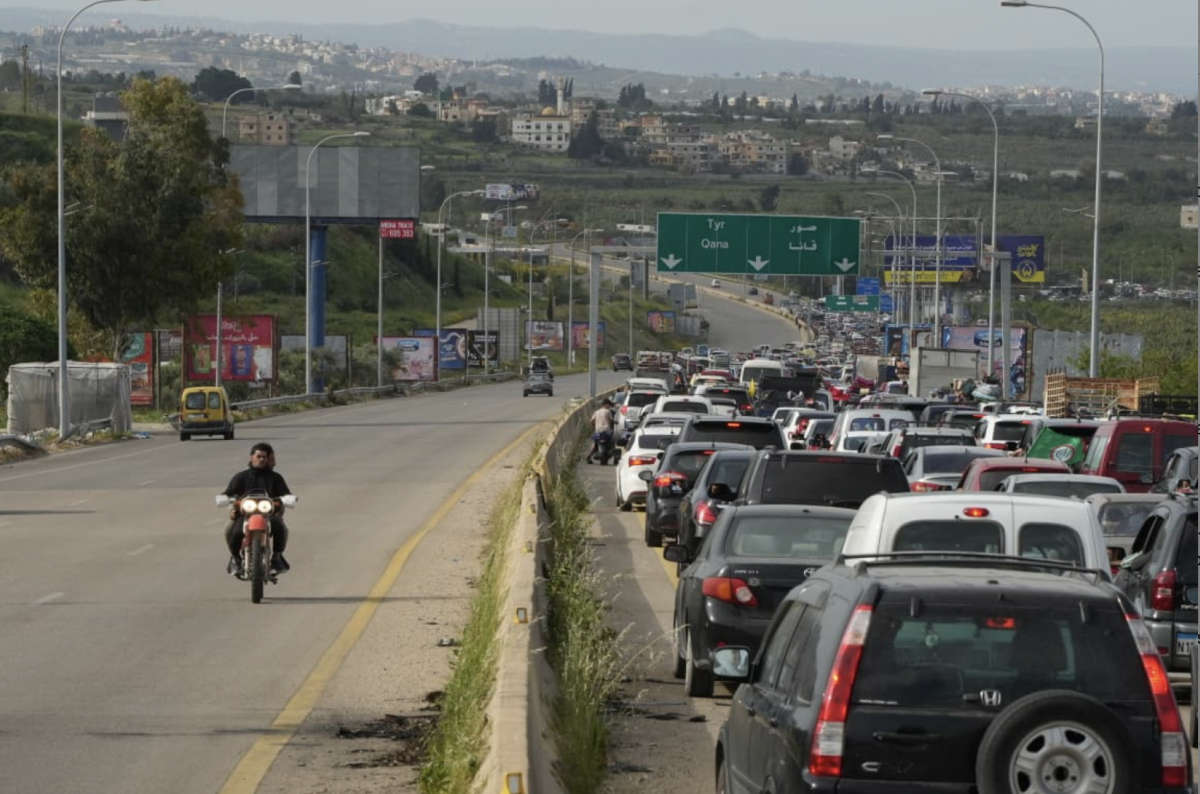
Traffic jams towards Sour, in southern Lebanon, on Friday, April 17, 2026, following the announcement of a MoU between Iran and the U.S., including a "cease-fire" in Lebanon. (Credit: Mohammad Yassin/L'Orient-Le Jour)






BEIRUT — Social Development Minister Haneen Sayed has announced that 400,000 forcibly displaced people in Lebanon — out of more than one million since Israel re-escalated its war on March 2 — have “returned to their home regions.” The number represents “40% of those displaced,” reports the state-run National News Agency (NNA).
Citing the latest report from the Lebanese Red Cross and the Disaster Risk Management Unit, Sayed stated that the number of displaced people housed in reception centers has "fallen to 13,896 families, or 52,243 people, whereas the highest number had reached 37,439 families, or 141,440 people." "This means that about 63% of the displaced have left the reception centers," she said.
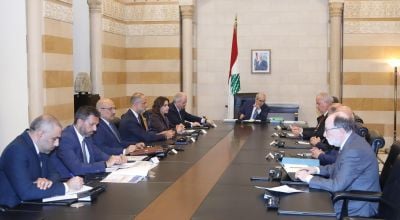
Sayed clarified that “some reception centers will remain open to accommodate displaced people who are not yet able to return to their homes.” “The number of reception centers has fallen from 692 at the height of the crisis to 479 today, representing the closure of 213 centers. In Beirut, the number has fallen from 150 to 100," adding that "the number of accommodation centers has fallen across all districts, with the exception of Nabatieh, where additional centers have been opened to accommodate displaced people wishing to remain close to their villages."
She highlighted in this context a "clear dynamic of return," even as Israel is preparing for a "long-term occupation" in southern Lebanon, according to remarks made Monday by Israeli Defense Minister Israel Katz, leaving hundreds of thousands of Lebanese with no prospect of returning home.
She stated that "these figures are positive, but that does not mean our responsibility has ended," affirming that her ministry "places the issue of the displaced at the top of its priorities." "We are working with donors as well as with local and international communities to ensure continued support for the displaced for as long as they remain in the reception centers or within host communities, in order to foster safe return and strengthen social, security and economic stability," she added.
Sayed also assured that the government is working on a "plan for return, recovery, and reconstruction" for the displaced, which "will distinguish between those needing rapid repairs, those requiring temporary housing allowance, and those who should benefit from provisional accommodations for a longer period."
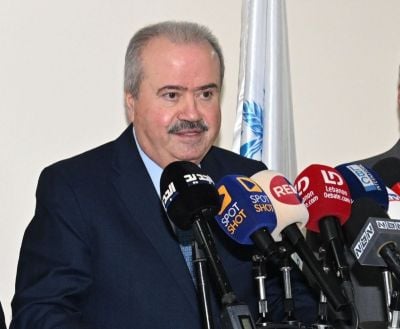
She specified that this would be carried out "in parallel with the development of a comprehensive reconstruction plan." On Saturday, Finance Minister Yassine Jaber called on "Lebanon's friendly countries to support residents of the South" in reconstruction efforts, and recalled that authorities are preparing a conference scheduled for July aimed at mobilizing nearly $1 billion to fund this project.
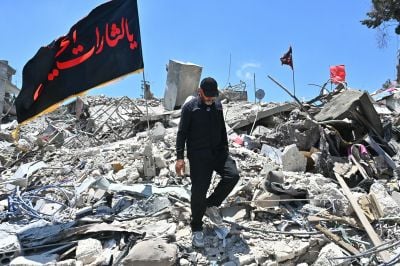
According to a study conducted by the United Nations Development Program (UNDP) and the National Council for Scientific Research (CNRS), Lebanon — which has suffered since early March due to Israel's onslaught — had, as of April 29, 2026, sustained damages estimated at more than $1 billion, with more than 11,000 buildings completely destroyed in the South.