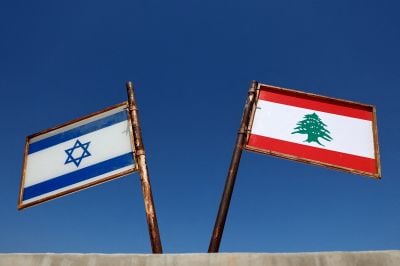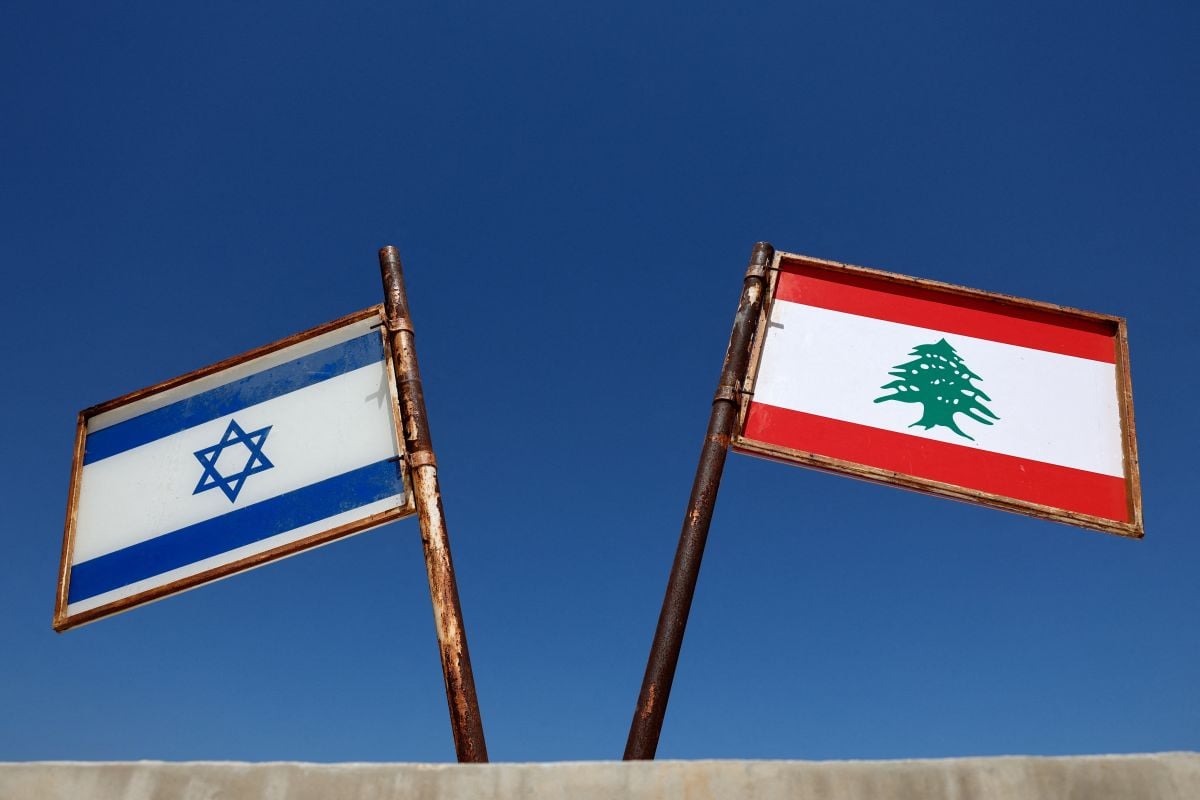
Israeli and Lebanese flags at a border memorial outside Metula, Israel, on June 27, 2026, celebrating the newly signed, U.S.-mediated framework agreement. (Photo credit: Amir Cohen/Reuters)






The "security" annex signed Friday night by Lebanon and Israel in Washington, alongside the framework agreement between the two countries, which mentions it three times, and revealed Monday night, is centered on the disarmament of Hezbollah.
L'Orient-Le Jour was able to confirm the authenticity of the document, published by journalist Hiba Nasr, chief of the Washington bureau of the Arabic-language media outlet Asharq Bloomberg.
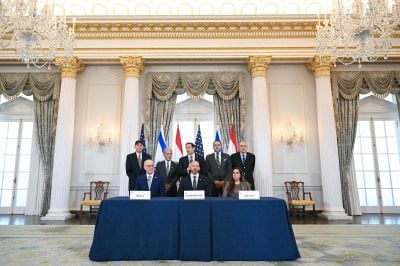
The "security" equation put forward by Israeli officials since Friday is clearly stated in its third and fourth points: the "gradual" withdrawal of the Israeli army from southern Lebanon is contingent on the "disarmament of Hezbollah and all other non-state armed groups" by the Lebanese Army. The annex also details the mechanism relating to "pilot zones" south of the Litani River, where the Lebanese Army is to gradually replace the Israeli army. In this context, it is planned that Lebanon and Israel will jointly establish an entity called the "Military Coordination Group for Lebanon."
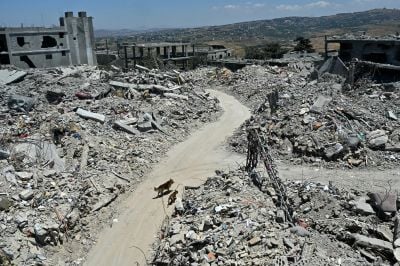
Here are the six points contained in the annex:
1. Designation of 'pilot zones'
The parties will immediately designate and initiate the initial "pilot zone" in the sector south of the Litani, according to an agreed military planning process, based on a four-step model:
- Neutralization: take legal action against any non-state armed personnel carrying out unauthorized activities, and destroy or render unusable the associated infrastructure, including, but not limited to, weapons, weapons caches, tunnels, and command centers of such non-state armed groups.
- Verification: verify the elimination of all non-state armed groups and their military infrastructure by a mutually agreed third-party entity.
- Presence of the Lebanese Armed Forces (LAF): deployment of highly qualified Lebanese Army who assume and maintain exclusive operational control in order to prevent any resurgence of non-state armed activity.
- Reconstruction: the Lebanese state leads reconstruction efforts, supported by international assistance and coordinated through the political track.
2. Implementation and verification
The LAF will lead the implementation of this model, with success measured by the verifiable implementation of the agreed disarmament and dismantlement process within these negotiations.
Israel and Lebanon will establish the Military Coordination Group for Lebanon (MCG4L), responsible for ensuring 24/7 operations to manage deconfliction, verification, and overall implementation.
This cell will report to the respective political authorities of Israel and Lebanon through indirect military channels between the two countries.
Verification will be conducted simultaneously with neutralization operations.
3. Security commitments
The LAF commit to taking the necessary operational measures to ensure the disarmament of Hezbollah and all other non-state armed groups, and to ensure that they hold neither role nor military capability in Lebanon.
4. Sequenced redeployment
Subject to the successful completion of an agreed and verifiable disarmament and dismantlement process, Israel commits to a gradual reduction of its military presence, based on predefined conditions, and then to the final redeployment of its forces out of Lebanese territory.
This process will be planned and sequenced by the MCG4L to coincide with the deployment of the LAF.
5. Desired outcome
As part of the broader effort concerning the disarmament and dismantlement of all non-state armed groups, in accordance with mutually agreed terms within these negotiations, the aim is to restore full authority of the Lebanese state over all Lebanese territory and to guarantee Israel's long-term security.
6. Supervision and dispute resolution
The parties, with U.S. facilitation, will conduct periodic reviews of the implementation of this annex and may amend it by mutual agreement.
Any dispute regarding its interpretation or execution will be resolved through trilateral discussions.