


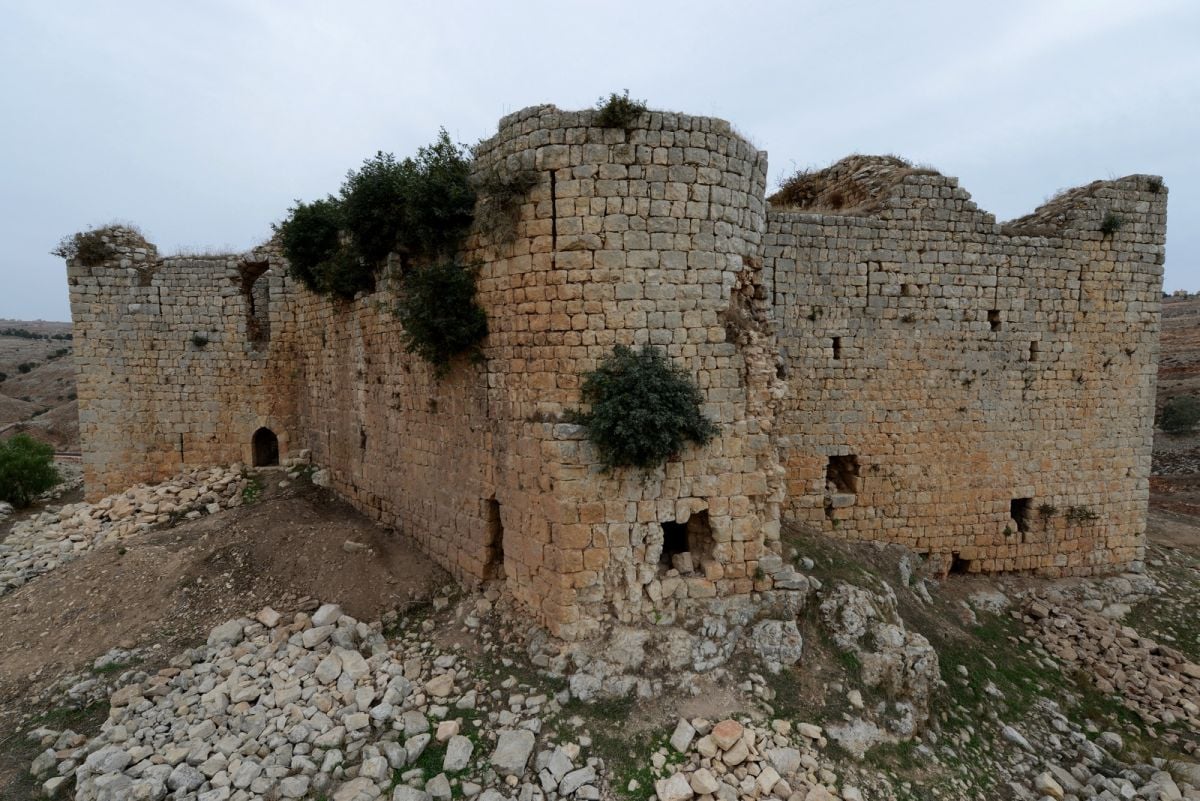
Qalaat Doubieh (or Shaqra). (Credit: French Archaeological Mission)






Lebanon is enduring one of the worst wars in its history, placing "a fortified medieval complex on UNESCO's Tentative List for World Heritage under Israeli threat," says Sarkis Khoury, director general of antiquities.
Khoury, who submitted to UNESCO the complete nomination dossier for the five fortresses of Jabal Amel, will lead a delegation of Lebanese experts to South Korea in July to defend their candidacy for World Heritage status. The designation would recognize the sites as "properties of outstanding universal value" and strengthen efforts to protect them, he says.
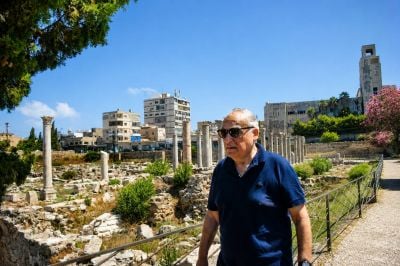
Medieval military architecture
The site comprises five major castles built in the early 12th century as some of the first Crusader military strongholds in the region: Qalaat al-Shaqif (Beaufort Castle), Qalaat Tibnin (Toron Castle), Qalaat Shaqra (Doubieh Castle), Qalaat Deir Kifa (Maron Castle) and the citadel of Shamaa.
Perched on hilltops within sight of one another, allowing communication by signal fires, the citadels are, despite their partial ruin, "archetypes of medieval military architecture." They retain "a high degree of authenticity and integrity" and provide "a unique testimony to the evolution of fortified architecture over nearly nine centuries," having remained in use until the late 19th century, according to UNESCO.
Since the 2024 Israeli war in Lebanon, the complex has also been granted "provisional enhanced protection" as cultural property under UNESCO Decision C54/24/4.EXT.COM/4.
Khoury says Israel has nonetheless shown "complete disregard" for international law. On May 31, 2026, Israeli forces raised their flag over Beaufort Castle, which UNESCO describes as "one of the best-preserved Crusader castles in the Near East."
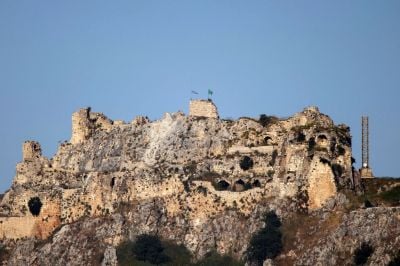
"Claims that tunnels have been dug beneath the fortress are completely false," Khoury says.
The citadel of Shamaa, described by UNESCO experts as a "living monument" because of its uninterrupted occupation since the third century A.D., was reduced to ruins by two waves of bombardment in 2024 and March 2026.
"But it will be rebuilt," Khoury says, pointing to Warsaw's historic center, which was deliberately destroyed by Nazi Germany during World War II before being reconstructed.
Tibnin, with foundations predating the Crusades
What has become of the castles of Tibnin, Shaqra, and Deir Kifa? Have they also been affected by Israeli attacks on southern Lebanon? Their surrounding towns have endured months of heavy Israeli bombardment that has devastated urban areas and directly threatened the integrity of the historic fortresses.
As military strikes continue to endanger Lebanon's cultural heritage, Culture Minister Ghassan Salameh has repeatedly appealed to the international community to help protect the country's historical and cultural identity.
Although partially in ruins, Qalaat Tibnin, in the Bint Jbeil district, remains "an outstanding example of medieval fortification, with traces of occupation dating back to the Bronze Age," according to UNESCO. After undergoing partial restoration in 1990, the castle reopened to visitors in 1996. One of its walls was severely damaged during the 2024 war.
Built atop a rocky promontory — which gave rise to its Crusader name, Toron, or "isolated hill" in Old French — the fortress was founded in 1104 by Hugh of Saint-Omer, governor of Tiberias. Its strategic role was to secure the hinterland alongside Beaufort Castle and control the road linking Sour and Damascus.
Captured by Saladin in 1187, the castle returned to Crusader control in 1229 before later falling to the Mamluks and then the Ottomans.
Nineteenth-century French archaeologist and geographer Victor Guérin wrote that "its highly strategic position at the heart of the country made it an important stronghold even in Jewish and Canaanite times."
Jean-Claude Voisin, a specialist in medieval fortifications and co-author with Lévon Nordiguian of Châteaux et églises du Moyen Âge au Liban, shares that assessment.
"In the underlying structures, you can still identify foundation walls from periods predating the Crusaders," he says.
The castle follows the natural contours of the hill in an irregular circular layout. Its main entrance is protected by a barbican and a zigzag approach designed to slow attackers. The keep is reinforced by "12 square and semi-circular towers," providing defenders with optimal firing positions.
The fortress also contains an extensive network of rock-cut cisterns that enabled defenders to withstand prolonged sieges in the region's dry climate. A large keep at its center served as the lord's residence.
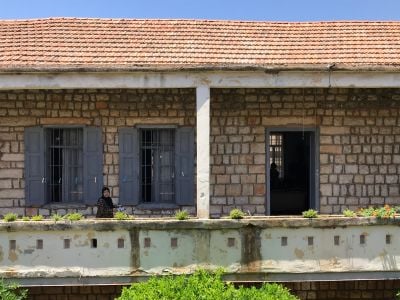
The hooded fireplaces of Shaqra
"Built on a naturally defended spur, the site forms an irregular quadrilateral flanked by six towers dating from different periods," Jean-Claude Voisin writes in a publication by Saint Joseph University.
Archaeologist Cyril Yovitchitch's analysis of the masonry, conducted during excavations by the French Institute for the Near East (IFPO) in 2012, identified three distinct construction phases.
The earliest corresponds to the construction of the turris, or military tower, in the 12th century. The two later phases, which remain difficult to date because of limited stratigraphic evidence, added two-story residential buildings connected by long curtain walls punctuated by square and rectangular towers.
"With this proliferation of defensive positions, Qalaat Doubieh is less a castle than a true garrison fortress," Yovitchitch writes, noting that several sections appear to have been built during the same construction campaign.
At the same time, he observes that "some construction techniques, such as vaulting, are identical in both the oldest and the more recent sections of the castle."
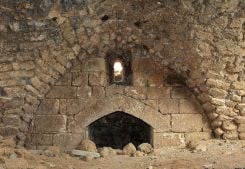
Among the fortress's most distinctive features are its large hooded fireplaces, found in the ground-floor kitchen, the room above it and the great hall on the upper floor.
"This is rather rare," Yovitchitch notes. "Such installations are uncommon in Near Eastern fortifications. While they became widespread in Western medieval castles from the 14th century onward, they are absent from Ayyubid and Mamluk fortresses, as are kitchens and great halls."
Because of the lack of stratigraphic evidence, however, the dating of this construction phase remains uncertain.
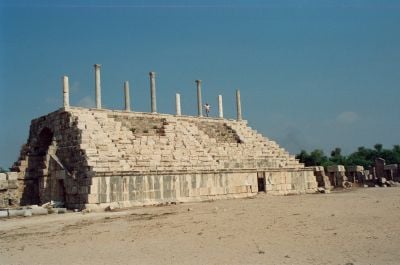
Deir Kifa, built on a Phoenician site
Perched on a hill surrounded by valleys, Deir Kifa Castle was once a formidable medieval stronghold covering between 17,000 and 20,000 square meters.
It was regarded as impregnable until Sultan Qalawun's Mamluk forces besieged it for seven days, captured it, and destroyed it in 1289 to prevent the last Crusader troops from using it as a refuge.
Historical records indicate that the site originally served as a trading center established in the 10th century by Aram ibn Ya'qoub on an ancient Phoenician settlement. The market included tanneries, leather-dyeing workshops, and thriving commercial activity.
Its alternate name, Qalaat Maroun, derives from the Crusader leader Meron, who captured the site in 1124 and built a fortress with seven imposing round towers, some of which have since collapsed.
The castle consists of three distinct levels. The basement contains remains dating to the Phoenician period. The groin-vaulted main level, built during the Crusader era, includes the commander's residence, meeting halls, and gymnasiums. The upper level was reconstructed in 1761 by Sheikh Abbas Mohammad al-Nassar, a feudal ruler of Jabal Amel appointed by the Ottoman Empire as governor of Sour and its surrounding region.
The entire complex is enclosed by walls six meters high. At each of its seven corners stands a tower about eight meters in diameter, housing guardrooms, granaries, and cellar prisons.
Israeli bombardments between 1976 and 2006 caused extensive damage to the castle. In recent months, the village of Deir Kifa and its surroundings have again come under airstrikes, causing significant destruction.
Though partially in ruins, the castles of Jabal Amel continue to bear witness to a history deeply intertwined with the region's successive conflicts.

 7 p.m. recap: 1 person killed near border with Lebanon; 200 kilos of explosives carried by mules; Riyadh shuts its airspace