






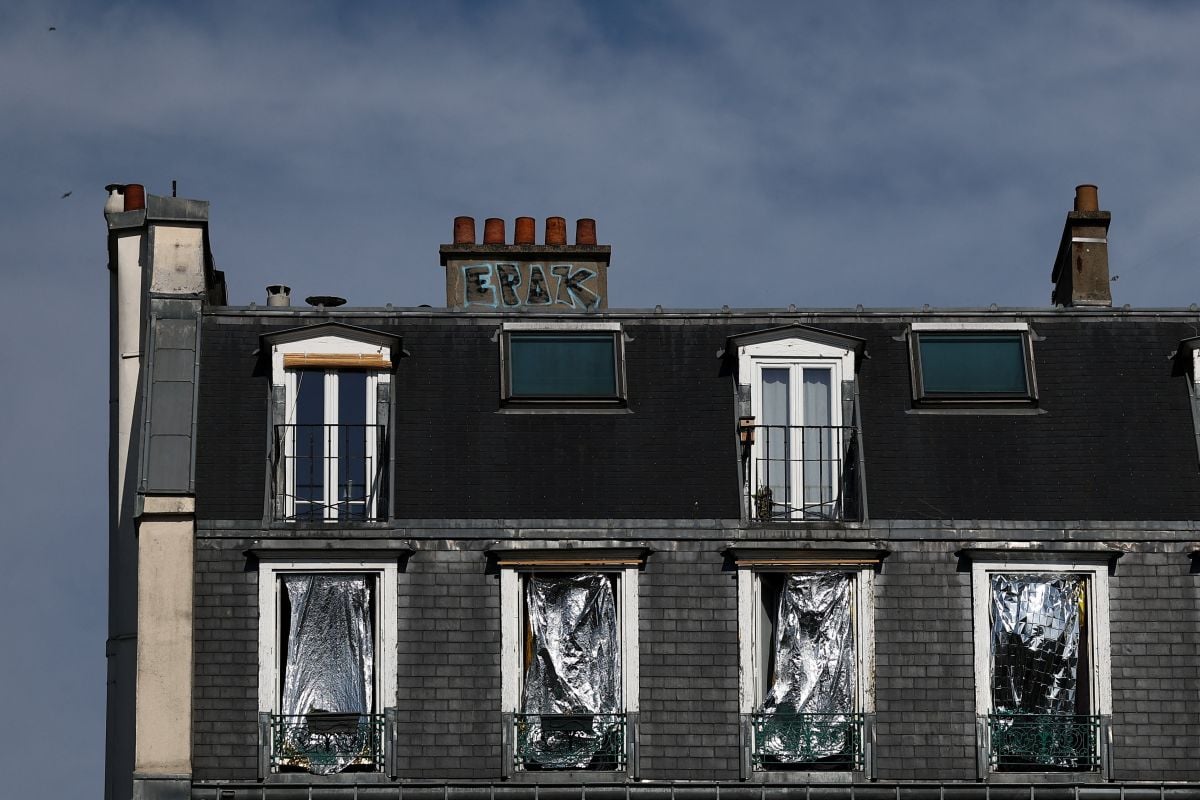
Windows of a residential building are covered with emergency blankets to block the sun as temperatures rise in Paris during a heat wave affecting much of France, on June 25, 2026. (Credit: Gonzalo Fuentes/Reuters)






It is June 22, 2026. A Royal Air Maroc Boeing lands on the scorching tarmac at Paris-Charles de Gaulle Airport. Seated by the window, Olivia admires the landscape. The two weeks spent sipping cocktails on loungers in Marrakesh did her a world of good, but she is not unhappy to return to the French capital. A little fresh air after all that sunbathing, "it can't hurt," the Franco-Lebanese woman remarks with irony over the phone.
After stepping off the plane, the 20-something grabs her bags and heads for the terminal exit. The moment she passes through the automatic doors, a hot gust slaps her face. The asphalt seems to smoke beneath her feet. It's (not quite) a cold shower: In France, it's hotter than Morocco, much hotter than Dubai or even Senegal. It's a heat wave, and in France, each day breaks the previous day's record. Temperatures have never been so high since records began in 1947.
At least Olivia won't feel out of place. "My attic room is a hammam," she jokes. From the first night, she had to get creative to survive: emergency blankets taped to the windows, unplugging heat-generating electrical devices. Her favorite way to fall asleep is still with a frozen water bottle tucked under her T-shirt, which she hugs all night between sips.
Air conditioning, the forbidden grail
Like Olivia, many Lebanese are trying to find alternatives to the once-sacrosanct air conditioner, while only 25% of French households were equipped with one in 2025, according to the ecological transition agency Ademe, a figure that had nevertheless jumped 7 percentage points in just two years.
While its use is a matter of debate on the other side of the Mediterranean, particularly for environmental reasons, members of the Lebanese diaspora remain baffled.
"In France, they consume a huge amount of energy, pollute, but air conditioning is their red line. At least in Lebanon, we're not hypocrites. If you give me electricity for three hours a day, I'll turn on my AC for three hours and one minute, just for fun," jokes Qassem.
The engineer, who hadn't planned to return to Lebanon this summer, recently found himself checking flight prices out of fear that temperatures might soar again in the coming months.
For once, Lebanon seems to be a more comfortable country to live in than France for the diaspora.
"My relatives living in Beirut tell me that they still don't need to turn on the air conditioning to sleep, as the start of summer has been quite mild," explains Cynthia, who lives in the Paris suburbs.
Day and night, she sends messages to her family WhatsApp group looking for a little support from those who stayed back home.
"I'm hot," "I'm suffocating," "help me," she jokes all day long.
"Hang in there," "it's almost over," reply her father and mother, a role reversal that makes the thirty-something smile after several months of all-out war between Hezbollah and Israel in Lebanon, which was particularly nerve-racking for Lebanese abroad.
Though she jokes about it, Cynthia considers herself lucky compared with those who are less well-off or elderly, as the heat wave — whose death toll is not yet known — has already proved deadly: Three children have died in cars, and around 40 people have drowned.
Grocery runs and the frozen food aisle
While waiting for the mercury to fall, Lebanese people have discovered new passions, like going to the gym or taking long strolls through stores.
"Before, if I went to Franprix to grab something, I would head straight to the right aisle and leave just as quickly. Right now, I take my time, wander the aisles and look at the products," says Cynthia, whose sudden interest in the frozen food section has not gone unnoticed by one of the employees, who bluntly — but with plenty of humor — asked whether she was there to enjoy the cool air.
Those interviewed have also opted to completely suspend remote work, as their offices now provide the ultimate grail, no matter the schedule.
In any case, whether heading to work or out for fun, they all agree on one thing: The mistake not to make is taking public transportation, especially the metro or RER.
"We prefer the bus, bike or scooter, even if it takes a little longer," says Qassem.
"Due to the high temperatures, it's recommended to stay hydrated and keep cool," the RATP (Paris public transit) repeats.
"It's recommended — if not required — to take a shower and put on some deodorant, for everyone's sake!" one Lebanese person adds.