






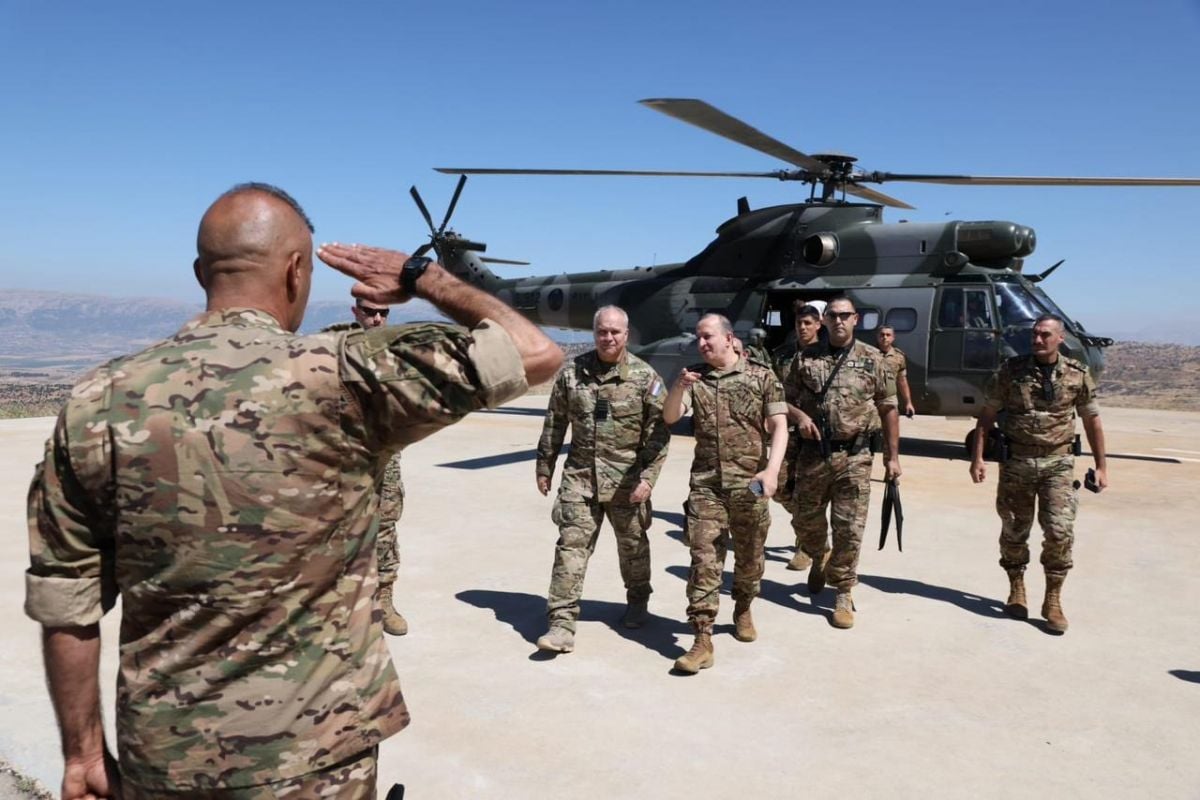
General Onno Echelsheim and Rodolph Haykal touring military outposts as pas of a two-day Dutch military visit to Lebanon.






The relationship between the Netherlands and Lebanon is rooted in a long history of security cooperation, dating back to Dutch participation in the U.N. Interim Forces in Lebanon (UNIFIL) mission from 1979 to 1985. Today, that relationship is evolving as regional conflict places increasing pressure on Lebanese state institutions, and in particular on the Lebanese Army.
In November 2025, Dutch Defense Minister Ruben Brekelmans visited Beirut, signing a new Memorandum of Understanding and announcing a 7.5 million euro support package for demining, checkpoints and training infrastructure — part of a broader effort to reinforce the Lebanese Army’s operational capacity.
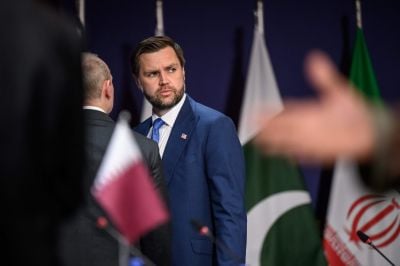
This week, Dutch Chief of Defense General Onno Eichelsheim followed up that visit with a two-day visit to Beirut, at the invitation of his Lebanese counterpart General Rodolph Haykal. The program included high-level staff talks and field visits aimed at assessing the realities facing the army, which he describes as "overstretched."
OT: Building on the last two official engagements, how do you view the outcomes of your discussions here in Beirut?
General Onno Eichelsheim: This visit allowed us to gain better situational awareness of the difficult position Lebanon is in. I’m also quite positive about the discussions we’ve had on how they see the negotiations in Switzerland or in Washington. Of course, nobody knows what the end result will be, but at least from a Lebanese perspective, there is something on the table that addresses the relationship between Lebanon and Israel.
On the more practical side, we will continue our training of the Lebanese Army in, among other things, K9 units (military working dogs) and search-and-breach. We also discussed supporting the Lebanese Army in other areas, such as AI.
In that context, like most modern armed forces, the first step is on the logistical side — standardizing administrative and organizational processes. Beyond that, there is growing interest in how AI can support decision-making and analysis. It can speed up processes, but it also introduces risks, so a key question is how to mitigate those risks.
This is a field where we have not cooperated closely in the past, but we can now expand that cooperation under the existing MOU. The same applies to UAVs (Unmanned Aerial Vehicles) and counter-UAV systems. These are areas of interest for armed forces everywhere, and we are still learning ourselves, but they offer clear opportunities to deepen our cooperation.
OT: Despite international assistance, the Lebanese Army remains stretched across multiple fronts. What is the most pressing capability gap you see today?
General Eichelsheim: They can always use more help, of course, but I must say they are performing quite well on the ground with what they have today. At the same time, there are clear capability gaps that need to be addressed. They need greater mobility, which means more vehicles, and they need additional personnel, along with the equipment required to support them.
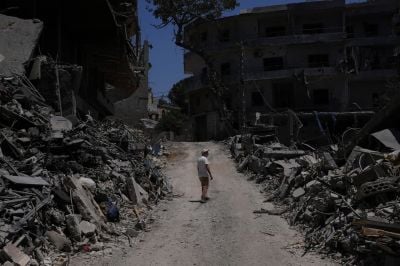
We see those shortages, and I think Lebanon's international partners are capable of helping meet those needs. But the reality is that the Lebanese Army remains overstretched. It is operating simultaneously in the North, the South and the East, and it will continue to be overstretched if we do not step up our support.
We have increased our assistance, including on the infrastructure side, through projects such as Automated Quartermaster Systems (AQS - logistics platforms used by law enforcement to track equipment), which make it easier for them to operate from different locations. Other nations have also stepped up. That is creating more possibilities for the army, but it will take time.
OT: You have described the Lebanese Army as a crucial institution for stability. How do you see its role evolving in southern Lebanon in the current context?
General Eichelsheim: For us, the Lebanese Army remains a good alternative for what is needed in the South. Everybody understands that Israel has security concerns when it comes to Hezbollah and wants to address that problem. At the same time, occupying southern Lebanon can never be the end solution. In our view, the Lebanese Army is part of that answer. What we need to do is continue supporting the army and make it as strong as possible so that it can play a meaningful role in the South.

OT: With the UNIFIL mandate ending by the end of the year, there is talk of new monitoring formats. What is the Dutch stance on the future of international missions in Lebanon?
General Eichelsheim: If there is any agreement, you always need a monitoring mission. There needs to be something in place — whether that is UNIFIL, an EU mission, UNTSO (United Nations Truce Supervision Organization which holds a liaison office in Lebanon and is attached to UNIFIL), or a combination of those, and the Dutch will be involved in one form or another.
If you look at UNTSO, it does good work in terms of monitoring, but it lacks the capability and support that UNIFIL currently provides. I’ve seen proposals suggesting the answer lies somewhere in between the two. From a military perspective, you need one system that combines monitoring with real capability on the ground. UNTSO alone cannot do it — it would need backup.
These missions are never easy. I don’t have a perfect answer, because there isn’t one. But what we hear from personnel involved in these missions is that decisions need to be made quite quickly. The deadline is approaching fast, and if something is to be in place, it has to be prepared now.