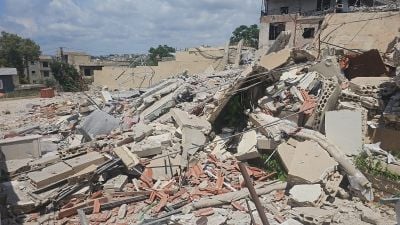


In Mansouri, south of the city of Sour, 70% of buildings have been destroyed by Israel. (Photo provided by our correspondent in southern Lebanon, Muntasser Abdallah)






SOUTH LEBANON — In the village of Mansouri, south of Sour, a handful of residents have begun to return to their homes following the implementation of the "cease-fire," as is the case in many villages across southern Lebanon, our correspondent in the region reports.
For now, given the scale of the destruction and the human losses caused by Israel's war, residents are limiting themselves to inspecting their houses and organizing for a gradual return and the resumption of daily life.
One resident, Hassan Mdayhli, hopes not to experience "the bad experience of forced displacement" again. He describes the "difficult living conditions and the physical and financial exhaustion" that marked his stay in a shelter, as well as the "constant worry" due to the security and military situation. The return to the village represents, for him, "immense joy." To resettle, he has already brought in mattresses and basic utensils. He hopes "at least to rebuild one room of his destroyed house in order to live there with his family, recover a piece of his former life and the memories tied to the village."
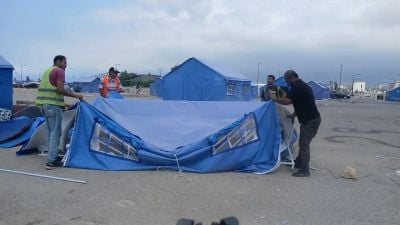
For his part, Mansouri Mayor Haidar Mdayhli says he has been informed by "the Lebanese Army and the competent authorities" that residents are allowed to access the village to assess the state of their homes. He recalls that residents left as soon as the first cease-fire was announced, before the village became a "theater of military operations." Mansouri was subjected to particularly intense Israeli airstrikes and shelling, he says, specifying that in a single day, Israel targeted the village with about 15 air strikes and continuous artillery fire.
His priority for now? "Reopen the village roads, which are blocked by debris from destroyed buildings, and clear the rubble to facilitate movement, all while ensuring a minimum of essential services, especially electricity and water."
According to the municipal president, Mansouri has about 4,000 inhabitants. So far, only a few dozen people have returned to inspect their homes and assess the situation. The destruction rate is estimated at between 60 and 70 percent. Most buildings have been completely destroyed; the remainder are partially damaged. "Less than 10 percent of the houses are habitable, with limited damage such as broken doors and shattered windows," he says.
In this context, Mhayli is calling for urgent aid to help Mansouri's residents, who have exhausted all their savings during the war and are facing severe hardship, start the first stage of returning and resettling, after many long months away from home.