





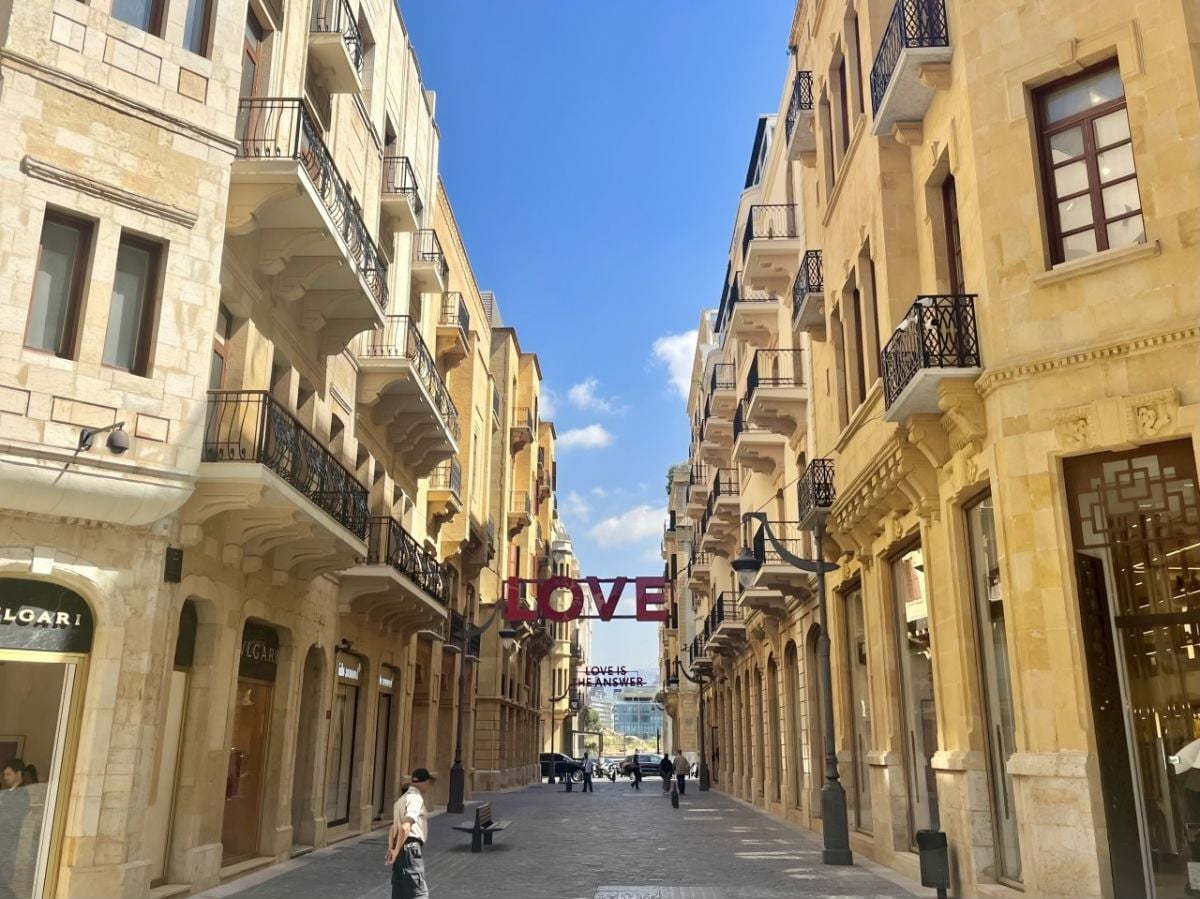
A street in downtown Beirut on Sept. 28, 2022. (Credit: Philippe Hage Boutros/L'Orient-Le Jour)






BEIRUT — Meeting in Parliament on Monday, the Finance and Budget Committee approved the government's draft law establishing a Lebanese "golden visa," offering wealthy foreigners and expatriates the opportunity to obtain residency in Lebanon and benefit from tax residency under a relatively favorable tax regime.
"We all know that Lebanon needs to attract investors and investment as part of economic, financial, and banking recovery. It is necessary to prepare for the next phase, even if we are not there yet," Committee President and MP Ibrahim Kanaan said after the meeting.
According to details Kanaan provided to L’Orient-Le Jour, the law would grant special residency rights to non-residents, whether foreigners or Lebanese nationals living abroad who need a tax residence, in exchange for a deposit or investment of at least $500,000. Applicants could place the money in a bank, use it to buy real estate, or invest it in a Lebanese company.
"This mechanism would create jobs, bring money into state coffers, and encourage investment once the conditions are met. It offers the possibility of choosing a tax residence and paying taxes there, without violating bilateral tax treaties or international standards on transparency, combating tax evasion and other forms of financial crime," Kanaan said.

Minimum threshold set
The committee made several changes to the version the government submitted a month ago, Kanaan said.
MPs added a minimum requirement of $500,000 in deposits or investments to qualify, whereas the government had planned to set the amount later by decree.
They also introduced additional fees payable to the state from the start of the process: at least $50,000 for the applicant and another $50,000 for each family member included in the application. The government had planned to charge fees, but intended to set the amounts later by decree.
The committee added a provision stating that foreign purchases of property must comply with existing regulations, including the limit of 3,000 square meters of land without a special permit from the Cabinet.
If Parliament passes the law and authorities implement it, General Security will likely handle the applications, Kanaan said. He added that MPs discussed easing procedures for Lebanese expatriates compared with foreign applicants and that the idea remains under consideration.
Another major question is whether the scheme complies with the requirements of the Financial Action Task Force (FATF).
The international body that sets standards to combat financial crime has kept Lebanon on its gray list since October 2024. In a post on LinkedIn, tax lawyer Karim Daher noted that, during Lebanon's latest evaluation from June 17 to 19, the FATF recommended keeping "the same 10 measures already identified in October 2024" and warned that "the next evaluation might be less lenient [possibly in October] and will no longer consider the exceptional circumstances of the current period."
The corrective measures are already known and mainly involve enforcing Lebanese laws through the judiciary and law enforcement agencies. However, "the political decision needed to turn these efforts into concrete action continues to be delayed," Daher added.

 7 p.m. recap: Iran warns Egypt, Israeli soldiers vote in south Lebanon, Haret Hreik responds to Kataeb