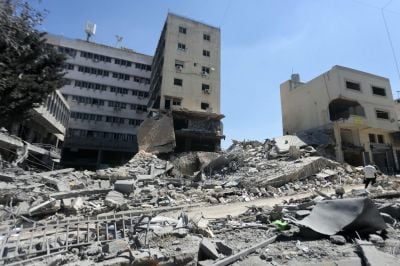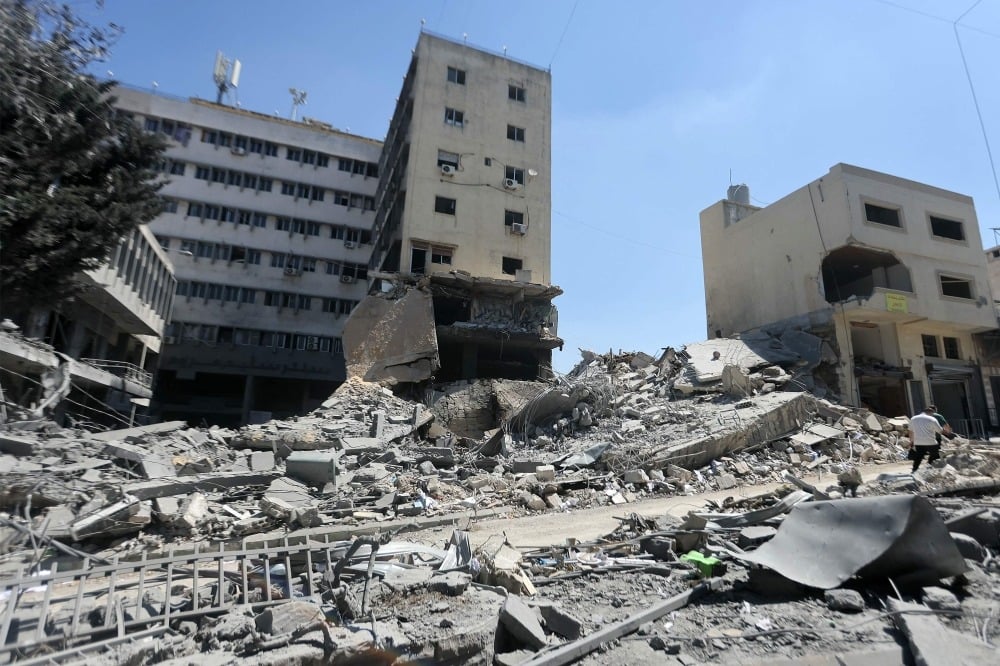
The rubble of a building collapsed as a result of an Israeli airstrike, in Nabatiyeh, southern Lebanon, on June 21, 2026. Photo MAHMOUD ZAYYAT / AFP






BEIRUT — The unprecedented comments made on Saturday by U.S. Vice President JD Vance regarding Christians in Lebanon sparked reactions from both ends of the political spectrum in the country. The leader of the Lebanese Forces (LF), Samir Geagea, sent a letter Monday to the U.S. official, thanking him for his statements and urging him to completely separate the Lebanese issue from negotiations with Iran, following talks in Switzerland where the Hezbollah-Israel front took center stage. Hezbollah, however, denounced what it saw as "provocative remarks."
On Saturday, during an interview on American television, JD Vance addressed Lebanese Christians, assuring them they have "many friends in the American government who want to bring peace." He suggested that if these Christians have been attacked in the current conflict with Israel, it is because Hezbollah fighters "hid among them, provoking a response by the Israeli army."
In a lengthy text, Geagea, who describes himself as the leader of the "largest Christian party" in Lebanon, condemned the fact that, over the past 40 years, Hezbollah "has confiscated national decision-making, weakened the institutions, and prevented the emergence of a strong state," which has worsened with "Lebanon's involvement in wars linked to Iranian agendas." Faced with this reality, and what he sees as the Christians and Lebanese remaining "determined to restore their state and full sovereignty," he said that "the greatest contribution the United States can make to Lebanon at this delicate stage is to support the Lebanese state and its legitimate institutions as the only national point of reference." According to Geagea, this can be achieved by "limiting any negotiation or approach to the Lebanese issue to the Lebanese state alone, and definitively excluding Iran from the Lebanese dossier."
Lebanon was a central point of negotiation in talks between Iran and the United States, which began Sunday in Switzerland, leading to the creation of a "deconfliction" mechanism for Lebanon, though its details remain unclear. This comes as Lebanese authorities have initiated their own process of direct negotiations with Israel — rejected by Hezbollah — under U.S. auspices. Many have argued that including the Lebanese issue in these regional negotiations has allowed Iran to regain, at least apparently, leverage over the matter. The LF leader also called for Washington's support in restoring the state's monopoly on arms, which "would pave the way for building a state that is truly sovereign, free, strong, and capable of ensuring security, stability, and prosperity for all its citizens."
Hezbollah denounces 'provocative remarks'
On Sunday, the Hezbollah official in charge of relations with Christian entities and parties, Mohammad Khansa, denounced in a statement the "provocative remarks" by JD Vance, which "show the extent of the racist and sectarian mentality prevailing in the White House." According to Khansa, "holding Hezbollah responsible for the Israeli bombings and violence against these Christians, under the pretext of self-defense, is an attempt by Christian Zionism to give this conflict vile religious and sectarian dimensions and to sow discord among the sons of the same country." He added, "Hezbollah is and will remain committed to coexistence among the various communities. This Lebanese model is the opposite of the U.S.-Zionist project for the region."
The current escalation of Israel's war on Lebanon began on March 2 in the wake of the U.S.-Israeli war against Iran which started on Feb. 28.
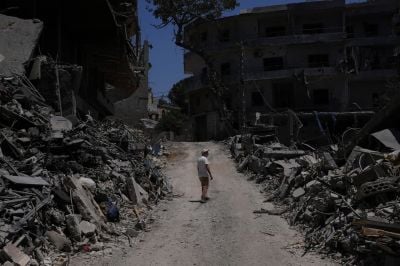
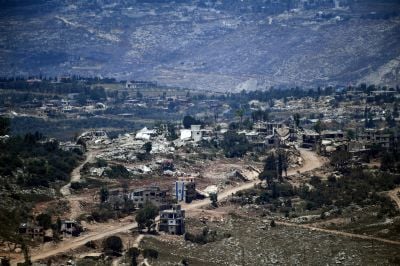
Since then, Israel's offensive has allowed it to occupy nearly 6 percent of Lebanese territory, in a strip about 10 kilometers deep along Lebanon's southern border. Israel has razed nearly 70 villages in this so-called "buffer zone" to the ground, rendering them completely uninhabitable. The area also includes several Christian villages which have been largely, though not entirely, spared from Israeli fire and whose residents have mostly decided to remain despite the intense battles between Israeli troops and Hezbollah fighters in the region throughout the war.