


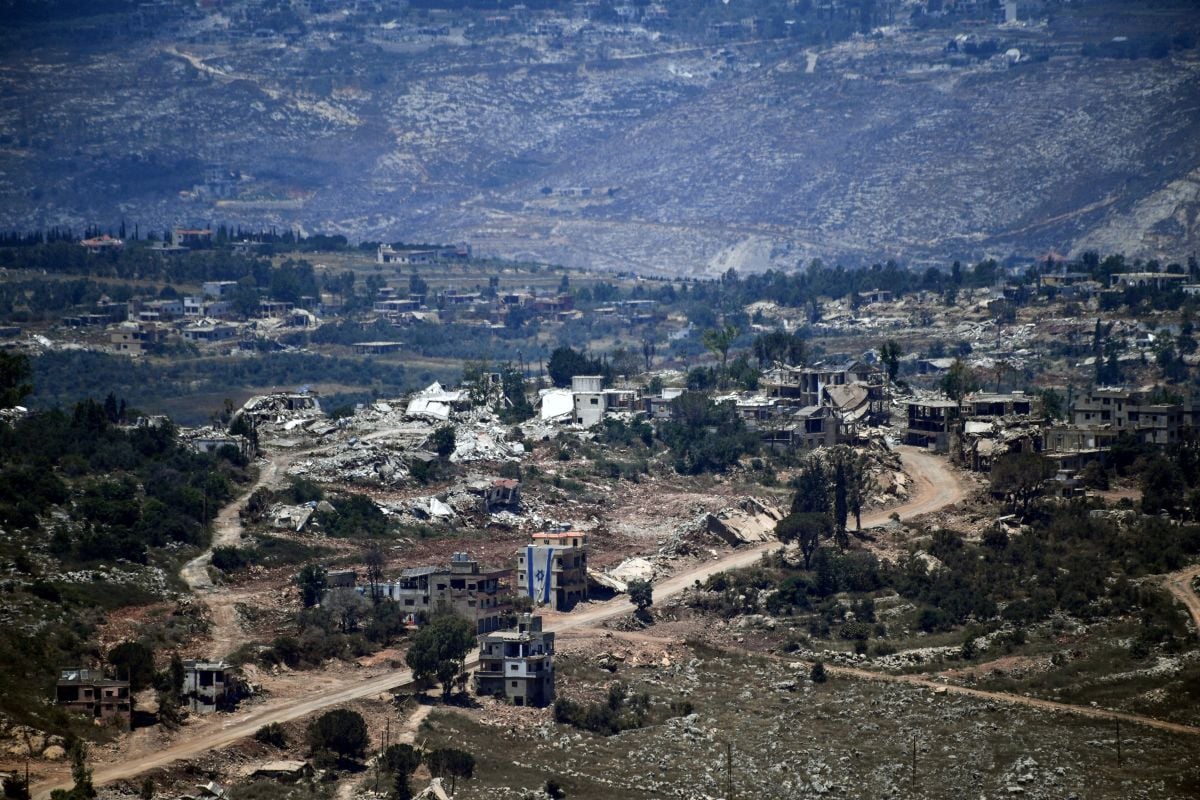
An Israeli flag hangs from a damaged building in a village inside south Lebanon close to the border as seen from northern Israel, June 18, 2026. (Credit: Gil Eliyahu/ Reuters)






BEIRUT — President Joseph Aoun spoke by phone on Monday with U.S. officials and the Qatari mediator about the cease-fire between Hezbollah and Israel in Lebanon, as well as the possibility of establishing a mechanism to ensure the cessation of hostilities is respected, as the situation on the ground in southern Lebanon remains relatively calm, except for an incident involving an Israeli stun grenade fired late in the morning in the Nabatieh region.
The mechanism that the mediators seek to implement in Lebanon, referred to as a "deconfliction cell," was announced for the first time in a joint statement issued after Sunday's negotiations in Switzerland between Iran and the United States. "Pakistani and Qatari mediation has led to major breakthroughs to bring the war in Lebanon to an end," Iranian Foreign Minister Abbas Araghchi, who participated in the discussions, said on X. "The parties have agreed to the creation of a deconfliction cell among the parties, the Lebanese Republic, and the mediators, in order to ensure the end of military operations in Lebanon is upheld, in accordance with the memorandum of understanding," reads the text published by Pakistan and Qatar. Araghchi said this mechanism, whose details remain unclear, would be "the first real test" of the talks.
According to the Lebanese presidency's X account, Aoun spoke by phone with U.S. Vice President JD Vance, President Trump's lead adviser, Jared Kushner, as well as the Prime Minister of Qatar, Mohammad bin Abdulrahman al-Thani. "The discussions focused on consolidating the cease-fire in Lebanon, halting the Israeli military escalation, and measures to be taken in this regard, including the possibility of establishing a deconfliction cell," Baabda said.
While no information has yet been released about how this new mechanism would work — following the mechanism created in November 2024 that included representatives from the Lebanese and Israeli militaries, France, and the United States — the announcement of its creation comes as Hezbollah and the Israelis appear to be respecting the cease-fire.
Since Sunday afternoon, only one Israeli stun grenade was fired in the Nabatieh region near journalists in order to block them and other residents from approaching Nabatieh Fawqa, whilst Israeli fired machine-gun fire at Zawtar Sharqieh, in the same region.
On Sunday, machine gun and grenade fire was reported in the districts of Nabatieh and Bint Jbeil. In another possible sign of easing tensions, Israel announced it was lifting, as of Monday morning, all wartime restrictions on gatherings in the north of the country near the border with Lebanon.
However, Israeli Prime Minister Benjamin Netanyahu reiterated that the Israeli army would remain in southern Lebanon "as long as necessary," and his foreign minister, Gideon Sa'ar, insisted that while Israel "has no territorial ambitions" in Lebanon, it will not withdraw from the established "security zone."
This buffer zone, unilaterally declared by Tel Aviv, stretches up to about 10 kilometers deep into Lebanese territory, with Israelis having razed entire villages there. At the same time, the Israeli press has denied reports circulating the previous day about a possible withdrawal from certain points and a reduction in the number of soldiers in Lebanese territory. This comes as Hezbollah leader Naim Qassem rejected any Israeli "security zone" in the south of the country in a speech Sunday evening.
Israel has killed 4,106 people in Lebanon since March 2. The Israeli army has reported 36 soldiers killed.
 Israeli army carries out demolition at Jabal Amel School in Houla as strikes continue