






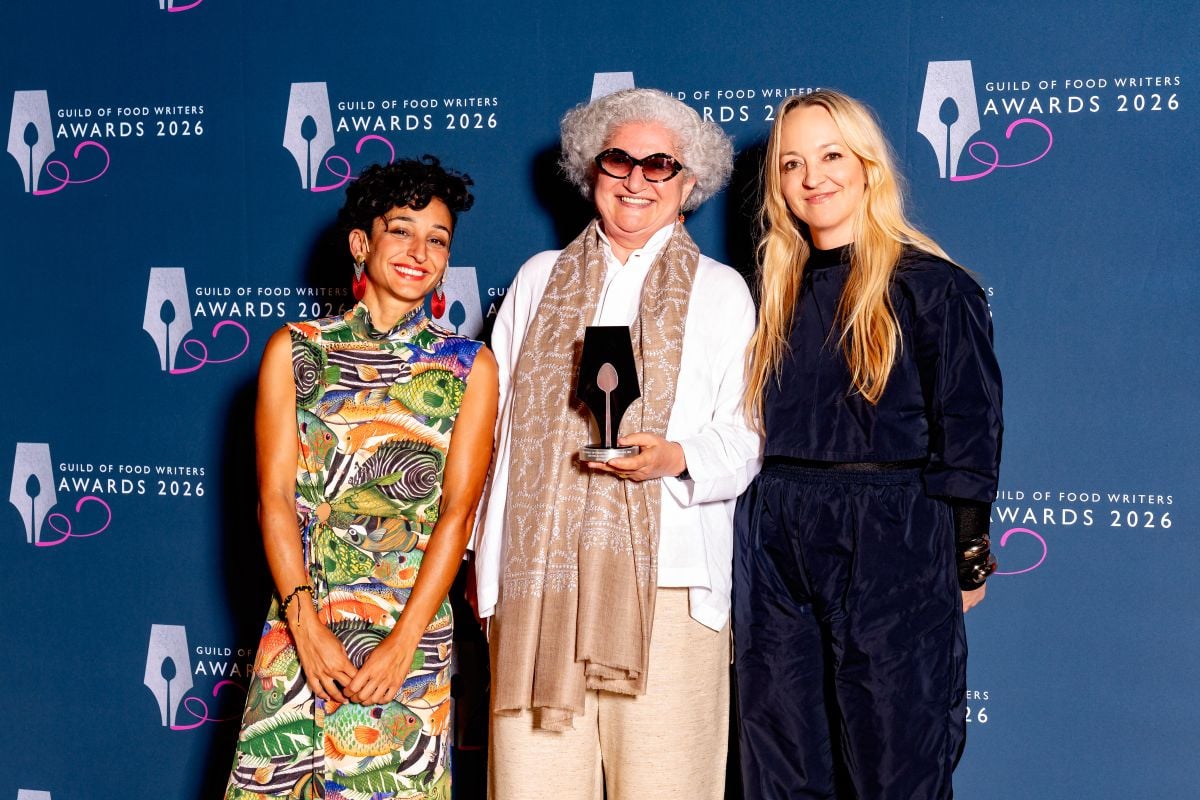
Anissa Helou, center, with Claire Ptak, right, and Leyla Kazim at the Guild of Food Writers Awards in London. Ptak is a leading figure in Britain's contemporary culinary scene, while Kazim hosts BBC Radio 4's The Food Programme. (Credit: Courtesy of the Guild of Food Writers Awards)






Just over a month ago, these pages introduced Anissa Helou's 11th and latest book, "Lebanon: Cooking the Food of My Homeland," a return to her native country through its regions, traditions and the people who continue to preserve and pass on its culinary heritage.More than a cookbook, however, the book reflects the work of a lifetime. Over decades, Helou has become one of the leading voices on Lebanese, Levantine, Mediterranean, North African and, more broadly, Islamic-world cuisines. Yet she had never written about food. Like an oral historian, she traveled across regions, interviewed residents, observed their techniques and documented stories, traditions and culinary practices before they disappeared. Long before zaatar, freekeh and orange blossom water became familiar ingredients on Western tables, she was among the...
Just over a month ago, these pages introduced Anissa Helou's 11th and latest book, "Lebanon: Cooking the Food of My Homeland," a return to her native country through its regions, traditions and the people who continue to preserve and pass on its culinary heritage.More than a cookbook, however, the book reflects the work of a lifetime. Over decades, Helou has become one of the leading voices on Lebanese, Levantine, Mediterranean, North African and, more broadly, Islamic-world cuisines. Yet she had never written about food. Like an oral historian, she traveled across regions, interviewed residents, observed their techniques and documented stories, traditions and culinary practices before they disappeared. Long before zaatar, freekeh and orange blossom water became familiar ingredients on Western tables, she was among the...

 8 p.m. recap: Israel again threatens Beirut’s south suburbs; 2 ships hit near Hormuz; Riyadh football matches canceled