

Search
Search
Voices from the Middle East

OPINION

Taef: All or Nothing


Taef: All or Nothing

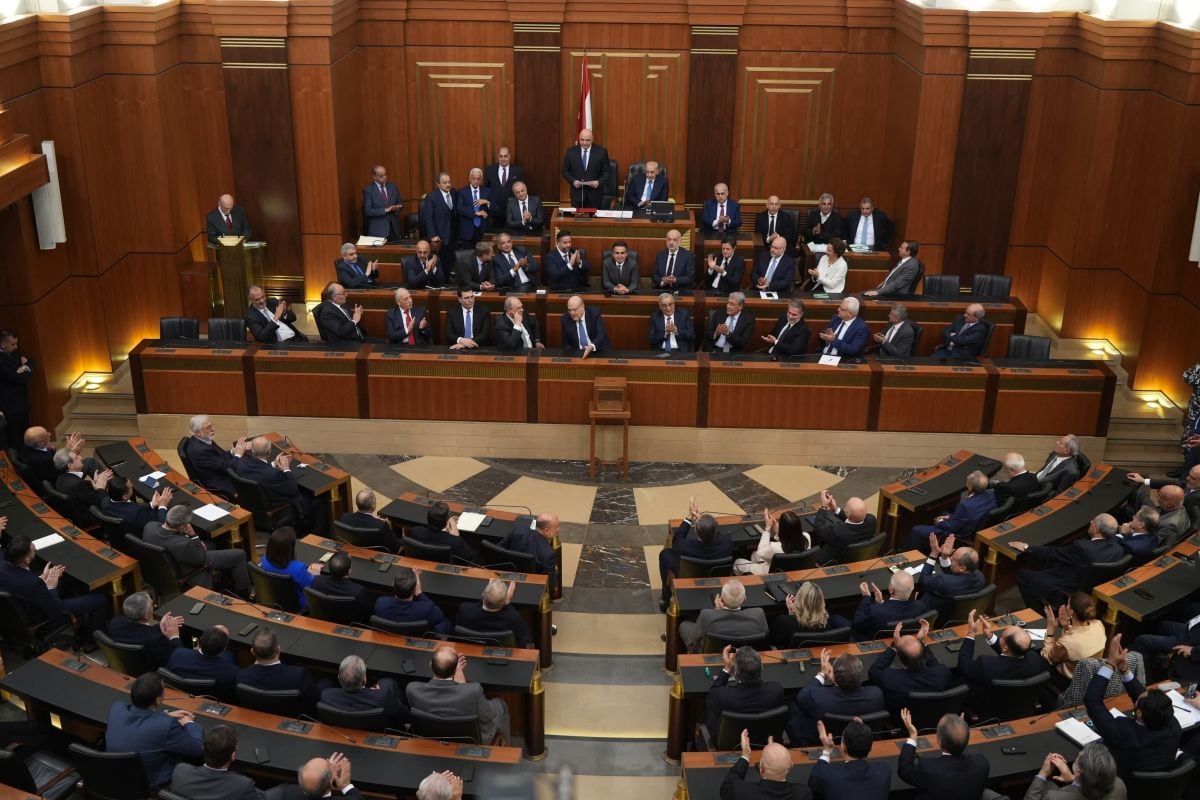
Parliament convened at Place de l’Étoile during the presidential election session on Jan. 9, 2025. (Credit: Mohammad Yassine/L'Orient-Le Jour)


Ahmad El Husseini is a political analyst and essayist who writes on Middle Eastern geopolitics, U.S. foreign policy, and the evolving structure of regional power, with particular focus on Lebanon, Iran, Saudi Arabia, the Arab Gulf, and the future of American influence in the region.

For years, many of Lebanon's Christian political leaders complained, often correctly, about the selective implementation of the Taef Accord. They argued that the agreement had been applied in ways that weakened the presidency while leaving untouched the structural reforms that were supposed to create a functioning state. During the Rafik Hariri era, this grievance became a central pillar of Christian political discourse.

Taef, they argued, had been implemented à la carte. Today, however, the same complaint has largely disappeared among the same political currents that once raised it most loudly. The reason is not that Taef has been completed. The accord remains only partially implemented. But this partial implementation now appears acceptable to some because the current balance of power no longer feels as threatening as it once did. There is no longer a Sunni strongman comparable to Hariri, who used money, regional backing, and a weak presidency to exercise in practice the authority of prime minister, justice minister, and president simultaneously.

The presidency has regained room for maneuver. The commander of the army, the governor of the Central Bank, and many other strategic positions remain, by precedent and practice, Maronite. In practice, the presidency did not lose nearly as much authority as many once claimed.

This explains why figures such as Gebran Bassil, Samir Geagea, Joseph Aoun, and others appear increasingly comfortable with Taef in its suspended condition: implemented enough to preserve parity and Christian guarantees, but never fully enough to reach its most transformative provisions. This will not hold.

The Senate was never created to reassure communities while allowing Parliament to become a non-sectarian national chamber. Political sectarianism was never abolished on any serious timetable. A national committee to manage that transition was never meaningfully empowered. Administrative decentralization was never established.

A fair electoral law capable of producing genuine national representation was never adopted. Instead, Lebanon has lived under electoral laws designed to reproduce sectarian bosses, protect local monopolies, and transform elections into managed renewals of the same political cartel. The judiciary was never liberated from sectarian interference. State institutions were never reorganized around competence, accountability, and citizenship.

Taef's most ambitious promise, the gradual transition from confessional allocation to meritocratic republicanism, was placed in a freezer from which it has never been retrieved. That is the part the cartel prefers not to discuss.

The true revolutionary core of Taef was not merely the redistribution of executive power between president and prime minister, nor only the equal Christian-Muslim formula in Parliament. Its deeper logic was to protect coexistence while preparing Lebanon to move beyond permanent confessional arithmetic, to reassure communities in the short term while building a state in which the best person could serve regardless of sectarian belonging. That is why institutional independence, taken alone, is not enough.

Independence without the accompanying architecture of pluralism, codified bylaws, accountability, and meritocracy is not reform. It is a cleaner path to institutional capture. The legislature has been repeatedly weaponized by Nabih Berri and the machine around him. The prime ministership has operated without equalizing bylaws that prevent discretion from becoming domination. The presidency has demonstrated that an institution can be constitutionally independent and still be converted into a sectarian weapon.

A judiciary divided by sect, captured through appointments, and shielded by communal vetoes does not become the guardian of justice. It becomes a more dangerous instrument of selective prosecution, obstruction, and intimidation. Without dismantling the sectarian system at its root, every reform will be reabsorbed into the same logic, every institution suspected of serving one community against another, every demand for accountability read as an ambush. Governance itself remains permanently weaponized.

One cannot invoke Taef when it protects communal guarantees and suspend it when it threatens inherited privileges. A constitutional settlement either functions as a complete national pact or it gradually loses its legitimacy among those asked to observe it selectively. If one community insists on freezing Taef at the stage most favorable to its current interests, others will eventually ask why they should remain bound by it at all.

Some Sunnis may ask why the postwar formula should survive the collapse of Sunni political weight. Some Shia may ask why demographic and political realities should remain disconnected from institutional power. Others may call openly for a return to the drawing board, where referendums, updated demographic statistics, and raw political leverage replace the fragile compromise that Taef was designed to preserve. That is precisely the abyss the accord was designed to prevent.

Taef was never perfect. It emerged from exhaustion, bloodshed, and regional bargaining. But despite its imperfections, it achieved one essential thing: it offered Lebanon a formula for coexistence without partition and balance without demographic revenge. It rested on a fragile understanding that no community would seek total victory and none would be reduced to permanent defeat.

Those now attempting to preserve it in suspended animation should understand the magnitude of the risk. The longer Taef remains partially implemented, the greater the temptation among all sides to reopen the entire constitutional settlement. And if Lebanon returns to zero, nobody can guarantee what comes next. It does not mean a clean constitutional reset. It means returning to the drawing board under the pressure of referendums, modern demographic statistics, and demands to renegotiate power from scratch, or worse, returning to the streets, the sandbags, and the civil war.

The choice is therefore simple: all of Taef or eventually none of it.

Either the accord is implemented fully, including the abolition of political sectarianism, a fair electoral law, administrative decentralization, an independent and meritocratic judiciary, and the gradual transition toward equal citizenship ; or the legitimacy of the entire postwar settlement will continue to erode until there is nothing left to selectively invoke.

Taef was never meant to be a freezer preserving the privileges of one historical moment. It was meant to be a bridge toward a real republic. Suspending the bridge halfway may ultimately convince others to burn it altogether.

Ahmad El Husseini is a political analyst and essayist who writes on Middle Eastern geopolitics, U.S. foreign policy, and the evolving structure of regional power, with particular focus on Lebanon, Iran, Saudi Arabia, the Arab Gulf, and the future of American influence in the region.For years, many of Lebanon's Christian political leaders complained, often correctly, about the selective implementation of the Taef Accord. They argued that the agreement had been applied in ways that weakened the presidency while leaving untouched the structural reforms that were supposed to create a functioning state. During the Rafik Hariri era, this grievance became a central pillar of Christian political discourse. Taef, they argued, had been implemented à la carte. Today, however, the same complaint has largely disappeared among the same political...



