


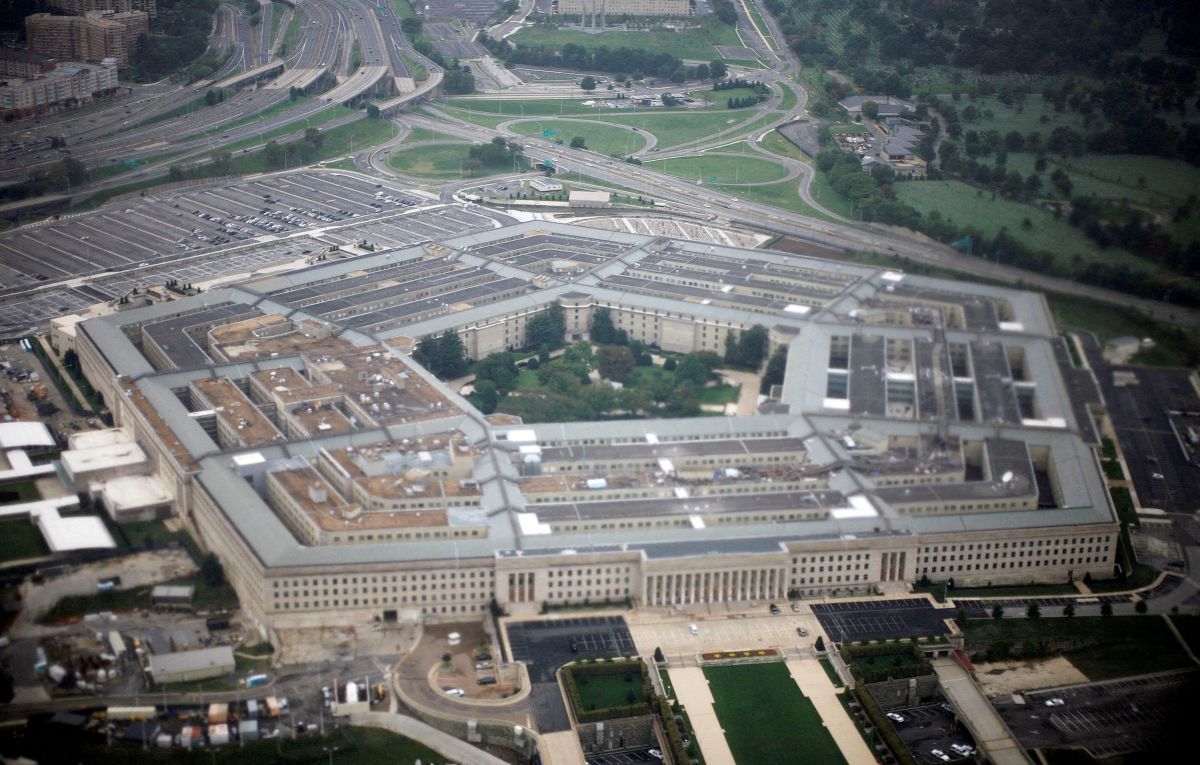
The Pentagon, in Arlington, Virginia, on September 28, 2008. (Credit: Jason Reed/Reuters)






The United States on Friday welcomed ‘’constructive’’ discussions between Israeli and Lebanese military officials at the Pentagon following nine hours of talks. However, no mention was made of implementing a cease-fire in Lebanon, despite Beirut’s insistence on the issue.
’’Today at the Pentagon, I hosted military delegations from Israel and Lebanon as part of the security component supporting the ongoing peace talks between their two countries,’’ U.S. Deputy Defense Secretary Elbridge Colby wrote on X. ‘’We held constructive military-to-military discussions that will serve as a basis for the political component led by the State Department next week,’’ he added, noting that Washington plans to meet again soon to continue the security track.
Colby did not mention the cease-fire in effect in Lebanon, although the mid-April truce, later extended by a month, has never been respected.
Despite the theoretical cease-fire, the Israeli offensive has continued across Lebanon, with deadly strikes in South Lebanon, the Bekaa and Beirut’s southern suburbs, which have been hit twice since the agreement took effect. The Israeli army has also accelerated its ground offensive in recent days, advancing on several fronts, notably north of the Litani River in the Nabatieh governorate. Prime Minister Benjamin Netanyahu confirmed Saturday that Israeli forces had crossed north of the river. Hezbollah, meanwhile, has continued attacks against Israeli forces in South Lebanon and against military sites in northern Israel.
Israel refuses to withdraw from southern Lebanon
The Pentagon meeting began around 3 p.m. Beirut time, or 8 a.m. in Washington, and marked the first session held exclusively at the military level.
According to a military source quoted by AFP, the Lebanese delegation intended to ‘’emphasize the need to end hostilities and present the army’s plan to extend state authority across national territory.’’
According to Israel’s Channel 11, the Lebanese delegation demanded during an initial round of talks that Israel withdraw from South Lebanon. Israeli officials, however, rejected any withdrawal ‘’as long as the threat persists on the ground.’’
The Lebanese delegation was led by the army’s head of operations, General Georges Rizkallah, and included six officers from different specialties. Israel was represented by Brigadier General Amichai Levin, head of the strategic division in the military’s planning directorate, according to an Israeli military spokesperson.
Lebanon and Israel have begun direct negotiations, with Beirut primarily seeking an Israeli withdrawal from Lebanese territory. Israel, meanwhile, is demanding the full disarmament of Hezbollah beforehand. The United States and Israel are seeking to work with the Lebanese Army on a plan to that effect. Another round of negotiations at the political level is expected early next week under the supervision of former ambassador Simon Karam.
Rubio and Hezbollah’s ‘provocations’
Shortly after the talks began in Washington, Lebanese President Joseph Aoun spoke by phone with U.S. Secretary of State Marco Rubio and stressed that a truce with Israel is a ‘’prerequisite’’ for any diplomatic progress.
According to the Lebanese presidency’s account on X, the two men discussed ‘’the general situation in Lebanon and the region in light of recent developments.’’
Rubio, for his part, ‘’praised the courage and foresight [Aoun] has shown by pursuing direct negotiations with Israel, even as Hezbollah continues to try to thwart these talks to the detriment of the Lebanese people,’’ State Department spokesperson Tommy Pigott said in a statement.
’’Rubio reaffirmed that Hezbollah is entirely responsible for the ongoing fighting and stressed the need for it to immediately cease its attacks and provocations to pave the way for de-escalation,’’ Pigott added.
The secretary of state also reiterated that ‘’the United States fully supports the Lebanese government in its efforts to seize this historic opportunity to bring peace, reconstruction and a better future to its people.’’
The conflict between Israel and Hezbollah resumed on March 2 after Hezbollah said it was acting in support of its Iranian ally, which has been under U.S. and Israeli pressure since Feb. 28. The war, which has caused widespread destruction, has so far killed more than 3,300 people and wounded around 10,000, while leaving dozens of villages in ruins.
Joseph Aoun, backed by Prime Minister Nawaf Salam, has chosen the path of direct negotiations in an effort to pull Lebanon out of the war, but Hezbollah has rejected the process.
 2 p.m. recap: Iran says, 'No military solution' to conflict; 2 Israeli soldiers wounded in south Lebanon; Houthis claim attack on Aramco