






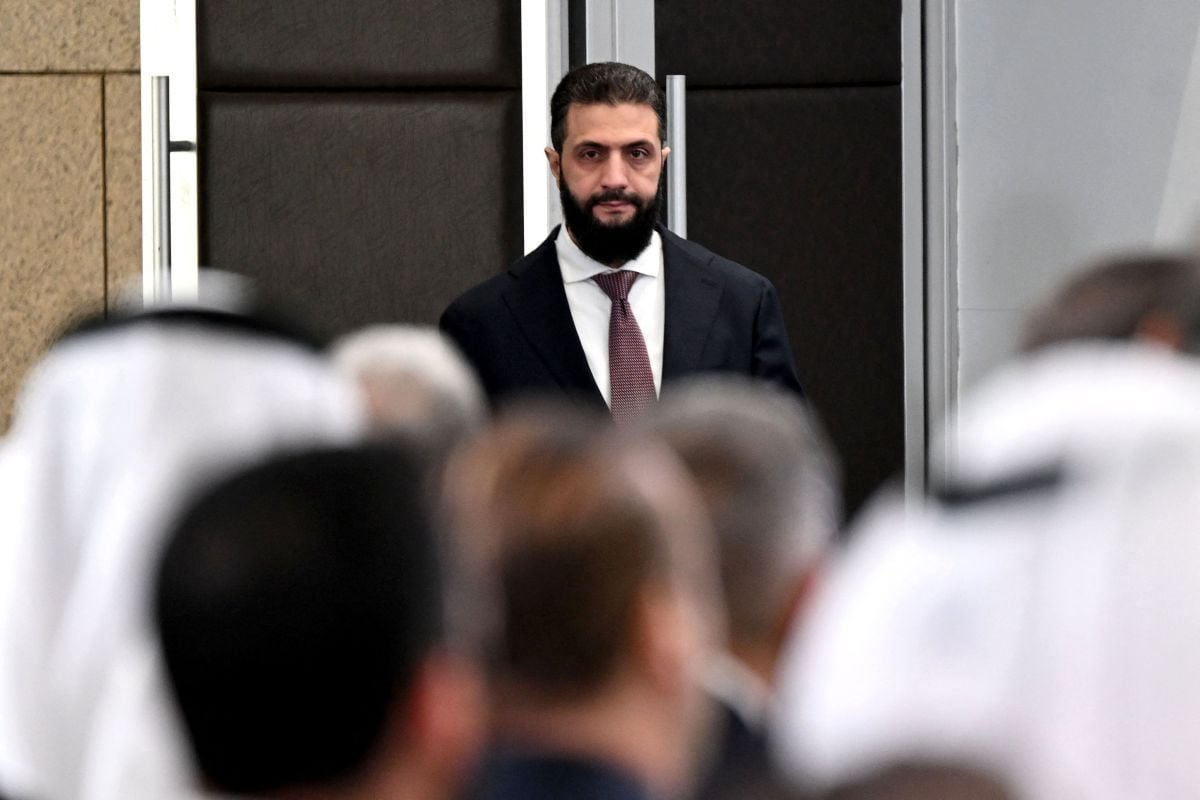
Syrian President Ahmad el-Chareh arrives to attend the second day of the first Syrian-Emirati Investment Forum, at the People's Palace in Damascus, on May 12, 2026. Photo Louaï Beshara/AFP Syrian President Ahmed al-Sharaa arrives to attend the second day of the first Syrian-Emirati (United Arab Emirates) Investment Forum, at the People's Palace in Damascus on May 12, 2026. (Photo by LOUAI BESHARA / AFP)






Is this a new sign of the obstacles still facing Washington’s efforts to normalize relations between Damascus and Tel Aviv? Through a new customs law enacted by decree (No. 109), Syrian interim President Ahmad al-Sharaa has not only launched a sweeping overhaul of Syria’s customs framework but also formally renewed the country’s longstanding ban on Israeli imports.Reaffirming its sovereigntyThe decree, issued on Monday, March 19, is primarily aimed at combating smuggling, strengthening border controls, and modernizing the customs administration. It also significantly increases financial penalties for illegal imports and trafficking. But at the heart of the text is also a more than symbolic reaffirmation of restrictions targeting countries subject to an economic boycott. Article 112 states that goods violating Syria’s boycott of Israel...
Is this a new sign of the obstacles still facing Washington’s efforts to normalize relations between Damascus and Tel Aviv? Through a new customs law enacted by decree (No. 109), Syrian interim President Ahmad al-Sharaa has not only launched a sweeping overhaul of Syria’s customs framework but also formally renewed the country’s longstanding ban on Israeli imports.Reaffirming its sovereigntyThe decree, issued on Monday, March 19, is primarily aimed at combating smuggling, strengthening border controls, and modernizing the customs administration. It also significantly increases financial penalties for illegal imports and trafficking. But at the heart of the text is also a more than symbolic reaffirmation of restrictions targeting countries subject to an economic boycott. Article 112 states that goods violating Syria’s boycott of...
