


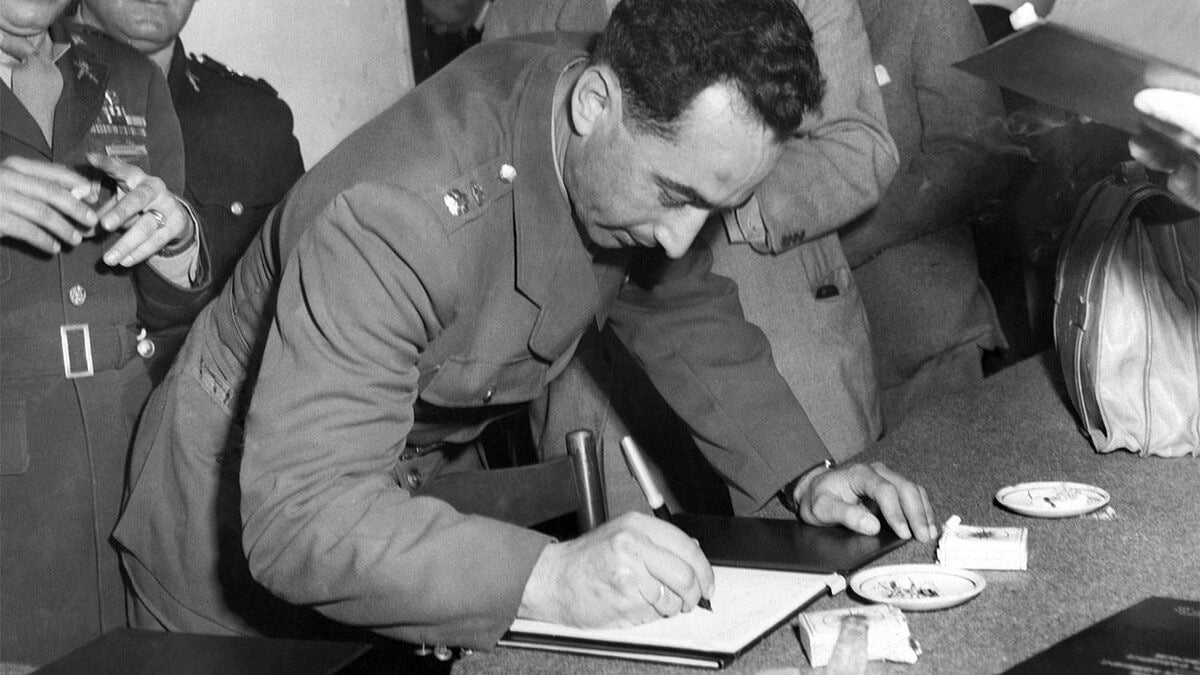
A Lebanese delegate leans over the table to sign the Lebanese-Israeli armistice on March 23, 1949 in Ras al Naqoura. (Photo: Acme Newspictures/AFP)






On March 23, 1949, in Ras Naqoura, Lebanese served champagne, cake, and bananas, while Israeli engineers cleared their landmines from fields. They were gathered to sign a historic agreement: an armistice treaty between Lebanon and Israel. The delegation’s head, Colonel Toufiq Salem, exchanged a few words with his Israeli counterpart. “Israel has never had a quarrel with Lebanon in the past and sees no reason why it should in the future. The agreement that has just been signed marks the end of an unfortunate chapter,” said Colonel Mordechai Maklef. In Beirut, many were delighted that the fighting had stopped, but many were also bitter that they had to negotiate an armistice with a state that Arabs had said they would never recognize.This “purely military agreement can have no effect on the political future of Palestine,” said Fouad...
On March 23, 1949, in Ras Naqoura, Lebanese served champagne, cake, and bananas, while Israeli engineers cleared their landmines from fields. They were gathered to sign a historic agreement: an armistice treaty between Lebanon and Israel. The delegation’s head, Colonel Toufiq Salem, exchanged a few words with his Israeli counterpart. “Israel has never had a quarrel with Lebanon in the past and sees no reason why it should in the future. The agreement that has just been signed marks the end of an unfortunate chapter,” said Colonel Mordechai Maklef. In Beirut, many were delighted that the fighting had stopped, but many were also bitter that they had to negotiate an armistice with a state that Arabs had said they would never recognize.This “purely military agreement can have no effect on the political future of Palestine,” said...