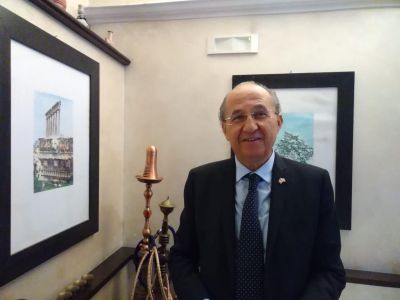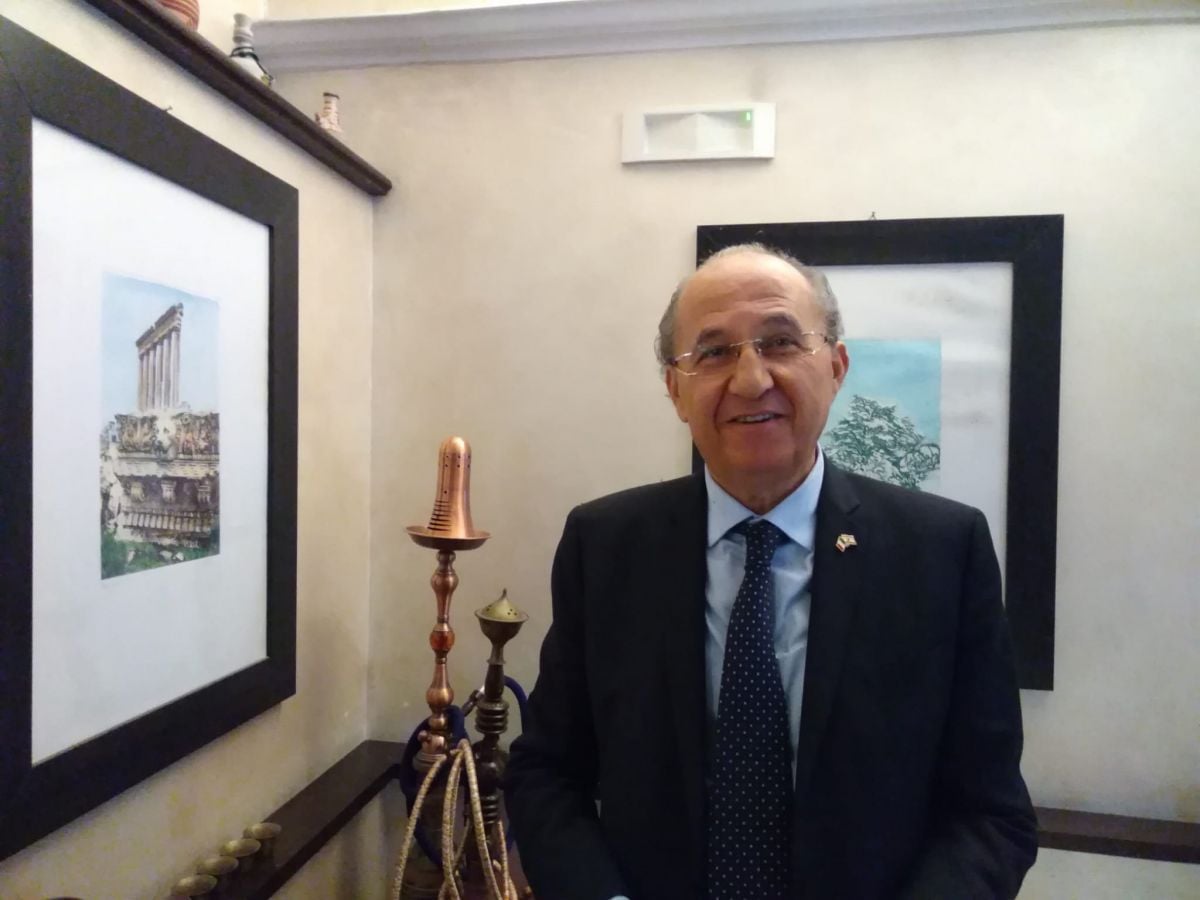
Maurizio Salameh head of the Istituto Cultural Italo Libanese (Photo provided by Maurizio Salameh)






In the difficult context that Lebanon is going through, and faced with immense and daily needs, many countries are offering aid where they can. Italy is one such country which, at the initiative of Ambassador Carla Jazzar, launched an aid plan to support Lebanon. As she explains to L’Orient-Le Jour: "I set up a group made up of important figures from the community in Rome and surrounding areas of the capital to coordinate, gather, and send humanitarian assistance. To this end, I reached out to all the major Italian companies that produce food, medicine, personal, and environmental hygiene products. Their response was positive and the various players in this industry mobilized to send us containers full of food."
The commander-in-chief of the Italian army, General Luciano Portolano, the chief of staff of the Minister of Defense as well as his diplomatic adviser collaborated at the same time to ensure the shipment of this humanitarian aid, which is to be received by the Lebanese Ministry of Social Development. The coordination of this operation, which will leave Italy on June 1, was immediately entrusted to Maurice Salameh. And for good reason: a holder of Italian nationality, having lived there for over fifty years, Maurice—who became Maurizio in his new life—has never ceased to live in step with his country of origin.
Maurizio, the Italian flag-bearer for his Lebanon
"Lebanon," he confides, "is everything to me, as simply as the saying goes: 'blood does not become water.' For me, it is the most beautiful country in the world when it is not the battleground for others’ wars." This creed is expressed in particular by his strong commitment to the Istituto Cultural Italo Libanese, of which he is president and the driving force. Located in Rome at Piazza Cola di Rienzo 92, the center’s main aim is to promote and strengthen cultural, economic, and tourist relations between Italy and Lebanon.
To Rome with love
Maurice Salameh was born in 1954 in Atchane, a village near Bikfaya, to Lebanese parents. He left Lebanon at the age of 21 when the war broke out in 1975 to continue his studies elsewhere, far from the bombs. Why Italy? "As you know, for a better future, back home, both young and old tend to look to America. It was too far for me; I chose Rome to stay close to Lebanon." It was in the Eternal City that he began his studies at the Academy of Fine Arts, before embarking on a career as an interior designer and starting a family with his Italian wife. The couple have two daughters.
Then, changing direction, he landed a position in the communications department at Leonardo, the second largest Italian industrial group and one of the world’s major players in the aerospace and defense sector. When circumstances allow, Maurice regularly travels to Lebanon, where some of his family still live. And when they all gather in the village of Atchane, it is, he says, "for a joyful remembrance of the good old times. You know, we talk about the "enab," the "tine," our good grapes and figs, and our stories, which are always present in our memory and in our hearts."
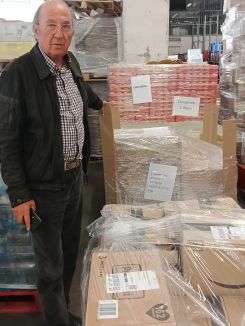
At the head of the Istituto Cultural Italo Libanese
Back in Rome, where he has lived for many years, Maurizio, a lively retiree, has never broken ties with his roots. Now a spirited septuagenarian, he shares his Lebanese identity with his colleague Maria Cristina Rigano, herself of Lebanese descent, who is in charge of organizing events for the Italo-Lebanese center.
Together, they work to ensure a continuous Lebanese presence in Rome. Their programing revolves around conferences (on political, social, economic and tourism-related themes), fashion shows, a film festival, and concerts. Not to mention a recent agreement signed between the Lebanese state and the Med-Or Foundation to grant scholarships for Lebanese students in need, as well as professional training programs in various fields.
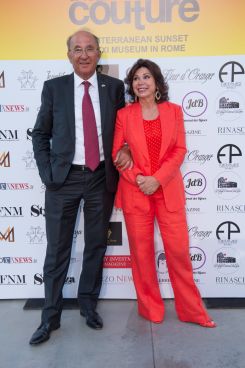
His collaborator, Maria Cristina, also lives to the rhythm of Lebanon, where she spent her childhood and teenage years. She studied up to eighth grade at the Franciscan school in Badaro. When the war broke out in 1975, she returned to Rome with her family. Now married and the mother of two children, she says: "One of my best memories of Lebanon is when my entire maternal family, the Chouchanis, used to gather in the summer in Aley to spend the holidays in my grandmother’s big house, Hanne Gemayel. In the evening, all around the big table — uncles, aunts, cousins — we would have dinner, chat, and play cards."
Maria Cristina returned to Lebanon this summer after fourteen years away, and the emotions were overwhelming. The images of her childhood and adolescence came flooding back as she visited her cousins and friends. Her attachment to her country of origin is very strong, and it is this feeling that led her to join the Italo-Lebanese Cultural Institute.
This article originally appeared in French on L'Orient-Le Jour.