








President Joseph Aoun participates in a joint press conference with French President Emmanuel Macron at the Élysée Palace in Paris, March 28, 2025. (Credit: Sarah Meyssonnier/Reuters)






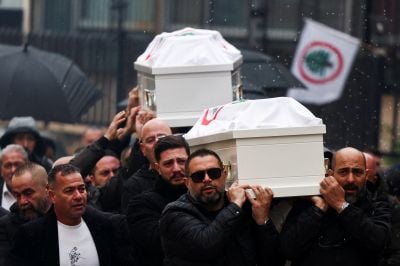
BEIRUT — President Joseph Aoun asserted again on Tuesday that the internal security situation was "under control," following a flare-up of sectarian tensions on Sunday triggered by an Israeli strike on Ain Saade, a Christian village northeast of Beirut.
He even stated that "anyone who tries to fuel a dynamic [of unrest], whether through social networks or the media, is a danger to Lebanon and commits acts worse than the Israeli attacks," which have killed more than 1,500 people in Lebanon since March 2. In this context, he called on people to put Lebanon's interests first.
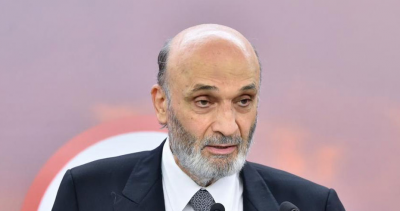
Aoun made these statements in front of a delegation from the "Beirut Forum," led by MP Fouad Makhzoumi. "The hand that will threaten civil peace will be cut off," the president said a week ago.
A deployment in Beirut
"The current security situation is under control and that there is no fear of sectarian unrest or internal security collapse. The incidents that occur remain limited and are dealt with quickly," added Aoun, as reported by the state-run National News Agency (NNA). "However, some seek to exploit the fear of sectarian unrest to serve their own interests," he continued, without directly accusing any group or individuals. "The current circumstances are different from those in the past: awareness is widespread among the population as well as among political and religious officials, because no one can tolerate internal unrest," he continued, affirming that the "responsibility for maintaining security within Lebanon, at this stage, is shared and requires full coordination between citizens, the army, security forces, and municipalities."
He emphasized that "the army has redeployed in Beirut and in several other regions and will strengthen its presence alongside the Internal Security Forces ISF) and other services, with stricter enforcement of security measures to reassure citizens who are safe in their homes." "During my term, I will not allow a citizen who remains in his village or locality to be accused of treason or collaboration simply because he chose to keep living there," he also assured.

"We must distinguish between the national interest and foreign interests, and our only salvation lies in the state," Aoun reiterated, who had indirectly called on Hezbollah to negotiate with Israel on Sunday to bring an end to the war. He indicated that "his negotiation initiative had received international support, as it is the right path to reach a solution, especially as Lebanon has already signed agreements with Israel, such as the armistice agreement and the maritime border agreement."
In March, Aoun had stated that his initiative for direct negotiations with Israel was still current, but that the ongoing military escalation had prevented its launch. On March 9, he called for direct negotiations with Israel under international aegis, as part of an initiative aimed at establishing a complete truce to stop all Israeli attacks against Lebanon. The initiative provides for logistical support for the Lebanese Army "to allow it to take control of the remaining tension zones, to confiscate weapons, and to dismantle Hezbollah's arsenal, warehouses, and depots."
Aoun concluded by stressing that "contacts are currently focusing on obtaining guarantees that the Masnaa border crossing, vital for both Lebanon and Syria, will not be targeted." The director general of General Security, Hussein Choucair, visited the Masnaa border post on the Lebanese-Syrian border on Monday.
Israel issued a threat on Saturday night to strike the route at that crossing, but has yet to act upon it. Israeli media reported that this request came from the United States.
After his meeting with the president, Makhzoumi presented his roadmap to maintain stability in Beirut. He notably called for an immediate meeting of the Supreme Defense Council, in order to "take exceptional security measures and raise the state of readiness to its maximum."
He subsequently requested the deployment of the army and security apparatus in Beirut, the control "of all tenants and occupants, without exception" and more regular inspections of empty apartments. "We also emphasized the need to implement the Beirut security plan that we proposed last March 25, and to place the capital under the full and entire authority of the state, as a fundamental condition for establishing stability — in other words, a Beirut free of all weapons," the MP declared.
'Increased security presence' throughout the regions
For his part, Interior Minister Ahmad Hajjar said Tuesday that security forces have stepped up deployment in several regions. After a meeting with Aoun, Hajjar said they were "working to ensure increased security presence in the regions." To this end, the president has "issued his directives to reassure the population and protect citizens," he specified, emphasizing that "the Lebanese have no shelter except within the framework of the state."

The minister also stressed the "essential role" municipalities must play in protecting citizens, and in coordination with the security services and the army. Many municipalities in the country are requesting to see rental contracts and are collecting information on any potential new tenants, as part of strengthened measures.
Regarding the closure of the Masnaa border crossing, Hajjar expressed hope that it would be "reopened soon." He also mentioned the issue of villages still inhabited in southern Lebanon, which are cut off from the rest of the country and on the front lines of ground fighting between Hezbollah and Israeli troops. "The president cares about these villages, whether they are Christian or not," he said.
"The security forces are on the side of those who are holding on," he assured, as the Lebanese Army withdrew some of its soldiers from there last week.
