










Dear reader,
The regional war sparked by the U.S.-Israeli offensive against Iran on Feb.28 shows no signs of abating – in fact, quite the opposite.
Bombing campaigns on Iran continue. On Sunday, oil depots in Tehran were targeted, while Iran continues to launch missiles and drones toward Gulf states hosting U.S. bases. Now in its ninth day, the conflict shows no signs of ending: Tehran claims it can keep fighting for “at least six more months” and says it has chosen Mojtaba Khamenei as the successor to Supreme Leader Ali Khamenei who was killed on the first day of the offensive.
In Lebanon, the past days have been marked by Israeli orders for mass evacuations in the south and Beirut’s southern suburbs, displacing hundreds of thousands of people.
In the night of Saturday into Sunday, an Israeli strike hit a hotel in Raouche, in the heart of Beirut, which according to Israel, targeted “senior commanders” from Quds Force.
Since Feb. 28, the news cycle has been relentless. Our teams continue to provide coverage of developments both regionally and in Lebanon. To help you make sense of it all, we offer in-depth reports, analyses, and explanations – produced by journalists rooted in the region, with perspectives shaped by firsthand knowledge of these realities.
Here is a selection.
L’Orient Today


What military capabilities does Hezbollah still have?

Following the assassination of Supreme Leader Ali Khamenei on the first day of the war between Iran, the U.S., and Israel, Hezbollah launched its first attack on Israeli territory in 15 months. Six rockets were fired at Israel on the night of March 1-2. Since then, Israeli strikes on Lebanon have multiplied. Hezbollah itself acknowledges the imbalance of power but insists it can hold its ground. Who can it count on now that its arsenal has dwindled since 2024? And what options does it really have in a conflict that seems far larger than itself? Analysis by Malek Jadah.
Neither 2006 nor 2024: What kind of war will Israel wage on Lebanon this time?

On March 5, Israeli army spokesperson Avichay Adraee ordered all residents of Beirut’s southern suburbs – a densely populated Hezbollah stronghold – to evacuate. This forced displacement has reignited fears of a return to the so-called “Dahiyeh Doctrine” employed during the July 2006 war, when heavy bombardment of public infrastructure in Beirut’s southern suburbs was used to pressure Hezbollah. During the 2024 conflict, while border villages near Israel were largely destroyed, U.S. intervention spared Beirut’s southern suburbs, favoring targeted strikes over widespread destruction. The question now looms: what will happen this time? Analysis by Salah Hijazi.
Five hours in the Bekaa: Inside the Israeli commando operation at Nabi Sheet

During the night of Friday, March 6, into Saturday, an Israeli commando unit infiltrated the Bekaa Valley to recover the body of a pilot captured in 1986 during an air raid, in Nabi Sheet. Deployed by helicopter, the Israeli special forces moved through the area in vehicles resembling those used by Hezbollah and the Lebanese army. After several hours, they were spotted, and clashes broke out. The operation ended tragically: 41 people were killed. The pilot’s body was not recovered. Story by Mounir Rabih.
What if Israel did not exist?

Since Hezbollah’s fired its first rockets at Israel on the night of March 1-2, Israeli strikes on Lebanon have intensified. Between the Israeli offensive, the fragility of the Lebanese state, and Hezbollah’s role, Anthony Samrani explores the political and collective responsibilities that have placed the country at the heart of this new conflict.
To die... for Khamenei
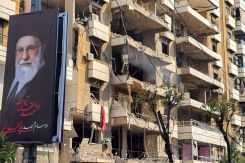
Lebanon didn’t choose this war. It was pulled in by decisions made beyond its institutions, shaped by broader regional dynamics. Rita Sassine analyzes how Hezbollah, loyal to its alliances, has dragged the country into an unequal conflict, and the challenges the Lebanese state faces in trying to regain control.

When will the Houthis join the war?

With Hezbollah weakened, Yemen’s Houthis have emerged as key players in the “axis of resistance.” Yet unlike at the start of the war in Gaza, the group has so far not entered the fight alongside Iran. Why? Analysis by Laure-Maïssa Farjallah.

The Gulf countries ‘are now allied in the face of a common threat’

Since the outbreak of the war between Iran, the U.S., and Israel on Saturday, Feb. 28, the Gulf monarchies seem caught between a rock and a hard place. Despite their efforts to remain on the sidelines, they face daily Iranian attacks, putting their reputation as havens of peace and stability at risk. Could their stance shift as the conflict continues to escalate? Noura Doukhi interviewed Faisal J. Abbas, editor-in-chief of Riyadh-based outlet Arab News.

Hydrocarbons, a deterrent factor in Trump's war against Iran?

Hydrocarbons are at the heart of the ongoing regional war in the Middle East. The closure of the Strait of Hormuz – which handles nearly 20 percent of global oil shipments – combined with the prospect of a prolonged conflict, is rattling markets. This is a particular concern for U.S. President Donald Trump ahead of the midterm elections in November. His aversion to negative economic fallout could push him to seek a quicker resolution to the conflict, potentially before Israel achieves its objectives. Explained by Laure-Maïssa Farjallah.

Mojtaba Khamenei, following in his father's footsteps
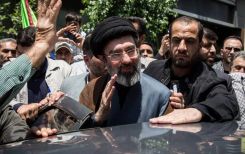
On March 5, Mojtaba Khamenei was appointed Iran’s new supreme leader. More than 40 years after the revolution, he is following in the footsteps of his father, Ali Khamenei, assassinated on Saturday, Feb. 28, the first day of the U.S.-Israeli war. Analysis by Tatiana Krotoff and Noura Doukhi.


 7 p.m. recap: 1 person killed near border with Lebanon; 200 kilos of explosives carried by mules; Riyadh shuts its airspace