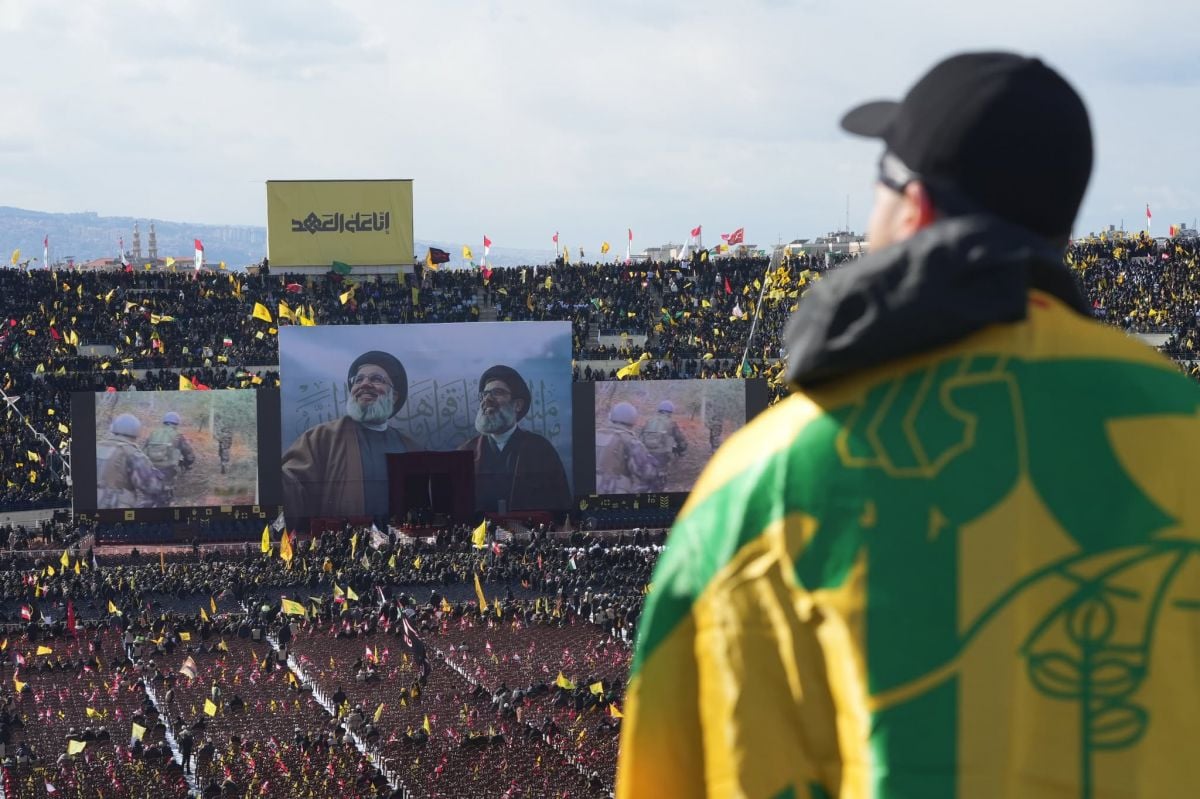
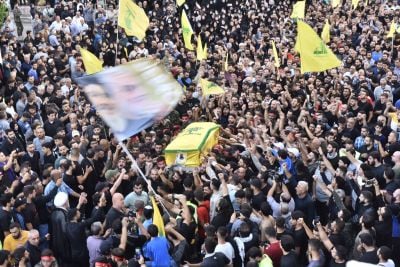
A man carrying the Hezbollah flag on his shoulders, on Feb. 23, 2025, at Beirut's Sports City Stadium, during the funeral of former Hezbollah leader Hassan Nasrallah. (Credit: Mohammad Yassine/L'Orient-Le Jour)






Hezbollah lives through its past lives and identities. It is a militia, an offshoot of the Islamic Republic. It is a political party representing the majority of the Shiite community in Lebanon. It is a social movement that operates schools, banks and charity associations to help its community.
Born in 1982, it was part of Iran's efforts to let the Islamic Revolution reach the broader region, and it landed in Lebanon, amid Israel's occupation. Because of this, Hezbollah has been able to exist in a gray area, between being an Iranian proxy and a "resistance movement," to build a legitimacy and following well beyond the supporters of the Islamic Republic.
Since south Lebanon's liberation from Israeli occupation in 2000, Hezbollah led Lebanon in three wars against Israel: 2006, 2024, and most recently, just a few days ago in 2026.
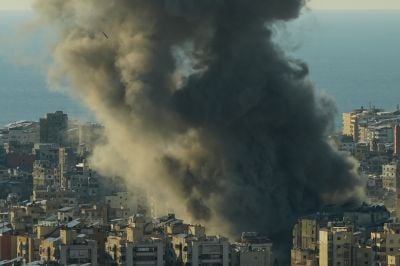
From the first, it emerged (politically) stronger. From the second, militarily weakened, and subject to international and local pressure to disarm.
Its third could be its last, as it and Iran fight another U.S.-Israeli escalation in the region and on their own home fronts.
To understand how the party evolved, changed the Shiite community and Lebanon's politics, and its past role as a leading regional player before losing everything, L’Orient Today highlights a series of articles from our archives.
History
Originally founded as an organization designed to serve as an alternative to the state, which it never recognized, Hezbollah made its way into all Lebanese state institutions and even became part of its leading teams.
In the first part of his retelling of Hezbollah's history, Mounir Rabih chronicles its beginnings and when Hezbollah first stepped into the Lebanese state.
In the second part, Rabih recounts what he describes as "Hezbollah's slow takeover of the Lebanese state."
Turning point
Beirut, Sept. 27, 2024, at 6:17 p.m. The walls shake. The southern suburb of the capital has just been struck by the largest Israeli attack since the 2006 war.
Over 900 kilos of U.S.-made munitions, 80 bombs, six residential buildings flattened and a country in shock.
Rumors begin spreading that Hezbollah Secretary-General Hassan Nasrallah could have been targeted by an unprecedented operation. It's not until the next day that the Israeli army, and then Hezbollah, confirm his death.
To Lebanese citizens, this means that the unimaginable has happened. Hassan Nasrallah is dead. A page turns. Look back at who he was, with Stéphanie Khouri.
In 2024, Israel booby-trapped pagers meant to go to Hezbollah members, killing 12 and injuring 2,323, marking a turning point in the party's history.
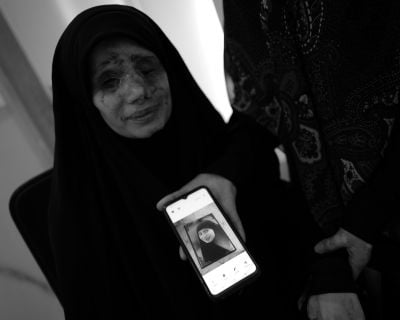
A year later, our reporters spoke to victims of the attack and chronicled how the party saw their recovery from injury as a new form of resistance.
Ideology
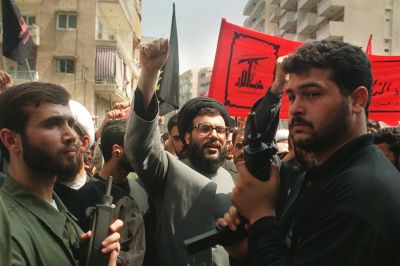
A product of Iran’s 1979 Islamic revolution, Hezbollah’s ideology is intrinsically associated with Shiite political Islam, the “velayat e-faqih” [or clerical rule] of Iran’s supreme leader. Martyrdom and “Islamic resistance” then became the party’s cornerstone.
Salah Hijazi dives into the party's culture of martyrdom.
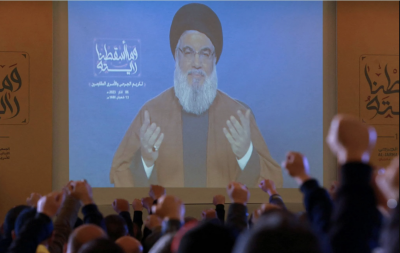
Hezbollah is often perceived by outsiders as an enigmatic, austere and closed organization. Inside the party, however, debate reigns and consultation is the norm — at least until the supreme leader speaks.
Jeanine Jalkh explains what democracy looks like within Hezbollah.
On Dec. 25, 1994, a law was passed in Iran banning satellite dishes, preventing three million viewers from watching international channels. Residents have a month to dismantle their antennas. Otherwise, members of the Basij, a paramilitary force, will be allowed to take action.
Through this measure, the Islamic Republic intends to contain "Western cultural invasion."
Three decades later, the method stretched beyond Iran’s borders. In the summer of 2023, Hezbollah launched an ideological attack against the LGBTQ+ community's "deviant culture."
Stéphanie Khouri revisited the origins of Hezbollah’s "culture war."
As part of its social standing, Hezbollah also runs 15 al-Mahdi schools, the first of which opened in 1993. These schools are managed by the Islamic Institution for Education and Teaching. Hezbollah’s official educational institution, founded in 1991, teaches Lebanon's standard curriculum with additions it sets.
Hezbollah and others
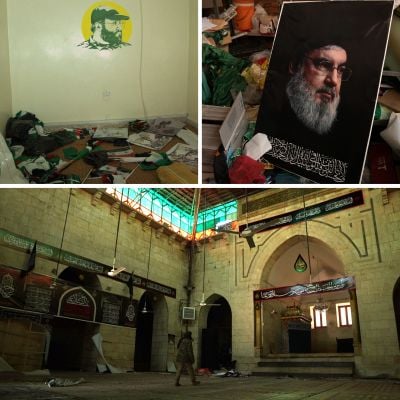
At the end of February 2025, Caroline Hayek and Lucile Wassermann set out with Ahmad Roumi in search of traces of Hezbollah's presence in Syria.
From Qousseir to Aleppo via the Idlib region, they found documents, weapons and drugs reflecting the methods of Iranian forces and their allied militias.
A year later, Hezbollah's ties with the Maduro regime were in the spotlight again.
Hezbollah's finances
Founded in 1983 and registered as a non-governmental organization since 1987, Hezbollah's al-Qard al-Hassan collects non-remunerated deposits, in dollars or Lebanese liras, according to Islamic teachings, in exchange for microloans.
But in 2025, after being targeted during the 2024 war, the institution began to show signs of financial difficulties. Mounir Younes explains how these could be a symbol of broader, party-wide difficulties.
This week, al-Qard al-Hassan was once again targeted by Israel.
In a 2022 investigation, L'Orient Today also recounted the roles the Assad regime in Syria and Hezbollah played in turning Lebanon into a regional hub for captagon trafficking.