






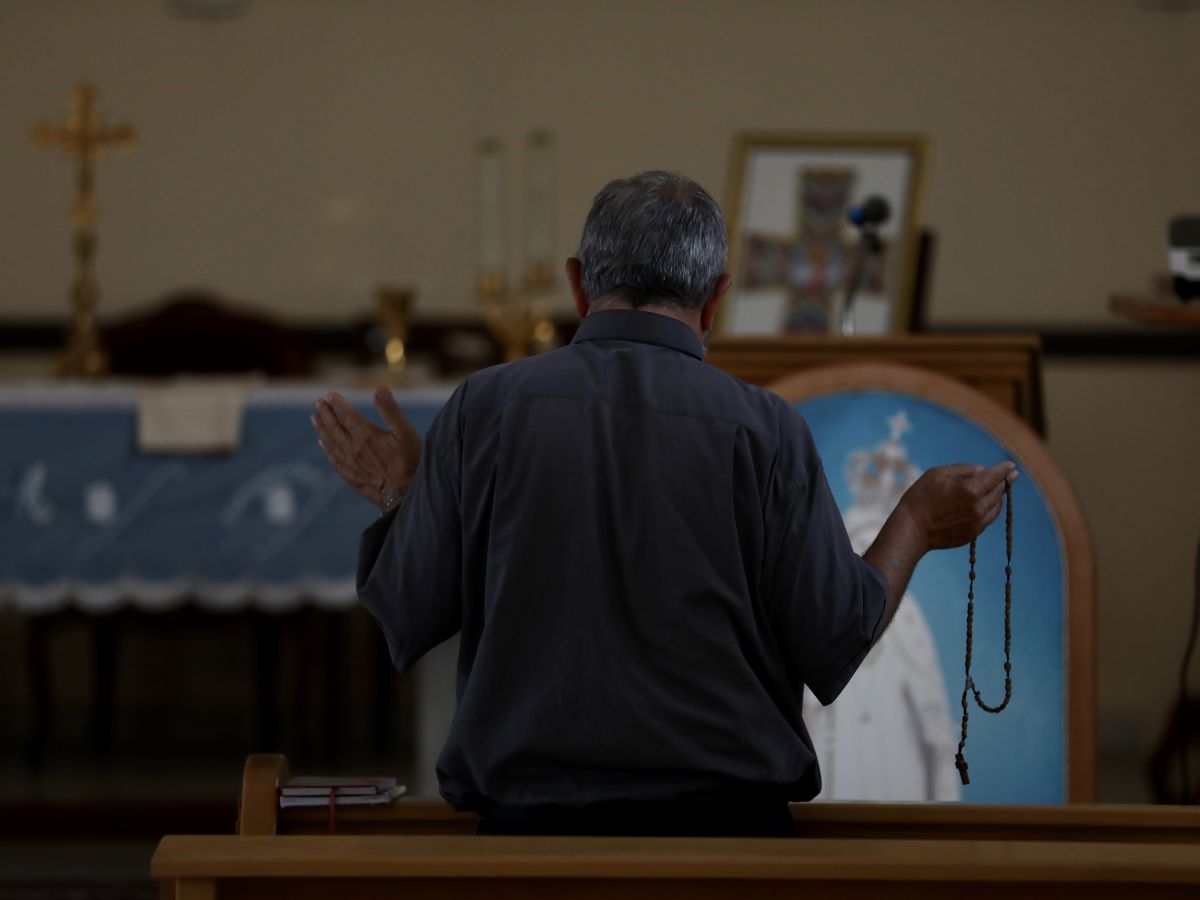
Alma al-Shaab's priest prays inside the Our Lady church in this Tyr district village on Nov. 5, 2025. (Credit: Matthieu Karam/L'Orient Today)






In the southern border village of Alma al-Shaab, the bells of Our Lady Church rang out late Monday night. Not for Mass, but in defiance.
After an evacuation threat issued by the Israeli army's Arabic-language spokesperson, Avichay Adraee, residents gathered in the church square at the center of town.
Instead of packing their cars, many stood shoulder to shoulder beneath the stone façade, insisting on staying, ringing the church's bell to alert their neighbors. A video of this incident soon went viral on social media platforms.
“We placed our faith in God and in our saints… we put our faith in Mar Elias, Mar Charbel, Jesus, and the Virgin Mary, and stayed,” Shadi Sayah, the mayor of Alma al-Shaab told L'Orient Today on Tuesday.
The warning was part of broader Israeli evacuation threats against the residents of some 30 villages in south Lebanon, including Alma al-Shaab, one of the few Christian towns in the district of Sour. So far, 122 villages have been the target of evacuation threats.
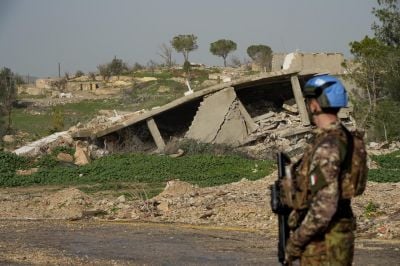
In the early hours of Monday, before dawn, Hezbollah fired several rockets and drones against Israel, in a show of support for Iran after the U.S.-Israeli offensive which began last Saturday.
Hezbollah's rocket launches prompted an immediate Israeli offensive onto Lebanon, with massive airstrikes and ground incursions in southern Lebanon, as the country was still reeling from the last 2024 devastating conflict.
'We are around 200 people in the town now'
As of the day before the warning, around 350 people were still in the village, Sayah told L’Orient Today. When the threats came, about 150 of them left.
“We are around 200 people in the town now,” he said. Those who departed included elderly residents who depend on medication and feared that if fighting intensified, they would not be able to access treatment. “It’s very hard,” Sayah explained. “It feels like choosing the lesser of two evils, remain in our town despite Israeli threats, or leave our homes, businesses and land.”
The mayor believes the Lebanese state is "not capable or protecting" his village. "The Lebanese Army cannot confront the might of the enemy."
He also voiced disappointment with the Vatican Church leadership. "When Pope Leo XIV visited Lebanon [at the end of 2025] he didn't come and check on the Christians of the south. We sent him a letter and he is supposed to have received it. Christ came for the sick and for the tired, and the Pope is the representative of Jesus. Why didn't he come to us and hear our concerns? We are the ones who are suffering in the same town where Jesus walked."
Among those standing in the church square Monday night was Wissam Khoury, a supermarket owner in the town. "We knew that if we left, we would not be able to return later," he said, fearing an Israeli occupation of the village.
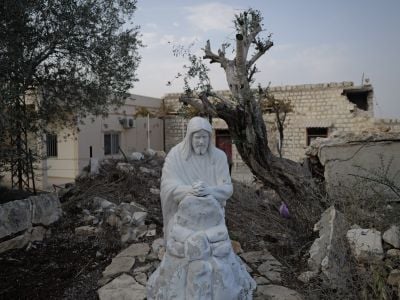
During the last war, Israeli troops entered the village and occupied several homes, installing artillery and other military infrastructure, before retreating after the cease-fire. Several buildings in the village have been heavily damaged.
Khoury said that the Lebanese Army, which maintains a position in the village, "initially intended to withdraw after the Israeli threats. We, the residents, blocked the road and demanded the army protect us. We rung the church bells to send a message: we are under the army’s protection. Calls were also made to religious and official figures in the state and we were ultimately allowed to remain."
At the time of publication of this article, the Lebanese Army is still stationed in the town.
The memory of 2024 still feels fresh. That year, most residents left; only four or five people stayed behind. "Those who left were humiliated for a year and a half, maybe two years," Khoury said. His house was partially damaged, and his business, a supermarket in the town, had to be rebuilt and rehabilitated at a cost of around $180,000.
The town priest 'made some calls'
"Our business in Alma and house is the only thing we have. I don’t have a house in Beirut," Solange Khoury, Wissam's wife, added. “The priest of the town made some calls to people in the state to keep us out of [the war]. We stayed on this basis,” Solange explained.
She remembers the July 2006 33-day war clearly. "That year, I was a new bride. We stayed for the first 17 days in Alma. We couldn’t get bread, medicine, anything. We were trapped." That experience pushed the family to leave in 2024, fearing they would be trapped again. "We would keep coming up and down to take our things, while we stayed at my family's house in Saida.”
Now, faced with another warning, her two daughters' reactions, aged 16 and 10, have changed. “During the last war, they wanted to leave,” she said. “This time, they don’t. They don't want to be displaced again."
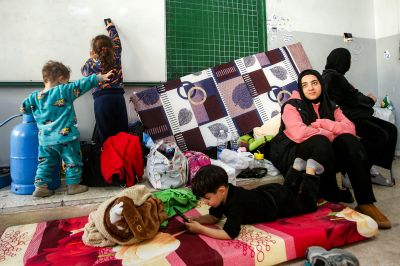
Since the start of the offensive, more than 58,000 people have been forcibly displaced, according to Lebanon's Health Ministry.

 8 p.m. recap: Israel again threatens Beirut’s south suburbs; 2 ships hit near Hormuz; Riyadh football matches canceled