











Although various political circles believe that holding the elections in May is far from certain, preparations are moving ahead at full speed, with particular attention on the Shiite political landscape.
In this context, the Shiite parliamentary seat in Jbeil carries significance for several reasons. First, it is located in a district where Shiite voters are a minority compared to Christians.
As a result, whoever secures this seat will partly owe their victory to an alliance with a Christian party, in order to ensure the electoral threshold for their list.
This seat is attracting particular interest from those seeking to challenge what they see as the grip of the Amal-Hezbollah alliance — especially Hezbollah — over the Shiite community’s representation in the next Parliament.
A first breakthrough would be highly symbolic: it could break a long-standing taboo and potentially pave the way for similar shifts elsewhere. In that sense, any weakening of Hezbollah’s dominance over the Shiite political scene could begin in Jbeil.
This is all the more relevant as, amid mounting internal and external pressure, Christian parties currently appear reluctant to form electoral alliances with Hezbollah, even for purely pragmatic electoral purposes.
It is precisely to avoid these pitfalls that former General Security Chief Abbas Ibrahim is considering running in Jbeil in the upcoming parliamentary elections.
Although he has not yet taken the step, partly due to uncertainty surrounding a possible postponement of the vote, Ibrahim has, according to people close to him, carefully studied the political landscape before potentially choosing to run in Jbeil, despite being originally from southern Lebanon.
Sources close to him say he believes southern seats should remain with candidates from the Amal-Hezbollah alliance, given the symbolic significance of the region. Moreover, in southern constituencies, where Shiite voters form the majority, Amal and Hezbollah can secure seats without needing electoral alliances.
The Jbeil constituency also carries symbolic weight, as it lies at the heart of what has traditionally been referred to as the “Christian heartland,” while simultaneously representing a longstanding model of coexistence between Maronite and Shiite communities.
This is precisely why Ibrahim is considering launching his candidacy there. Through his various roles within the state, he has forged what his close circle describes as “deep ties” with the country’s different components.
In this context, he is believed to be weighing the possibility of running on a Free Patriotic Movement (FPM) list in the district while still attracting a significant share of Shiite votes, estimated at around 10,000 in the constituency.
Such a move could also benefit the FPM, sparing it the need to formally ally with the Amal and Hezbollah in Jbeil while still allowing its list to capitalize on Shiite votes and potentially secure additional seats.
But how could Ibrahim persuade Amal — particularly Parliament Speaker Nabih Berri — and Hezbollah to back his candidacy, when both parties insist they intend to retain the same candidates as in the 2022 elections, including in Jbeil?
According to sources close to both parties, they are keen to avoid repeating the 2018 scenario, when a Shiite candidate outside the alliance, Mostafa Husseini, managed to win the seat by fewer than 300 votes.
According to sources close to Ibrahim, these questions could be resolved through discussions currently taking place behind the scenes. This appears all the more plausible given that relations between the FPM, Hezbollah and Amal are not marked by hostility, even if no formal agreement has yet been reached.
In fact, the FPM remains the Christian-majority party closest to the alliance.
Ibrahim’s candidacy could, according to his entourage, represent “an honorable way out” for all parties involved, particularly as his profile enjoys significant international respect due to the mediation roles he carried out during his tenure in office.
Still, if his candidacy is confirmed and he is elected, would this be seen as a breach in the duo’s grip over Shiite representation? Those close to Ibrahim insist that his positions “are clear” and guided primarily by “his attachment to his country.” They also stress that, if elected, he has no intention of running for Parliament speaker as long as Berri remains in the race.
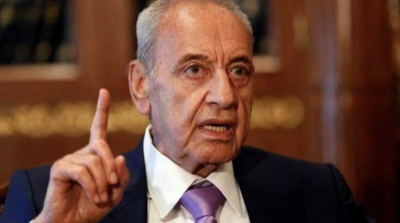
Berri, for his part, appears more determined than ever to contest the elections and was the first to officially announce his candidacy.
Yet beyond electoral trends and voter sentiment, the real question remains: will the elections take place on schedule?
This article was published in L'Orient-Le Jour and translated by Sahar Ghossoub.

 Evening recap: Netanyahu announces West Bank offensive; 7 killed in Jordan church shooting; tents burned in south Lebanon
 US strike on Iran this weekend? ‘Absolutely,’ says Barrack; ‘I have no idea,’ says Trump