







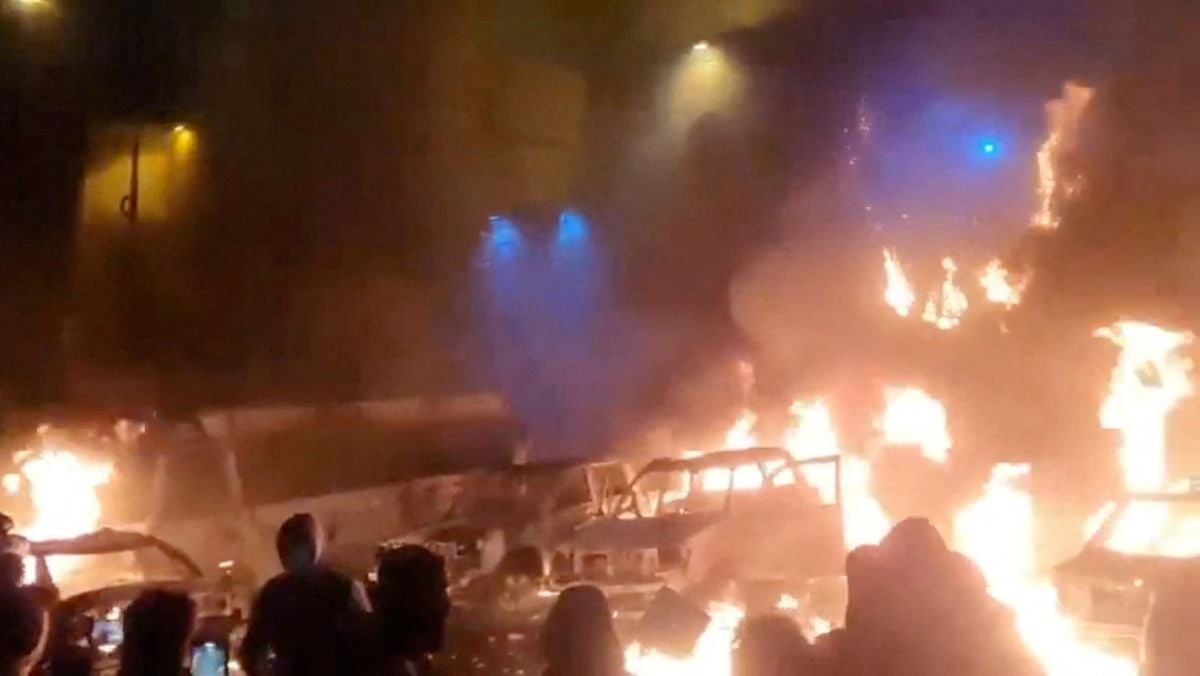
Vehicles on fire during a protest in Tehran, Jan. 9, 2026. (Credit: Social Media/via Reuters)






Iranian cities erupted in protest Thursday night, as demonstrations spread from Tehran to Mashhad and Tabriz, with thousands calling for an end to the current authorities' rule.
What began as relatively calm protests 12 days ago over the rial's devaluation escalated into clashes with security forces, the burning of government buildings and a nationwide internet blackout.
From Washington, U.S. President Donald Trump threatened to strike Iran if its government targets protesters. “I have let [Iran] know that if they start killing people, which they tend to do during their riots… we’re going to hit them very hard,” he said in an interview with conservative radio host Hugh Hewitt, quoted by Times of Israel.

At least 45 protesters, including eight minors, have been killed since the unrest began, according to figures released Thursday by Norway-based Iran Human Rights (IHR), which said hundreds have been wounded and more than 2,000 arrested.
Iranian authorities and state media have reported at least 21 deaths, including members of the security forces, according to an AFP tally.
Here is a look back at Thursday night's events:
Protests in about 50 cities
Since the movement began on Dec. 28 in Tehran, rallies have been held in at least 50 cities across 25 of Iran’s 31 provinces, according to an AFP tally based on official statements and media reports.
In Tehran, a large demonstration began in the evening. Protesters, on foot and in cars honking their horns, flooded a major road in the capital, according to videos posted on social media and verified by AFP.
A Tehran resident told The New York Times that crowds chanted “Death to Khamenei,” referring to Supreme Leader Ayatollah Ali Khamenei, as well as “Freedom, freedom.” Others called for the return of the Pahlavi family, which ruled Iran before the 1979 revolution.

In several cities, protesters tore down official flags and replaced them with flags used before the Islamic Revolution.
Persian-language television channels based outside Iran and other media reported large demonstrations in cities including Tabriz in the north, the holy city of Mashhad in the east, Bushehr in the south, as well as Shiraz and Isfahan.
Protests turn violent
The demonstrations, which began peacefully in the early evening, quickly turned violent, according to witnesses cited by The New York Times and videos verified by multiple media outlets.
“The crackdown is expanding and becoming more violent every day,” said Mahmood Amiry-Moghaddam, director of IHR.
NGOs reported the use of tear gas in several locations, as well as live ammunition. Amnesty International said Iranian security forces have injured and killed both protesters and bystanders.
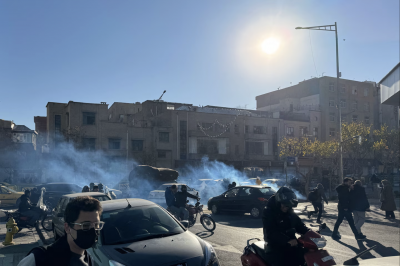
Videos filmed Thursday night showed government buildings on fire across the country, including in Tehran, where protesters also torched cars, according to footage verified by the BBC.
Another video verified by The New York Times showed fires burning in the streets around Kaj Square in Tehran as thousands of protesters filled the area.
In the Sadeghieh neighborhood, security forces fired shots into the air and launched tear gas, but failed to disperse the crowd.
In Karaj, west of the capital, demonstrators fled after gunfire was heard, though the source was unclear, according to other footage.
In Bushehr, a resident told the U.S. daily that security forces were forced to retreat in the face of massive crowds.
Several videos circulating online referred to “massacres” of dozens of protesters, but some users shared the same footage of bodies on the ground while claiming it showed different cities hundreds of kilometers apart, including Karaj and Tabriz. These claims could not be independently verified.
Revolutionary Guards may intervene
As tensions rose, a senior Iranian government official, speaking anonymously to The New York Times, said many officials were privately calling and texting one another, "at a loss for how to contain the avalanche of protests."
He said the Revolutionary Guards Corps, typically in charge of securing Iran’s borders, not internal security, would likely take over the situation.
Nationwide internet blackout
Authorities cut internet access across Iran on Thursday night, according to monitoring groups, a day after judiciary and security officials warned of harsh measures against protesters.
Data from NetBlocks and the Internet Outage Detection and Analysis database at Georgia Tech showed a sharp, near-total drop in connectivity beginning in the afternoon, indicating the country was almost entirely offline.
Iranian authorities did not immediately explain the outage. The government had repeatedly imposed internet blackouts during previous crises.
“The Iranian government uses internet outages as a tool of repression,” said Omid Memarian, an Iranian human rights expert and senior researcher at DAWN, a Washington-based organization. “Whenever protests reach a critical point, authorities cut connections to isolate protesters and limit communication with the outside world.”

 8 p.m. recap: Israel again threatens Beirut’s south suburbs; 2 ships hit near Hormuz; Riyadh football matches canceled