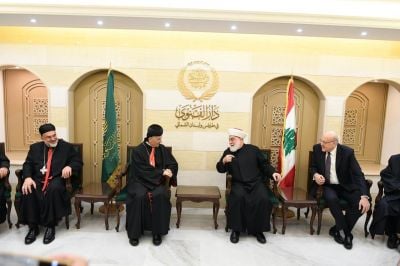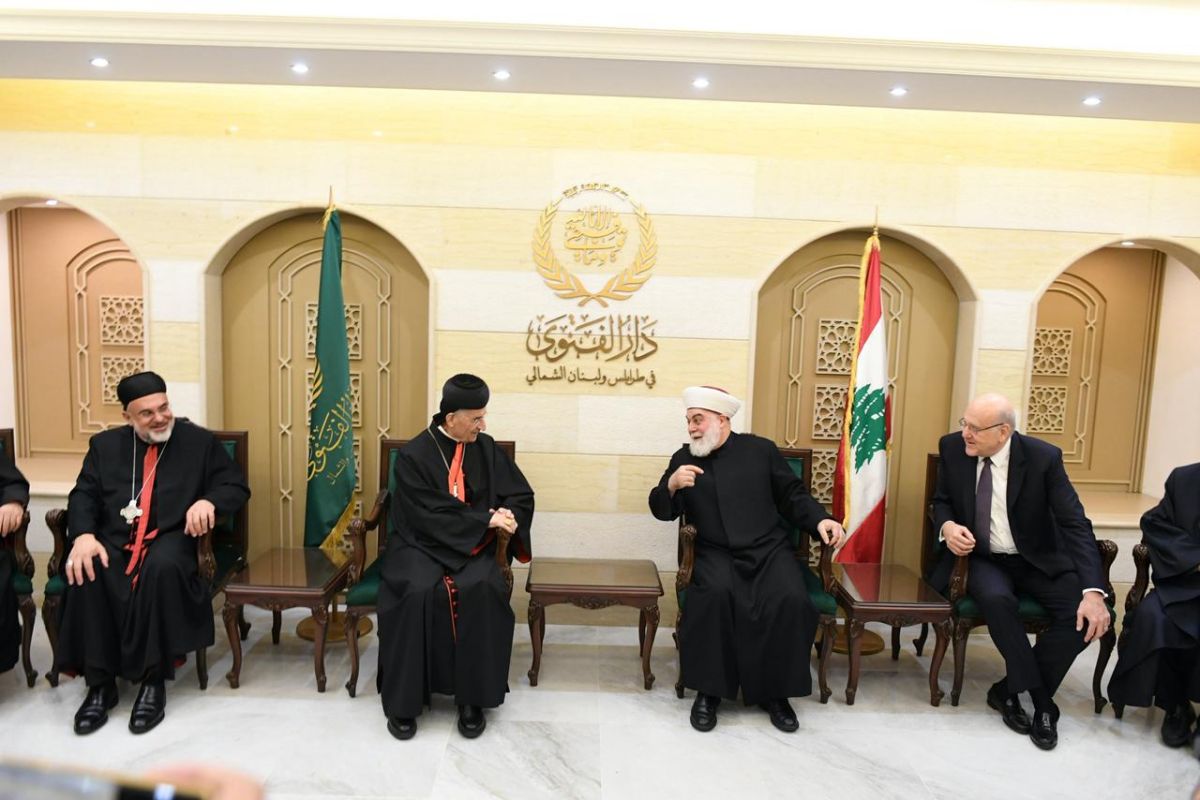
Maronite Patriarch Bechara al-Rai and the Mufti of Tripoli, Sheikh Mohammad Imam, at Dar al-Fatwa, in Tripoli, on Dec. 20, 2025. (Credit: X/Maronite Patriarchate)






“Tripoli is the city of peace.” This is the message that stood at the heart of what Maronite Patriarch Bechara al-Rai sought to convey during his visit on Saturday to the capital of North Lebanon, a Sunni-majority city in Lebanon.
Such a step is very rare for the head of the Maronite Church, whose last visit to the city dates back to August 2013, in the aftermath of twin bombings that struck local mosques.
Rai is the first Maronite patriarch to visit Dar al-Fatwa in Tripoli, the city’s highest Sunni religious authority.
He chose to make this visit amid a tense political climate marked by polarization over Hezbollah’s weapons and at a time when religious rhetoric is becoming increasingly common.
Through this visit, the patriarch aimed to affirm Tripoli’s image as a model of coexistence between Christians and Muslims, only weeks after Pope Leo XIV’s visit, which also focused on this theme.
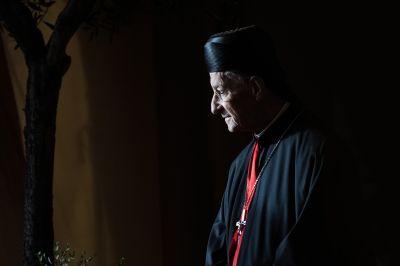
“The meetings held by Patriarch Rai in Tripoli follow on from the Holy Father’s visit, which called for peace,” Maronite Archbishop of Tripoli Youssef Sweif, who had invited Rai, told L’Orient-Le Jour.
“He stressed the importance of peace and the need to enshrine the idea of Lebanon as a message,” he added. Hence, the decision was made to visit Dar al-Fatwa in Tripoli after stopping at the Maronite archbishopric.
“This marks the most important stop of Saturday’s program,” said Tripoli MPAshraf Rifi. He attended the meeting alongside fellow MPs, where Rai met the city’s mufti, Sheikh Mohammad Imam.
The meeting was followed by a luncheon at the headquarters of the Order of Engineers and Architects.
This allowed the mufti to praise the patriarch’s approach, which he said focuses on openness and solidarity to help the country emerge from its crises. “Those who raise sectarian slogans run against the course of history,” the mufti added.
For his part, the patriarch stressed Lebanon’s need to live in peace. “Each of us bears responsibility for peace. In Tripoli, we can speak only this language,” he said.
“After the Holy Father’s visit to Lebanon, talk no longer centers on war but on negotiations and peace. We pray that Lebanon and the region may live in peace. These words may sound bold, but they ring true. The region will know no peace before peace takes hold in Lebanon,” the Maronite patriarch said.
His remarks came weeks after Beirut decided to appoint former diplomat Simon Karam as the state’s civilian representative in the ongoing negotiations with Israel.
“Our message to the ruling class was clear. Religious authorities stand united and understand the challenges facing Lebanon. They therefore work to preserve the Lebanese model at all costs,” said Bilal Baroudi, head of the endowments in Tripoli
‘A message to Hezbollah’?
But while religious institutions believe that the visit has no political overtones, not everyone shares this view.
“Patriarch Rai’s visit broke the blockade imposed on the city by [former Syrian President] Bashar al-Assad’s regime on the one hand, and Iran and Hezbollah on the other,” Rifi told L’Orient-Le Jour. He thanked the head of the Maronite Church for “putting the city back on Lebanon’s map and affirming its commitment to the rule of law and coexistence.”
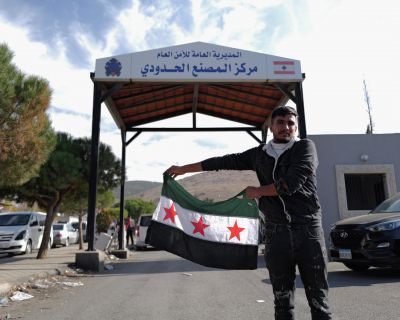
“This is the political line of the Sunnis. It is the opposite of what Hezbollah wants to impose on us,” he said.
In this vein, it was rumored that there were representatives of the Alawite minority (to which Assad belongs) to welcome the patriarch in Tripoli. However, a source in Tripoli denied these reports, confirming that representatives of the community, including MP Haidar Nasser, were present, “despite interference from allies of the former [Syrian] regime and remnants of the Ba’ath Party in the city.”
This article was originally published in L'Orient-Le Jour and translated by Joelle El-Khoury.