












While Egyptian Prime Minister Mostafa Madbouly’s visit to Beirut at the head of a large ministerial delegation is primarily aimed at signing economic agreements, fears of an escalation between Lebanon and Israel, and the fate of negotiations under the cease-fire monitoring “mechanism,” have dominated discussions.
This is particularly true amid what has been described, perhaps prematurely, as an Egyptian initiative to ease tensions between Lebanon and Israel. Lebanese officials and political actors say the effort amounts more to a set of ideas than to a fully developed plan.
Hezbollah, which is directly concerned by the Egyptian outreach, says two separate proposals were conveyed: one by Egyptian intelligence chief Hassan Rashad and another by Foreign Minister Badr Abdelatty. While broadly similar, the proposals differed in key details.

According to sources close to the group, Rashad’s proposal consisted of three points. First, the Lebanese Army would announce that there were no Hezbollah weapons or infrastructure south of the Litani River.
Second, Hezbollah would declare that it had no intention of launching attacks against Israel. Third, there would be a “freeze” on weapons, which would be placed under army control pending further talks aimed at reaching a clear and sustainable agreement.
During his visit to Beirut, Rashad did not meet directly with Hezbollah representatives but relayed his ideas through intermediaries, including Parliament Speaker Nabih Berri. The proposal was rejected, sources close to Hezbollah said, as unacceptable.
Abdelatty later visited Lebanon to present what he described as an “improved” and more “acceptable” version. Under the revised ideas, however, the proposed demilitarized zone would extend north to the Awali River. Hezbollah would also be required to commit to refraining from any attacks against Israel before negotiations between the two countries begin. Those talks would be held in Cairo under Egyptian auspices.
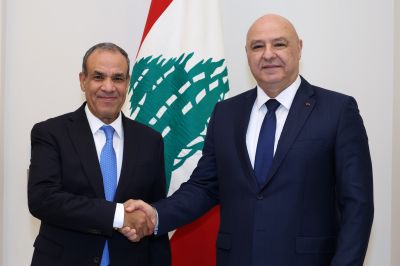
According to Lebanese officials, Abdelatty told his counterparts that Egypt fears Israel could launch a large-scale offensive against Lebanon and that the proposal was intended to avert such a scenario.
He also cited information suggesting Israel is determined to launch a new war against Iran and is seeking first to neutralize Hezbollah in Lebanon and the Houthis in Yemen to avoid fighting on multiple fronts.
Abdelatty urged Lebanese leaders to take Israeli threats seriously and said every effort should be made to spare Lebanon.
The information was relayed to Hezbollah, which has yet to issue a formal response. Sources in the group’s orbit say Hezbollah is skeptical that Israel is preparing for a major attack, arguing that Israeli threats alone have so far allowed Israel to extract concessions without resorting to large-scale military action.
Even so, the group believes Israel’s leadership is seeking to exploit the current climate to advance its broader strategic objectives. As a result, Hezbollah considers reports of a possible expansion of the confrontation to be plausible.
Through intermediaries, Hezbollah informed Egyptian officials that it takes their ideas seriously but that further discussion is needed. This led to talk of a possible invitation for Hezbollah representatives to travel to Cairo.
For now, sources close to the group say the idea remains under consideration. Discussions are ongoing with Berri, who may himself travel to Cairo to present Amal and Hezbollah's position.
Arab diplomatic sources say Egypt’s interest in Lebanon reflects both its desire to assert itself as a key Arab and Muslim regional power and its coordination with Saudi Arabia, which prefers to operate discreetly on some regional files.
However, diplomats say Egypt’s primary motivation lies in its assessment that the Lebanese front is closely linked to developments in Gaza. Officials believe that a wider confrontation in Lebanon would likely trigger the collapse of the cease-fire in Gaza.
Cairo also views developments in Gaza as directly affecting Egyptian security, particularly amid fears that Israel could seek to push Gazans into the Sinai Peninsula. Egyptian officials see such a scenario as a political and demographic threat and warn it could provide Israel with a pretext to strike Sinai, undermining Egyptian sovereignty.
In that context, Egyptian officials believe Israel is seeking to establish a new demilitarized zone that would expand its influence in the region, including over Egypt.
For these reasons, regional diplomats say there may be growing convergence of interests among Egypt, Jordan, Syria and Lebanon — and possibly Saudi Arabia — despite years of disagreements and rivalry.