






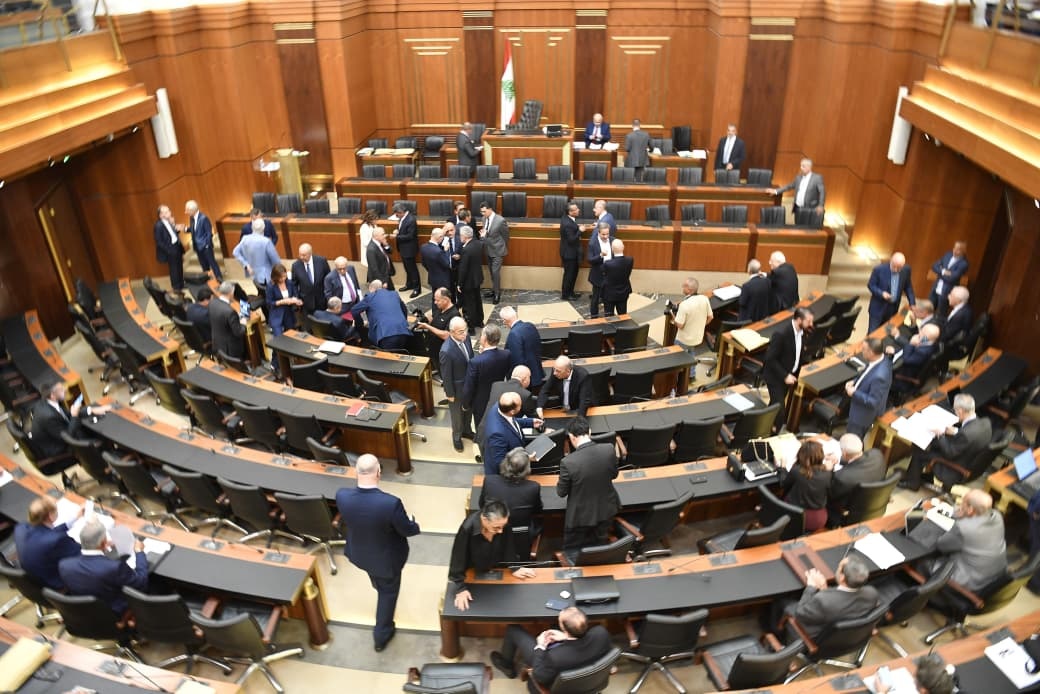
MPs in Parliament during a heated parliamentary session, in Beirut, on Sept. 29, 2025. (Photo: Mohammad Yassin/L'Orient-Le Jour)






The Lebanese Forces (LF) and Kataeb announced Tuesday their decision to boycott the plenary session called by Speaker Nabih Berri and scheduled for 11 a.m. on Thursday Dec. 18.
In doing so they cited Berri's repeated refusal to include the proposed amendment to the electoral law that would allow expatriates to vote for all 128 seats in Parliament during the upcoming parliamentary elections.
"Once again, the Speaker of Parliament has demonstrated his disrespect for the will of a majority of MPs," said the LF statement. The statement also noted that, beyond the MPs' proposed law, the government had submitted a draft law with double urgency status to freeze the clause stipulating that expatriates must vote for six specific deputies, but circumvented it by sending the draft to committee until the deadline for review expired. Parliamentary elections are scheduled for May 2026.
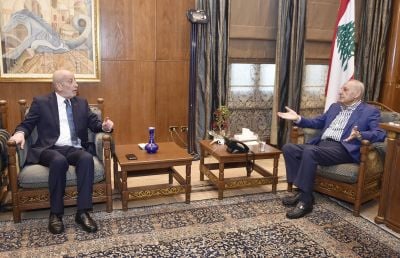
"Since Berri continues to overstep the rules of the legislature and shows his disdain for the will of a majority of MPs, the Strong Republic bloc has decided not to attend this parliamentary session, with the aim of setting things right in Parliament," the statement added.
In its own statement, the Kataeb Party also announced it "will not participate in the session due to the fact that the draft law with double urgency status, which would allow expatriates to vote for all MPs, is still not on the agenda, even though it is a constitutional right that must be upheld."
The Dec. 18 session is expected to be an opportunity to resume consideration of the agenda started on Sept. 29, before the session was aborted due to a lack of quorum caused by the anti-Hezbollah bloc, which is demanding a debate on the expatriate vote for the 2026 legislative elections. Berri has twice attempted to reconvene Parliament, but a majority of MPs failed to attend, resulting in the session being adjourned. A similar scenario is likely to recur Thursday.
The issue of expatriates' rights to vote for all 128 MPs according to their original constituencies has divided the country for several months. The current law provides for six specific MPs for expatriates, but no executive measures are in place to implement this clause. The main opponents to the amendment are the Shiite duo and the Free Patriotic Movement.
The blocs pressing for the amendment, including the LF, Kataeb and others, suspect the others fear the expatriate vote.

