






One of the downtown Beirut streets where Solidere has removed some of the urban planning elements it had previously installed. (Credit: Photo released by Solidere)






BEIRUT — Solidere, the Lebanese company tasked with the reconstruction and development of downtown Beirut after the war, announced Sunday that it has removed all concrete barriers, large flower boxes and other obstacles that were hindering the movement of vehicles and pedestrians from several streets in the capital.
The affected thoroughfares are: Weygand; Allenby; Foch; Patriarch Hoayek; Gebran Tueni; Omar Daouk; Emir Fakhreddine; Adnan Hakim; Faouzi Daouk; Wafic Sinno; Chafic Wazzan; Emir Majid Arslane; Georges Haddad; Mgr Chébli; Bachir Gemayel; State of Kuwait; Raymond Eddeh.
Work will soon continue on avenue Fouad Shehab, Riad Solh Street, Emir Bachir Street, and rue des Capucins, before finally extending to some main roads along the waterfront, with the aim of improving access and circulation throughout the area.
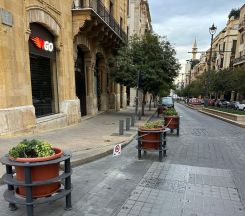
The initiative was launched "under the directives of Prime Minister Nawaf Salam and the supervision of Beirut Governor Marwan Abboud, in full compliance with the master plan designed to turn the center into an open space, with interconnected streets allowing for smooth circulation at the heart of the capital and toward neighboring areas," according to a statement published for the occasion.
The prime minister laid the foundation stone Tuesday for Rafic Hariri Garden on the Beirut waterfront, which is set to become "the largest park in the capital."
Solidere's initial mandate was set to end in 2019, but a decree extended it by ten years.

 Evening recap: Netanyahu announces West Bank offensive; 7 killed in Jordan church shooting; tents burned in south Lebanon
 US strike on Iran this weekend? ‘Absolutely,’ says Barrack; ‘I have no idea,’ says Trump