


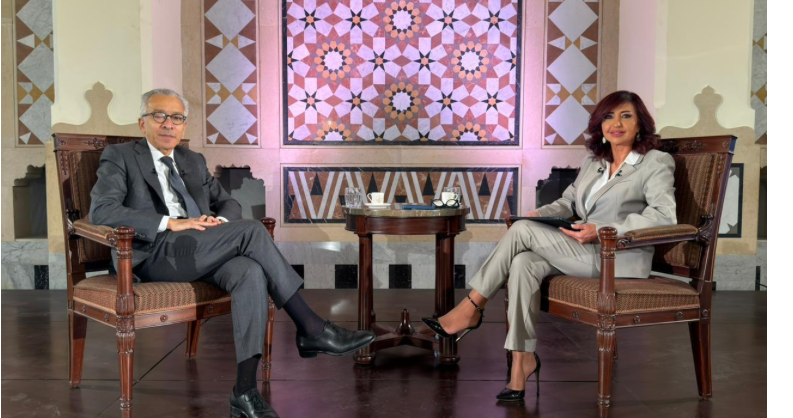
Minister of Economy Amer Bisat during an interview with Tele-Liban. (Credit: NNA)






BEIRUT — Lebanon must shift from a rentier, consumption-driven and import-dependent economy to a productive, investment-led model capable of competing internationally, Economy Minister Amer Bisat said in an interview with Tele-Liban, cited by the state-run National News Agency (NNA) on Wednesday.
The call echoes warnings repeatedly voiced during former President Michel Aoun’s tenure, which were never implemented before Lebanon’s 2019 economic collapse.
Bisat said that “85 percent of what Lebanese consume is imported, while exports do not exceed 3 billion dollars annually, which necessitates a fundamental change in the structure of the economy," noting that the "fundamental question remains in defining the comprehensive economic vision from which Lebanon must proceed.”
Bisat added that Lebanon has the assets needed to achieve such a vision, “including human capital, natural resources, a strategic geographic location, and the potential of its diaspora ... The country has historically been capable of far better outcomes than what is seen today. But realizing this requires addressing challenges and launching serious reforms.”
He emphasized that reforms must be comprehensive, covering all sectors. “Work must proceed simultaneously on electricity, telecommunications, infrastructure, roads, institutions and reconstruction,” Bisat said.
Calls to transition from a rentier to a productive economy have been longstanding in Lebanese politics but have rarely translated into action. Former Prime Minister Najib Mikati’s 2021 ministerial statement advocated supporting all productive sectors to move away from a rentier economy and achieve social justice. During his presidency, Michel Aoun similarly pledged to move Lebanon toward a productive economy.
Beirut One offers renewed optimism, though commitments remain absent
On the Beirut One investment conference held last month, Bisat said the event demonstrated “Arab willingness to re-engage economically with Lebanon.” He added that the government plans to follow up directly on the conference outcomes through preparatory meetings ahead of Beirut Two in 2026, linking each milestone to the implementation of agreed reforms.

The two-day Beirut One conference, organized by the Economy Ministry and the Economic, Social and Environmental Council, brought together international business leaders, government officials, economic institutions, and Gulf delegations to attract investment capital. Held on Nov. 18-1, it was Lebanon’s first major investment event since the country’s economic collapse six years ago.
Regarding the silos at Beirut Port, destroyed in the 2020 explosion, Bisat said rebuilding them is “extremely difficult at the moment.” He stressed they are not at risk of collapsing but do require work to mitigate environmental hazards from rotten and fermented wheat. A committee, chaired by Bisat and including several ministers, has been appointed by Prime Minister Nawaf Salam to oversee preservation of the silos as a memorial to the explosion’s victims.

 7 p.m. recap: Sharaa in Riyadh; Qassem signals openness to cooperation; Ben-Gvir: ‘We demolish, again and again’