


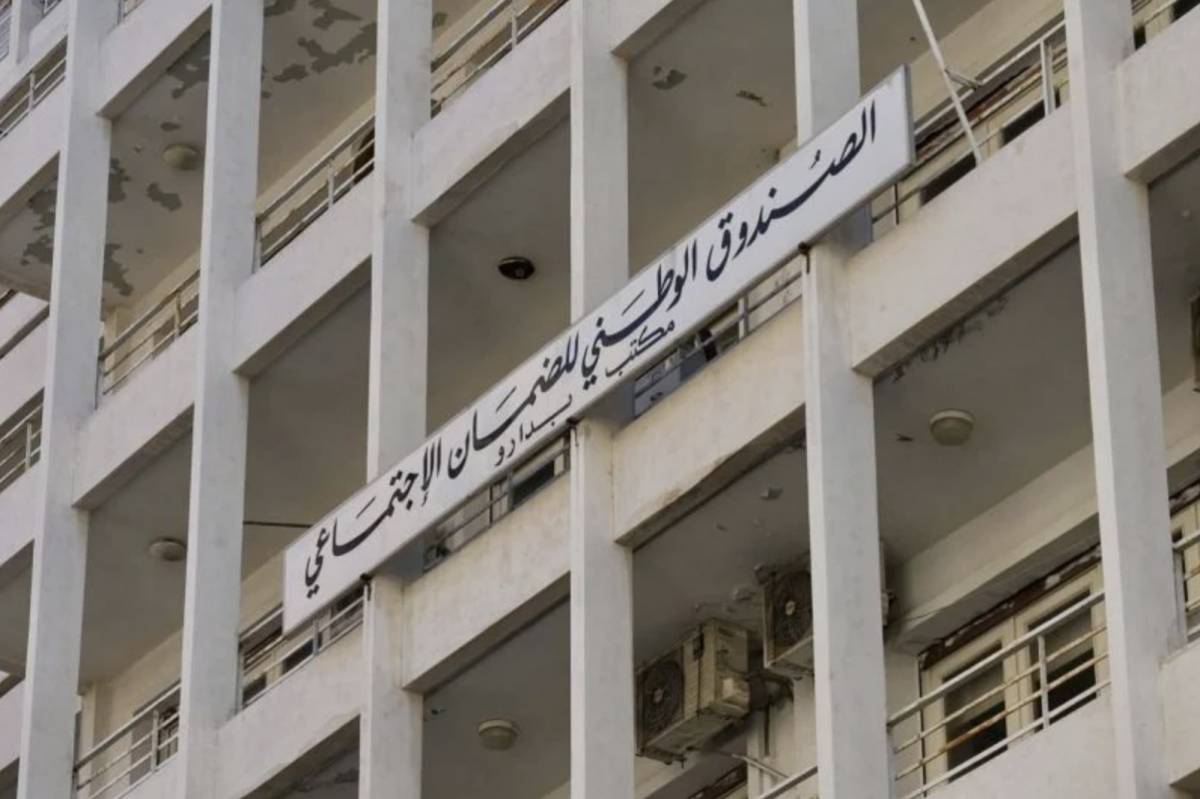
The National Social Security Fund (NSSF) in Beirut, in September 2023. (Credit: Mohammad Yassine)






BEIRUT — The National Social Security Fund (NSSF) announced in a statement on Wednesday that its Inspection and Monitoring Directorate has completed field audits of two institutions that violated NSSF laws and regulations, particularly regarding the non-payment of contributions, one of which was charged 151 million LBP ($1,687), and regarding the registration of fictitious employees.
“As part of its efforts to enhance transparency and reinforce the principles of good governance, the Fund’s management, through its relevant directorates, continues to follow up on various files related to the rights of insured members and the compliance of institutions with applicable laws,, reads the statement relayed by the state-run National News Agency (NNA).
"This comes within a reform plan overseen by the Director-General of the Fund, Mohammad Karaki, aimed at protecting the Fund’s assets and ensuring fair and effective services for all beneficiaries.”
According to the NSSF, the first institution had 42 fictitious workers and the second had three, "all registered ... without performing any actual work, while benefiting unjustly from the Fund’s health and social services, an act considered aggravated theft punishable by law.”
The Fund added that its Legal Affairs Department filed on Nov. 25 two complaints before the Financial Public Prosecutor against the owners of the two companies and all fictitious employees, on charges of "unlawful benefit and squandering public funds", in addition to "prosecuting anyone found by the investigations to be a perpetrator, partner, or accomplice in these violations."
On another note, it stated that regarding the Bteghrin office case, which refers to a well-organized network involving employees at the Bteghrin office revealed earlier this year, Karaki noted that judge Nada Al-Asmar issued an indictment on Nov. 25 and ordered the prosecution of the defendants Liliane Al-Sayegh and Layla Abdel Nour before the Mount Lebanon Criminal Court.
The Bteghrin office employees were, along with outside accomplices, fabricated fake medical invoices under the names of insured individuals and unlawfully collecting the resulting payments.
Companies contribute to the NSSF for registered employees, who can then benefit from reimbursements for certain medical procedures and end-of-service indemnities. Since the start of the economic crisis in Lebanon in 2019, the coverage rate collapsed at the same pace as the Lebanese Lira against the dollar, then began to recover from 2022.
By mid-April, the NSSF claimed that the coverage of drug prices and hospital rates had returned to their pre-crisis level, amounting to 80 percent and 90 percent, respectively.

 7 p.m. recap: Netanyahu seeks mastermind behind Flydubai incident; Washington sanctions 2 French nationals; Ben Gvir's 'I want to kill you' threat