






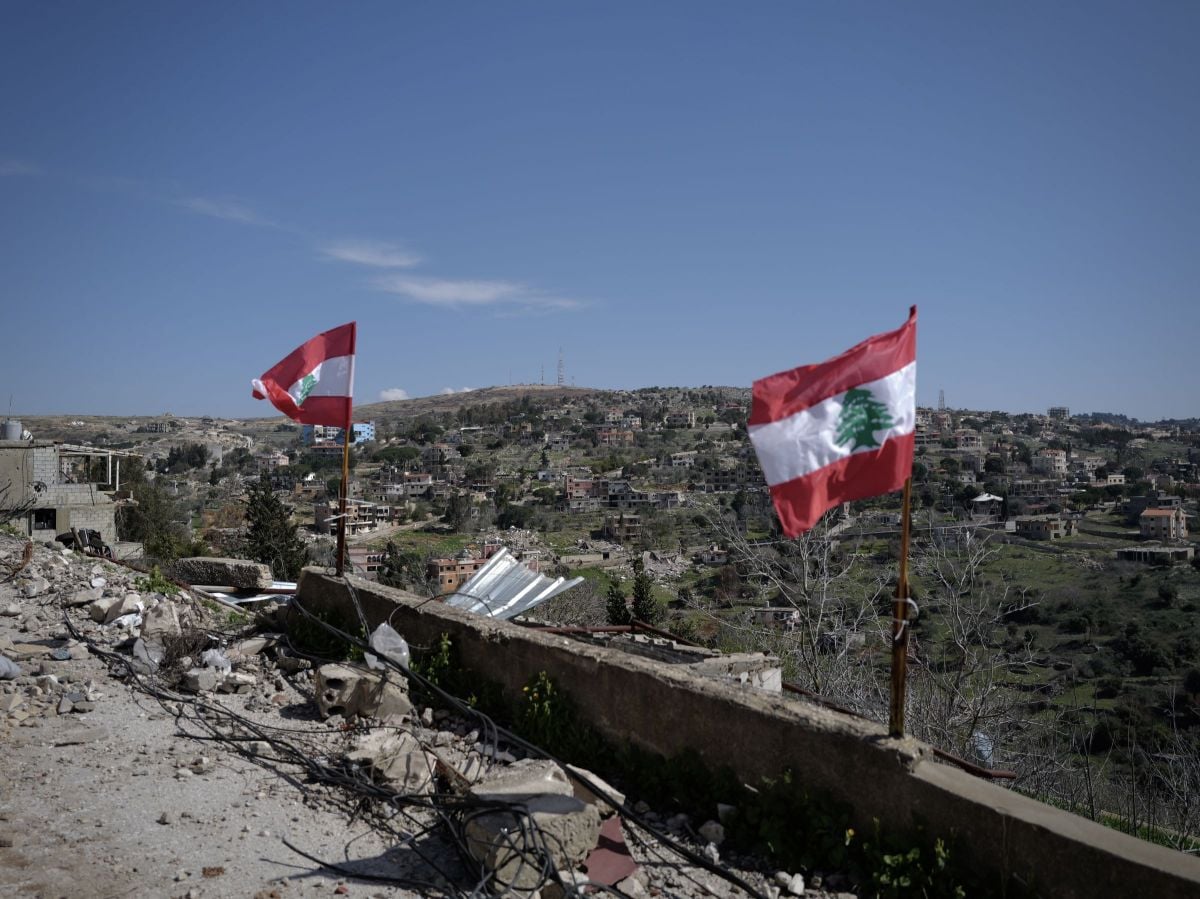
Lebanese flags above the damage in the village of Houla, south Lebanon, in February 2025. (Credit: Matthieu Karam/L'Orient Today)






The Israeli army’s Arabic spokesperson, Avichay Adraee, said in a tweet Tuesday that Israel is revealing “how Hezbollah’s Unit 121 assassinated figures who threatened to expose its role in the Beirut Port explosion.”
Adraee claimed that "Hezbollah’s Unit 121 carried out the assassinations of four well-known Lebanese figures out of fear that they would expose details about the August 2020 Beirut Port explosion, which Israel says was caused by Hezbollah’s storage of ammonium nitrate. The victims were customs officers and journalists who had pointed to Hezbollah’s alleged connection to the blast."
In related news
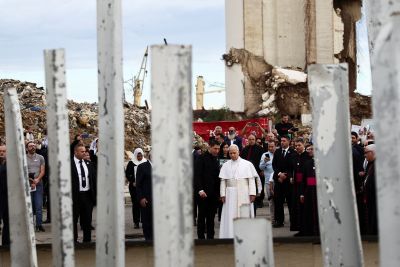
Leo XIV's intimate and moving tribute to the Aug. 4 blast victims at the Beirut Port
"Joseph Skaf, former head of Beirut Port Customs, was reportedly killed in 2017 after seeking the removal of Hezbollah’s ammonium nitrate from the port. Mounir Abu Rjeili, head of the Anti-Smuggling Unit, was allegedly stabbed to death in December 2020 after sharing information linking Hezbollah to the port blast. Photographer Joe Bejjani, who documented the explosion and assisted the Lebanese Army, was shot in his car in December 2020, and his phone was taken. Political activist and journalist Lokman Slim was shot dead in February 2021 shortly after accusing Hezbollah and the Assad regime of responsibility for the explosion," Adraee claimed.
"Hezbollah has denied involvement, and investigations remain incomplete. These killings are cited alongside previous accusations regarding the assassinations of Rafik Hariri and Elias Al-Hasrouni," Adraee concluded.
Former Lebanese Forces member Hasrouni was found dead in Aug.2023. Israel alleges that Hezbollah spread "rumors" claiming "he had been killed in a car accident" when he died in his village of Ain Ibl, (Bint Jbeil), an area under Hezbollah influence. The case sparked tensions in Lebanon, two months before the start of the war in Gaza and the conflict between Hezbollah and Israel.
'Mechanism asked Lebanese Army to 'remove bulldozer that had been clearing rubble'
The Mechanism Committee asked the Lebanese Army to remove a bulldozer that had been clearing the rubble of the resort destroyed by Israel a few days earlier in Tayr Felsay (Sour), our correspondent in the south reported Friday.
It is not yet known what measures have been taken regarding this. However, according to one of the residents, in the affected area in the town of Tayr Felsay there are eight resorts and homes belonging to their owners, and everyone has evacuated the area to safer places as a precaution.
Israeli forces also carried out sweeping fire with machine guns from the Al-Samaqah post toward the outskirts of the town of Kfar Shuba (Hasbaya), our correspondent reported.
Also, an Israeli quadcopter drone took off at around 1 a.m. on Monday night from an Israeli army position it occupies on Lebanese territory in the Jabal al-Batt area, and targeted a neighborhood in Aitaroun (Bint Jbeil), according to our correspondent in southern Lebanon
Meanwhile, in the Bekaa Valley, Israeli drones flew over the eastern slopes of the Mount Amana and Mount Lebanon mountain ranges on Tuesday morning, according to our correspondent in eastern Lebanon.
'I have spoken, and I will continue to speak, with leaders to establish peace'
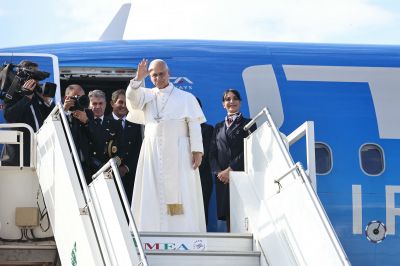
Responding to a question from the Lebanese channel LBCI about “conveying the cry of the Lebanese to Donald Trump to put an end to Israeli aggressions in Lebanon,” Pope Leo XIV said, “I have spoken, and I will continue to speak, with leaders to establish peace,” according to the channel.
Israeli Prime Minister Benjamin Netanyahu and Defense Minister Israel Katz met Tuesday in Jerusalem with Morgan Ortagus, U.S. President Donald Trump’s special envoy to Lebanon. Ortagus is expected to arrive in Beirut on Wednesday
Foreign Minister Gideon Saar said he had a “useful discussion” with Ortagus about the situation in Lebanon, telling her that Hezbollah is violating Lebanon’s sovereignty and that its disarmament is essential for Lebanon’s future and Israel’s security.
The Lebanese Army remains confident in its ability to declare the area south of the Litani River free of Hezbollah's weapons by the end of 2025. To achieve this goal, operations sweeping valleys and forests in the area have uncovered more than 50 tunnels and seized over 50 guided missiles as well as hundreds of other weapons, according to two Lebanese civilian sources briefed on the army’s operations.
The Lebanese Army has continued to deny the baseless Israeli accusations of its passivity or even collusion in the face of Hezbollah's activities in the south, saying instead that it has no knowledge of any new arms arsenals since the cease-fire agreement went into effect in November 2024.
Lebanese security officials insist that new army checkpoints in the south are preventing Hezbollah from moving weapons.
Reporting contributed by correspondents Muntasser Abdallah and Sara Abdallah.

