







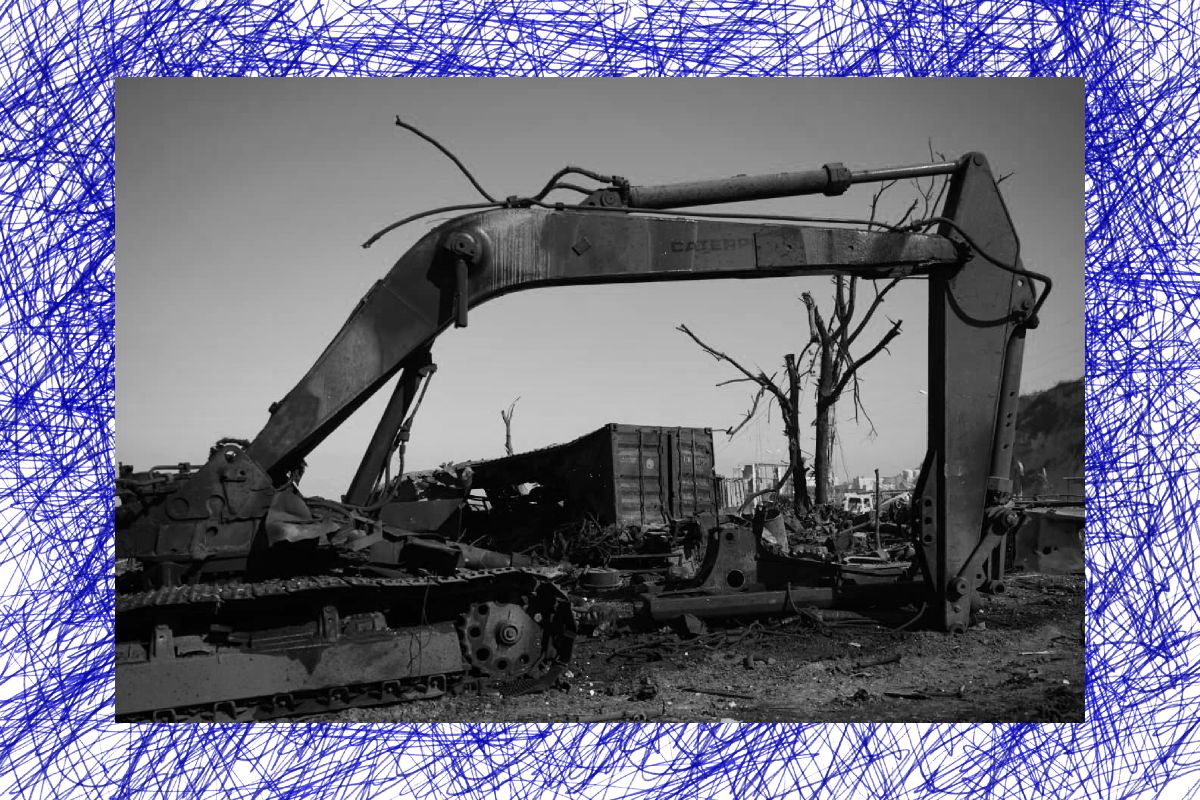
(Credit: Mohammad Yassin/L'Orient Today illustration)






On Jan. 29, Parliament passed Lebanon’s 2026 budget just two days before the constitutional deadline, including a limited allocation for reconstruction in southern Lebanon.
The vote followed months of warnings from Parliament Speaker Nabih Berri, who had made it clear as early as November 2025 that he and Hezbollah would not approve the budget without funding for reconstruction.
The next day, on Jan. 30, the Cabinet approved a framework outlining how areas hit hardest by the war would be rebuilt, amid mounting public anger in southern Lebanon over delays.
While part of the funding is now secured through the budget, the bulk of the reconstruction effort still depends on international aid, which remains conditional on Hezbollah’s disarmament.
So, what was the original plan? Where does the process stand now? Can international funding be unlocked anytime soon, and is Hezbollah contributing to relief efforts?
Let’s break it down.

1. What was the original plan?
The World Bank estimated total war damage at $11–12 billion, including infrastructure destruction and economic losses from halted production and activity.
In February 2025, a new government was formed, led by Prime Minister Nawaf Salam, and it promised to prioritize reconstruction.
To this end, the government tasked the Council for Development and Reconstruction (CDR), created in the aftermath of the 1975-90 Lebanese Civil War, to primarily work with the World Bank and the Lebanese government on reconstruction projects.
The Public Works Ministry was tasked with overseeing project execution.
The Environment Ministry would handle rubble management and environmental follow-up.
Other ministries are involved as well:
· The Social Development Ministry continues to support southern residents and returnees through the Aman program (a World Bank-funded social aid project) and other local initiatives.
· The Energy & Water Ministry is working to improve electricity and water networks in southern villages.
· The Education Ministry is trying to get students back into schools in border areas and repair damaged buildings.
· The Health Ministry is overseeing the rehabilitation of clinics and healthcare centers.
· The Agriculture Ministry is maintaining support programs for farmers and boosting local production through the World Bank’s loan.
· The Public Works Ministry has repaired parts of the road network and cleared rubble in affected areas.
A quick reminder: On Nov. 4, 2025, a highly symbolic meeting took place in Msayleh, a southern village heavily bombed by Israel and home to Parliament Speaker Nabih Berri.
The meeting included MPs, several ministers (Finance, Public Works, Environment, Agriculture, Health), representatives from the World Bank, U.N. agencies, UNIFIL, the Lebanese Army, and key national institutions, like the CDR and the Council for the South.
For Berri and Hezbollah, the message was simple: Reconstruction cannot wait.
They demanded that the 2026 budget include funding for rebuilding, warning they would not back it otherwise. The goal for Berri was not to cover the full estimated $11 billion cost, but to begin compensating homeowners whose houses were destroyed.

2. What has been done since?
Parliament approved Lebanon’s roughly $6 billion state budget for 2026, with only a modest and still ill-defined amount, estimated at $60 million to $90 million, earmarked for reconstruction.
Immediately after, the Cabinet approved what it called a framework to set the rules for the reconstruction process.
By this framework, priorities will go to:
· Restoration of buildings that were hit by airstrikes but not completely destroyed, in a bid to allow owners to return to their homes. Based on a recent survey conducted by CDR and the High Relief Committee — a Lebanese government body that has historically been involved in coordinating emergency relief and assistance work — some 50,000 families will immediately benefit from this priority phase.
· Restoration of businesses, infrastructure, and then residential units that were completely destroyed.
Prior to that, in mid-December 2025, Parliament also approved the $250 million loan with the World Bank for the reconstruction of southern Lebanon’s infrastructure.
France also promised an extra €75 million, and Salam said he was working with President Emmanuel Macron to organize an international donors’ conference.
The conference, however, appears to have been pushed down the priority list as international focus has shifted to supporting the Lebanese Army in enforcing the state’s monopoly on weapons and disarming Hezbollah in southern Lebanon.
Moreover, with Israeli airstrikes still hitting border villages more than a year after the 2024 cease-fire, the government is expected to review a plan to establish temporary shelters for displaced residents who cannot yet return home.
Qatar is also expected to contribute a smaller amount, earmarked for repairing parts of the infrastructure and the electricity cable network damaged during the war.
A quick reminder: Lebanon’s last experience with large-scale reconstruction was after the 2006 war, between the same two players, none other than Hezbollah and Israel.
Back then, money came mainly from:
· Iran,
· some allocations from the Lebanese state,
· and Arab donations, especially from Qatar, which funded the rebuilding of Beirut’s southern suburbs (Hezbollah’s stronghold).
That time, Hezbollah was seen across the Arab world as a kind of heroic resistance, the only Arab group standing up to Israel.
Fast forward to today: Things have changed. After the Syrian war and the group’s regional involvement, Hezbollah’s image in much of the Arab world has dimmed. So, donors aren’t exactly lining up to help this time.
This brings us to our next question.

3. Is Hezbollah pitching in on relief efforts?
According to a well-informed source, Hezbollah began offering financial assistance to help its supporters pay rent, with amounts reaching up to $6,000 per year.
However, in the first months after the 2024 war, Hezbollah launched a quick compensation program for destroyed homes, hailed at first as a generous gesture amid Lebanon’s deep economic crisis.
Families in Beirut and the capital’s southern suburbs received around $14,000, while those in southern Lebanon and the Bekaa got $12,000.
But the aid was meant to cover only one year, and a promised second payment never arrived.
Also, many of the initial checks reportedly bounced, sparking frustration and anger, even within Hezbollah’s own community.

