


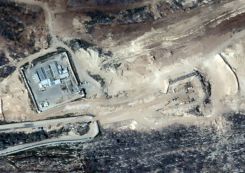
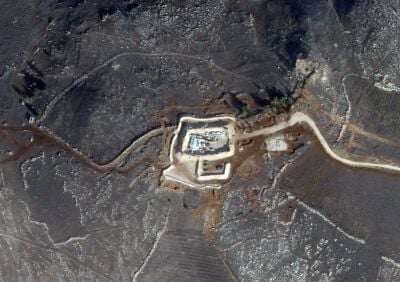
Satellite view of the position occupied by Israel on Hamames Hill, south of Khiam, in south Lebanon, on Nov. 18, 2025. (Credit: Planet Labs PBC/AFP)






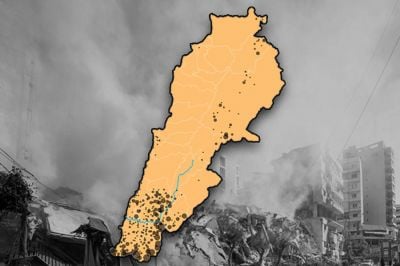
SOUTH LEBANON — One year after the cease-fire between Israel and Hezbollah came into effect, the Israeli army continues to occupy five positions inside Lebanese territory, reinforcing and expanding them with access roads, according to satellite images analyzed by AFP.
The Nov. 27, 2024, cease-fire agreement required Israel to fully withdraw from Lebanon. It was also supposed to pull back all its troops from southern Lebanon within 60 days, while Hezbollah was to withdraw its forces roughly 30 kilometers north of the Israeli border.
But in February 2025, Israel said it would maintain five occupied positions inside Lebanon “until it is clear there is no longer any Hezbollah activity in southern Lebanon,” assigning a company to each post.
Satellite images from Planet Labs PBC, reviewed by AFP, identified those forward positions.
The five sites still occupied since the cease-fire are:
- Tallet al-Hamames south of Khiam (Marjayoun district) — the farthest from the border at nearly 1.5 kilometers
- The main Markaba-Houla road (Marjayoun)
- Tallet Jal al-Deir in Aitaroun (Bint Jbeil)
- Jabal Blat east of Ramieh (Bint Jbeil)
- Labbouneh (Sour), located about 150 meters from a U.N. Interim Force in Lebanon (UNIFIL) post and the border
All are built along ridgelines stretching west to east near the Blue Line.
According to information obtained by L’Orient-Le Jour, a sixth position has also been occupied for several months south of Odaisseh (Marjayoun), even though part of that land has been disputed between Lebanon and Israel since the Blue Line was drawn. The development was reported in August 2025 by L’OLJ’s south Lebanon correspondent, citing local residents.
Systematic destruction
The positions overlook villages including Kfar Kila (Marjayoun), Aita al-Shaab (Bint Jbeil), Maroun al-Ras (Bint Jbeil), Aitaroun, Blida (Marjayoun), Markaba and Houla — among those hardest hit by Israeli airstrikes and ground operations.
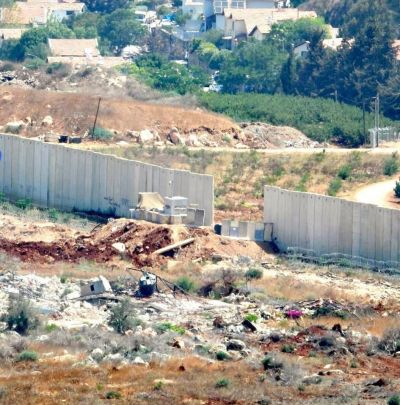
Satellite images show that all buildings near the Hatzivoni military position, between Houla and Markaba, have been demolished.
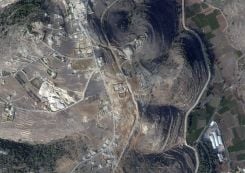
Surrounded by earthen berms and other fortifications, the bases — generally 1 to 2 hectares — are typically divided into a larger section with temporary structures and a smaller one used for military vehicles.
Shots are regularly fired at nearby villages, farmers or shepherds, according to information from L'Orient Today.
Satellite analysis also shows that access roads leading to the posts have been significantly widened to allow military vehicles to move more easily.
Israeli forces have systematically destroyed buildings and infrastructure in villages near the Lebanese border, just like in Gaza.
Some border villages, including Kfar Kila, Aita al-Shaab and Yarin (Sour), are now largely demolished. According to satellite-image analysis by University of Oregon researchers Corey Scher and Jamon Van Den Hoek, updated Jan. 30, 2025, more than 50 percent of their built-up areas have been destroyed.
Damage has increased since January, as Israeli troops — who were required to withdraw by Feb. 18, 2025, after their September 2024 invasion — used the final weeks to systematically level homes and infrastructure, in some cases entire neighborhoods, across southern Lebanon. Despite the cease-fire, Israeli forces have continued to enter Lebanese territory to demolish buildings and continue daily attacks.
 2 Israeli soldiers injured in 'operational accident,' as army continues attacks in the South