







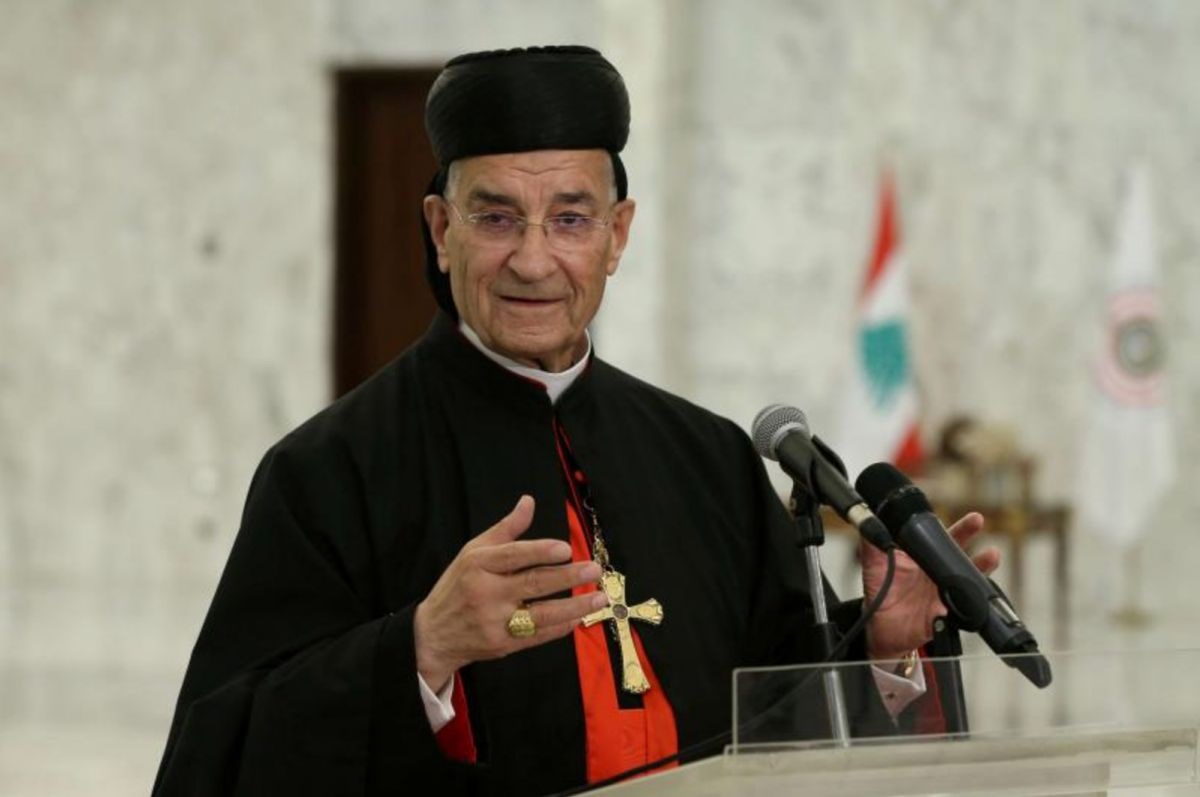
The Maronite Patriarch Bechara al-Rai, photographed at the Baabda Presidential Palace in August 2025. (AFP archive photo)






In a televised interview on the eve of Pope Leo XIV’s historic visit to Lebanon, Maronite Patriarch Bechara al-Rai spoke candidly on a number of issues, ranging from Hezbollah’s weapons to the internal dialogue he sees as non-existent, while also discussing the importance of the pontiff’s visit, issuing criticism of Christian parties, and expressing solidarity with Lebanese President Joseph Aoun.
Asked by al-Jadeed journalist about Hezbollah, the prelate said that “we cannot accept that Iran continues to meddle in our affairs through this party,” calling on Hezbollah to “hand over its weapons to the Lebanese Army.” “If we want a state that serves the interests of all, there must be no more weapons outside the hands of the state. It is time for Lebanon to regain its unity after 100 years of existence,” he emphasized.
The disarmament of Hezbollah has been a flashpoint since the cease-fire with Israel in November 2024 and the Lebanese government’s official decision on the matter in August 2025. The army, tasked with ensuring a monopoly on weapons for the state under a plan established in early September, has been providing monthly reports to the government since that date.
Nevertheless, Rai said he does not support disarmament by force, which risks tearing the country “to shreds.” This issue must therefore be “settled through diplomacy,” he argued. In this respect, he expressed clear support for Aoun and Prime Minister Nawaf Salam — often accused by the Americans of “slowness” on the matter — as well as Army Commander-in-Chief General Rodolph Haykal, whose trip to the United States was just canceled amid disagreement over Hezbollah’s disarmament. He called in this context to “stop the smear campaign against the president, support the army with funding and armaments, and reaffirm the decisions taken by the Lebanese authorities.”
Rai also said that, despite the “new trust” in the authorities inspired by the new administration, it is “thwarted by circumstances,” particularly the ongoing occupation by the Israeli army of positions on Lebanese territory and continued strikes. “Why does Israel maintain a presence in South Lebanon and continue its strikes? Is it to bolster Hezbollah and justify its refusal to hand over its weapons?” he asked.
Rai did not spare his criticism of the main Christian parties (notably the Lebanese Forces and the Free Patriotic Movement, without naming them), saying he understood Aoun’s remarks when he complained that certain parties “spread poison” among foreign embassies.
“Christians are divided, but not by ideology or on principles; rather, by their electoral and other interests, and that’s a shame. I would have preferred them to compete to better serve the country, but they just want to impose their presence,” he insisted. He acknowledged that Bkerke “should bring them back onto the right path, but they should also see the futility of their conflicts.”

The pope’s message of peace
Asked about Pope Leo XIV’s visit from Sunday, November 30 to Tuesday, Dec. 2 in Lebanon, Rai said this visit — “the pope’s first outside Vatican City since his election — shows the Holy See’s concern for pluralism and freedoms in this country.” “The meaning of this visit goes beyond the Lebanese, to include all Eastern Christians and the entire East,” he added.
“Lebanon needs this message of peace, just as the East, which is boiling over, does — whether spiritual, political, or social peace,” he continued. “I believe the pope will issue a call to all Lebanon and to all Lebanese in all their diversity, and I do not know exactly what that call will be. But the fact remains that, since 1975, we have not known peace, and it is time to rebuild it.”
On ways to make peace in Lebanon, Rai advocated dialogue, which he says must be initiated by the head of state. “So far, we have not started dialogue and have avoided thorny issues. We hope the Holy Father will issue a call in this regard and that the Lebanese will engage in it,” he assured.
However, he believes that “the road to dialogue is not yet clear,” citing differences that are still too deep and the consequences of war. Even so, he said he was convinced that “coexistence still exists.”
Syria, an ‘Islamic state’
Asked about Eastern Christians, Rai deplored the ongoing exodus from the region and the drastic drop in their numbers in Syria, Iraq, Jerusalem and even Lebanon, due to emigration, although he noted that this affects Lebanese Muslims as much as Christians.
On Syria, he was blunt, calling the new regime an “Islamic state” and expressing great caution regarding the future for minorities, especially Christians, who continue to leave the country.
Finally, speaking on an issue close to his heart, Lebanon’s neutrality, the prelate said he is growing increasingly attached to it. “This neutrality means that Lebanon no longer enters wars and is no longer part of regional blocs, but it remains positive — that is, Lebanon remains a land of peace and human rights, since that is its message,” he concluded.

