






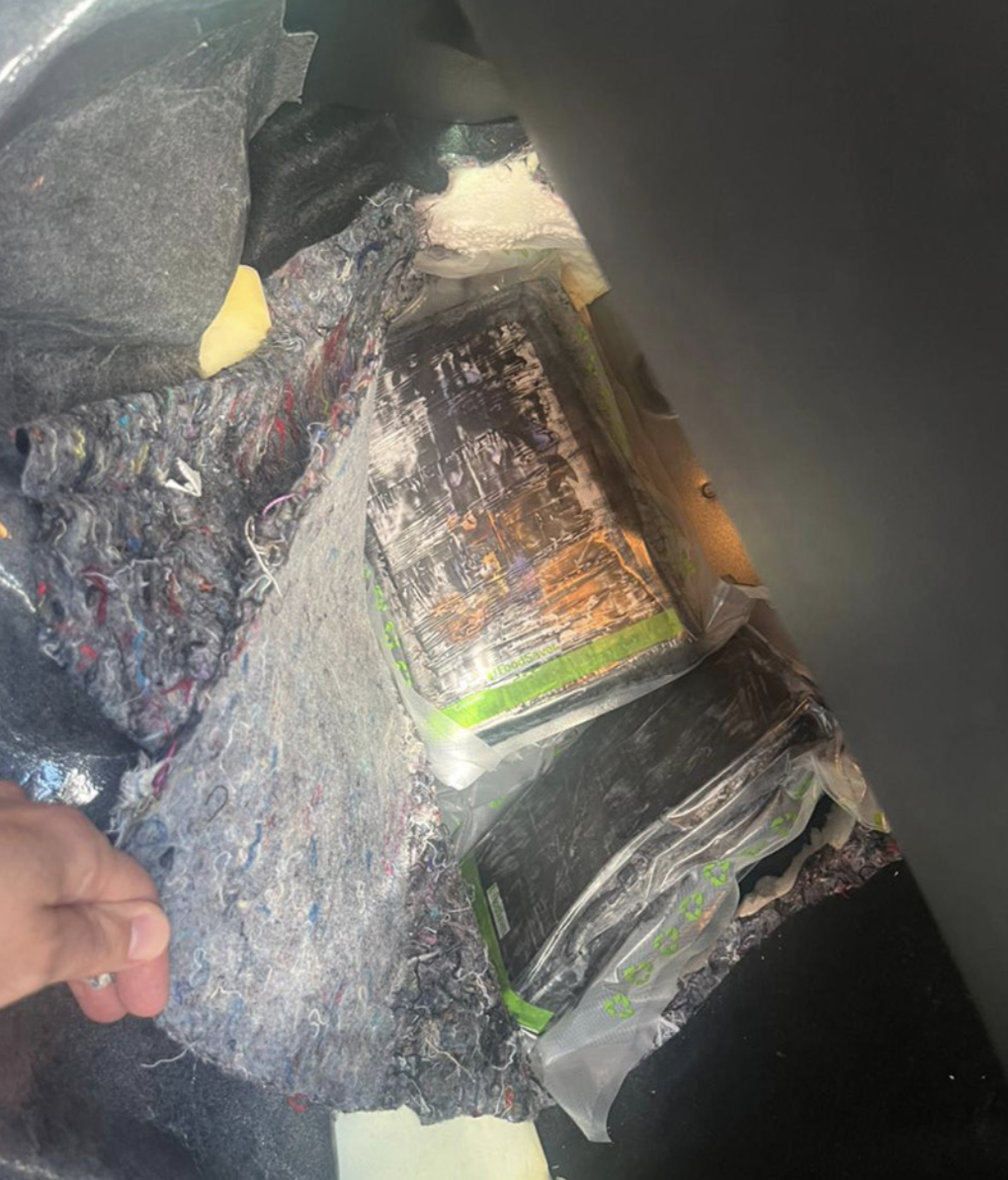
Narcotics bound for Lebanon seized by the Internal Security Forces (ISF) on Nov. 25, 2025. (Photo released by the ISF)






BEIRUT — The Internal Security Forces (ISF) announced Tuesday the seizure of a vehicle that arrived from Europe containing a significant quantity of cocaine and ecstasy. The interception was carried out in coordination with Saudi Arabia's General Directorate for Drug Control in Saudi Arabia, which has, in the past, cooled its relations with Lebanon over its failure to curb the flow of drugs through Lebanon toward the Gulf.
"The Central Anti-Drug Office dismantled an international smuggling network, seized cocaine and ecstasy, and arrested the mastermind behind the operation, in cooperation with the General Directorate for Drug Control of the Kingdom of Saudi Arabia," the ISF wrote on their X account.
According to the statement, ISF officers seized a black Renault Scenic that arrived by sea from a European country. The SUV was carrying 17.45 kg of cocaine and 11.2 kg of ecstasy, according to ISF.
The statement does not specify where the vehicle was intercepted. The drug network's leader, a Lebanese man in his late 30s, was also arrested as part of the investigation. One of his accomplices was also taken into custody. A third suspect was identified and a warrant has been issued for his arrest.
The Ministry of Interior released its own statement welcoming "the ongoing security cooperation with the Saudi Interior Ministry, which made it possible to thwart an attempt to bring a large quantity of drugs into Lebanon."
The operation was part of "the ministry's strategy to combat drug trafficking," the ministry stated, emphasizing that it "confirmed" Lebanon's commitment to countering drug trafficking within its borders and its "refusal to allow its territory to be used as a passage point or platform that could harm its interests or its relations with brotherly countries."
The Lebanese Army and security services have intensified their fight against drug trafficking in recent months under pressure from the Gulf states, as well as from the United States, which accuses Hezbollah of profiting from it.
The kingdom had suspended its commercial exchanges with Lebanon in 2021, when Saudi authorities banned the entry of fruits and vegetables from the country after several shipments containing Captagon were intercepted.
After bolstered efforts by Lebanese authorities to crack down on the drug trade — with the help of the new Syrian authorities close to Saudi Arabia — the kingdom has promised to strengthen its commercial ties with Lebanon.
In September, Lebanese authorities announced they had dismantled an international drug trafficking network and stopped a shipment of hashish and Captagon pills to Saudi Arabia. The Lebanese Army also announced in mid-September that it had seized around 64 million Captagon pills in the Bekaa, noting that it was one of the largest operations ever carried out against this drug in Lebanon.
