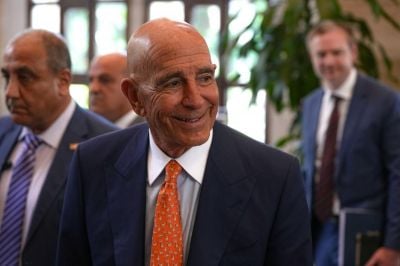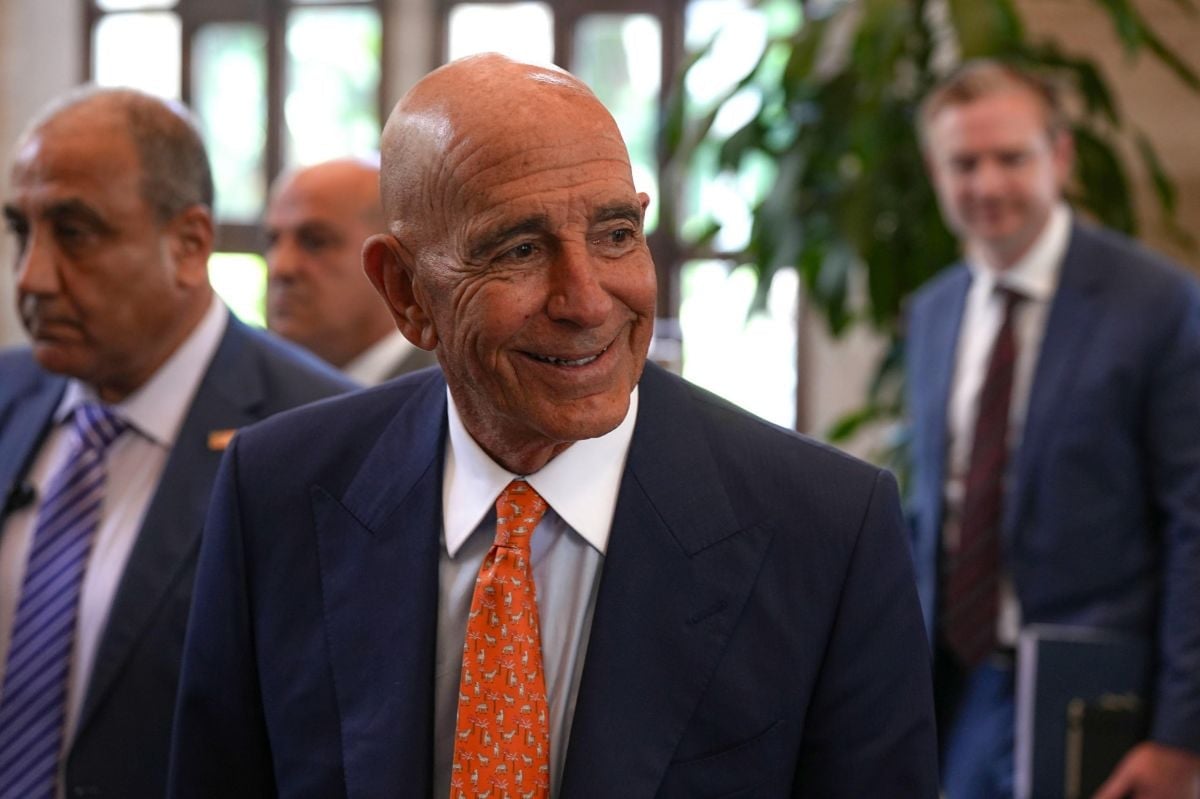
The American envoy to Syria and Lebanon, Ambassador Tom Barrack, during his visit to Beirut in early July 2025. (Credit: Mohammad Yassine/L'Orient-Le Jour)






BEIRUT — The U.S. envoy to Syria and Lebanon, Ambassador Tom Barrack, said in a lengthy post on X that recent days marked “a decisive turning point in the modern history of the Middle East — and in the remarkable transformation of Syria from isolation to partnership.”
His statement followed Monday’s historic visit to the White House by Syrian President Ahmad al-Sharaa, formerly a member of the coalition of jihadist rebels that overthrew Bashar al-Assad on Dec. 8, 2025.
"Damascus will now actively assist us in confronting and dismantling the remnants of ISIS, the IRGC, Hamas, Hezbollah and other terrorist networks," Barrack wrote, adding that the next step in "giving Syria a chance" would be repealing the Caesar Act.
The week before his meeting with U.S. President Donald Trump, Sharaa was removed from the U.S. terrorist blacklist and from U.N. Security Council sanctions — a move widely seen as a prelude to Syria’s integration into the international coalition against the Islamic State group.
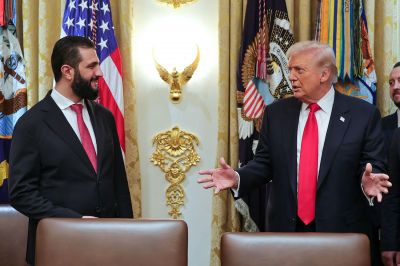
“In a warm and substantive meeting this week, President Donald J. Trump and President al-Sharaa reaffirmed a shared conviction: that the time has come to replace estrangement with engagement, and to give Syria — and its people — a genuine chance at renewal,” Barrack wrote.
“I (...) witnessed in the Oval Office President Sharaa’s commitment to President Trump to join the D-ISIS coalition, which stands as a historic framework marking Syria’s transition from a source of terrorism to a counterterrorism partner," Barrack added.
Barrack said that during a key trilateral meeting with Secretary of State Marco Rubio, Turkish Foreign Minister Hakan Fidan and Syrian Foreign Minister Assaad al-Shaibani, officials defined the next phase of the U.S.-Turkish-Syrian framework: integrating the Syrian Democratic Forces into Syria’s new economic, defense and civil structures; redefining Turkish, Syrian and Israeli relations; and strengthening coordination to support the cease-fire between Israel and Hamas, as well as border issues with Lebanon.

He also praised Turkey’s “quiet, steadfast diplomacy" and the “expanded alliance of Qatar, Saudi Arabia and Turkey,” which he said supported “the resurgence of a Syrian nation state for the entire region and all of its tribal, religious and cultural constituencies.”
“The Middle East is, by its very nature, a living mosaic: a region woven from countless cultures, faiths, tribes and traditions. Within it, Syria stands as a mosaic within that mosaic,” Barrack said. “In the delicate interplay of these layers lies both the challenge and the promise of the region’s renewal.”
He added that the Trump administration is working on “security first, prosperity next.”
Barrack’s conciliatory tone toward Syria contrasts sharply with the harsh criticism he has directed at Lebanon in recent months, as the fragile cease-fire reached in late November 2024 between the Israeli army and Hezbollah is violated almost daily by Israeli strikes. Israel continues to occupy several positions in southern Lebanon, while the party refuses to disarm as long as Israel maintains its operations and occupation of Lebanese territory.