


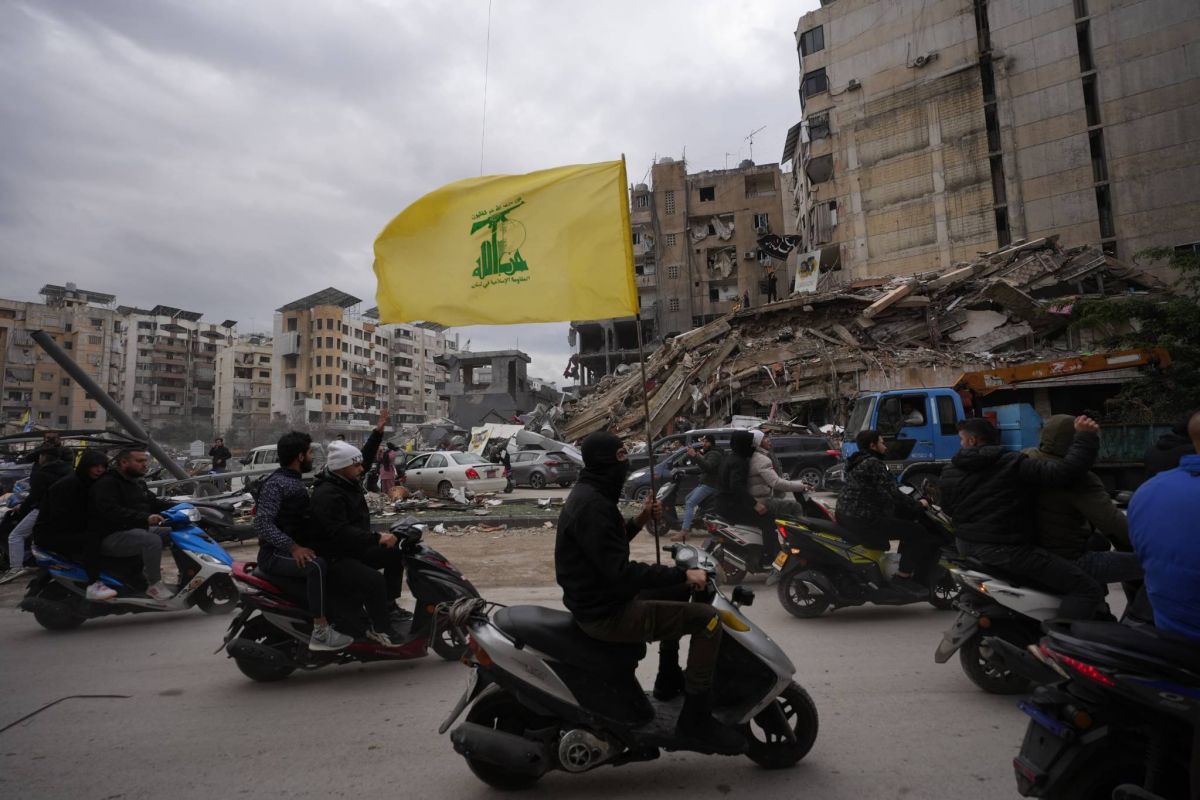
Hezbollah supporters parade in the southern suburbs of Beirut in early August 2025. (Credit: Mohammad Yassine/L’OLJ)






BEIRUT — Charities linked to Hezbollah, which have been sanctioned by the United States, have regularly directed donors to send funds via Lebanese digital payments providers that have partnerships with U.S. payment card companies, the Financial Times (FT) reported on Sunday.
Several charities in the group’s network of social programs have asked donors to send money to digital wallets held by private individuals through financial company Whish Money, or to donate through its competitor OMT, the British newspaper added.
The FT’s findings highlight how Hezbollah "appears to be exploiting weaknesses in the fight against terrorism financing and money laundering to raise funds", despite coming under intense global pressure since it suffered significant losses during last year's war with Israel.

According to FT, "routing funds through non-sanctioned individuals rather than official charity accounts increases the likelihood that sanctions-screening tools and know-your-client processes fail to detect links between the recipient of the transfers and the end beneficiary."
To facilitate cross-border remittance services Whish partnered with U.S.-based payment card giants Visa and Mastercard, which announced in August that the collaboration would allow Lebanese users to fund Whish wallets with their cards.
Though proponents say the move away from cash has made financial transfers more traceable and transparent, the FT’s findings "raise concerns about the ability of payments companies such as Whish or OMT to stem the flow of funds to organizations that are under sanctions by the U.S."
Contacted by FT in recent months, three of Hezbollah's charities, the Emdad Association, the Martyr Foundation — both of which are the subject of U.S. sanctions — along with the Wounded Foundation, asked for donations to be sent via Whish or OMT.
They provided reporters with names of individuals and Lebanese phone numbers linked to Whish wallets to receive the donations. Tellers at three separate Whish branches confirmed the wallets were active.
FT adds that "each of the phone numbers were linked to a named individual rather than a charity business account, suggesting that the individuals were collecting donations on behalf of the charities."
However, the British newspaper reported that "one of the phone numbers provided is also listed on the website of the Martyr Foundation, raising questions about the level of due diligence that Whish carried out on the account holder."
In the case of OMT, tellers told the FT that the individuals did not have wallets on their platform but could collect cash sent by donors who transmitted money using the recipient’s name and phone number.
Documents seen by the FT, along with screenshots of WhatsApp chats and a recording of communication with donators, suggest the charities also fundraise internationally through some of the same intermediaries. In one instance earlier this year, a dollar-denominated transfer was sent from the Democratic Republic of Congo, which has a sizeable Lebanese diaspora, to an individual representing Emdad via Whish’s international partner RIA, according to FT.
Whish said every user was “rigorously and continuously” screened against international sanctions and central bank watch lists and all transactions are monitored “to detect and prevent any form of money laundering or terrorism financing", according to the newspaper.
There is no suggestion that Whish, OMT or RIA were aware that any payments to the individuals would likely go to sanctioned charities, FT adds.
Visa said it complied with all applicable regulations, including sanctions, and required its clients and partners to do the same, while Mastercard said it uses the latest technologies and best practices to monitor activity on its network and “address and remediate any areas of concern”, according to the newspaper.
The Hezbollah foreign media relations office sent statements on behalf of the Wounded and Martyr foundations, both of which highlighted their humanitarian work and said they did not have official accounts on either Whish or OMT, FT adds.
The U.S. Treasury Department's top sanctions official, John Hurley, is expected to visit Lebanon this week, as part of his first Middle East trip since taking office.
In July, the central bank issued Circular No. 170, which prohibits banks, financial institutions, brokerage firms, collective investment funds and any entity it regulates from dealing, directly or indirectly, with unlicensed companies, “especially those sanctioned by the U.S. Treasury’s Office of Foreign Assets Control [OFAC]."
Last month, Wata'awanu (Help Each Other), a charity known for its ties with Hezbollah which claims that it is not under U.S. sanctions, stated that Whish Money had suspended its donation account.

 7 p.m. recap: 1 person killed near border with Lebanon; 200 kilos of explosives carried by mules; Riyadh shuts its airspace