


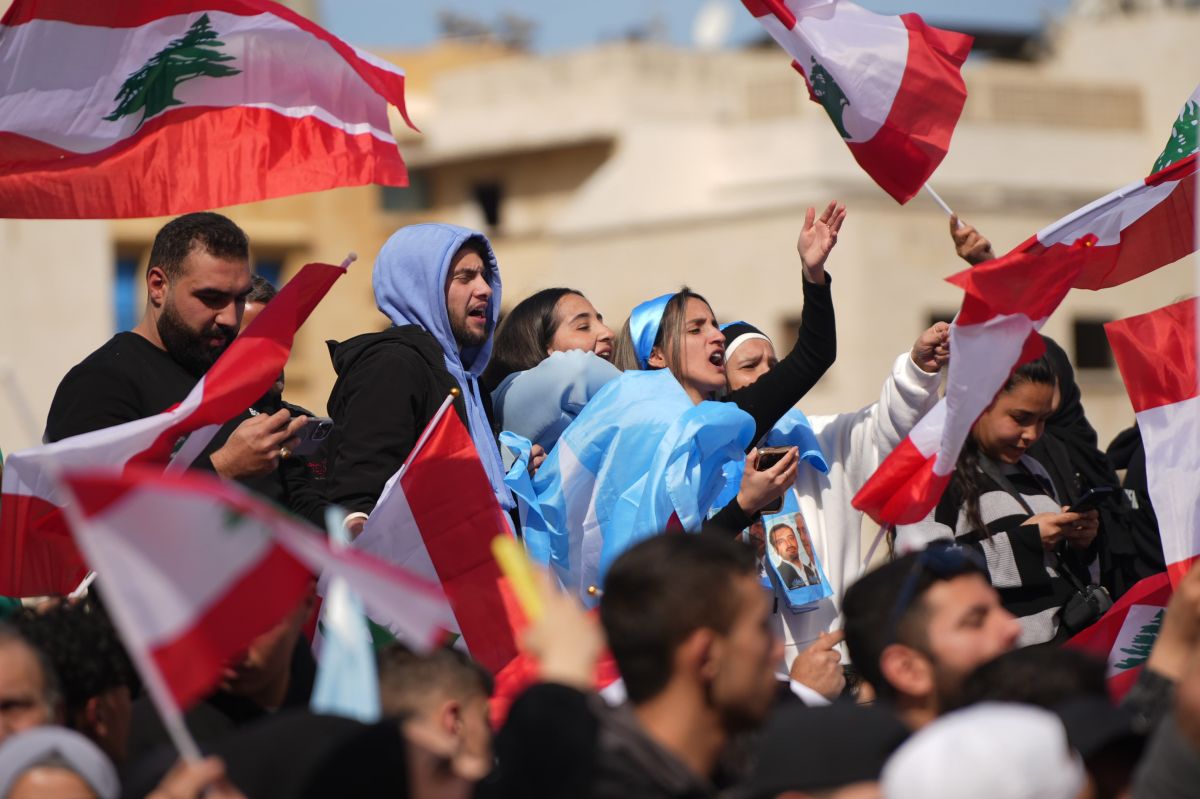
Future Movement supporters in Martyr's Square on Feb. 14, 2025. (Credit: Mohammed Yassin/L'Orient Today)






The Sunni scene is simmering as the May parliamentary elections approach: Among the various protagonists, contacts are multiplying as they seek to forge effective alliances in the absence of the traditional heavyweight leaders.
Since the withdrawal of Future Movement leader Saad Hariri from the political scene, the community has not been able to appoint a leader, despite many candidates.
Some have made a mark in the political landscape, such as Fouad Makzoumi and Waddah Sadek, but they have not yet attained the stature of leading figures capable of imposing their choices in the formation of electoral lists.
This is especially true given the increasing number of candidates, particularly in the Beirut II district, where many aspire to inherit the Future Movement’s legacy.
The biggest Sunni battles are taking place in the country’s three main cities: Beirut, Tripoli and Saida. Even though the names differ, the trends remain the same.
The contest is thus being played out between, on one hand, the traditional groups seeking to modernize their image through the sons of leaders or well-known political families, like Saeb Tammam Salam, Saleh Nouhad Mashnouk and Saif Salim Diab, and on the other, the so-called change forces, with Waddah Sadek presenting himself as their leader.
In between are religious political movements, such as the Ahbash and the al-Jamaa al-Islamiya, which, after decades of internal strife, are now seeking to set aside their differences to maintain their positions.
There are also newcomers to the political scene, such as Prime Minister Nawaf Salam, who, without stating it openly, is preparing to form a parliamentary bloc.
His main rival is essentially his predecessor, Najib Mikati. The latter, who recently said he does not intend to run, made a round of meetings with officials a few days ago — likely to remind everyone that he is still in the running for the Grand Serail.
The former prime minister primarily seeks to establish himself as the leader of a moderate movement, while maintaining relations with all political actors, both inside and outside the country.
Even if he is not personally running in the elections, he is seeking to build a parliamentary bloc and, at the same time, remind all concerned parties that he managed to steer Lebanon’s ship through a particularly sensitive period, in the absence of a president (2022-2024), avoiding many pitfalls.
Mikati is also seeking to capitalize on recent tensions between Salam and the Amal-Hezbollah alliance.
The outcome of this confrontation naturally depends on the public and on Saad Hariri's final decision, whose movement is quietly preparing for the elections while publicly asserting that, for now, no decision has been taken on the matter.
However, behind the scenes, many supporters believe that if the Future Movement does not participate this time, it may not be able to continue existing until the 2030 elections, since supporters may not be able to remain loyal to their leader for such a long period (more than 10 years).
This is why political circles see this as a crucial deadline for Saad Hariri as well. However, his decision will not be solely Lebanese, but will depend on the Saudi position.
It is clear that behind each of the main players, there are regional and international stakes. Most of those involved are thus seeking Saudi support and trying to decipher their true intentions.
Does their declared support for Salam as prime minister also mean supporting him as the leader of the community? Do Islamist movements, which had links with Assad’s Syria or with Qatar and Turkey, still have a place on the current chessboard? Do Iran and Hezbollah, who had established an alliance network within the Sunni community, still have influence over it?
These are all questions that are probably impossible to answer at the moment, given how unclear the overall situation in the region remains, with many possible scenarios.
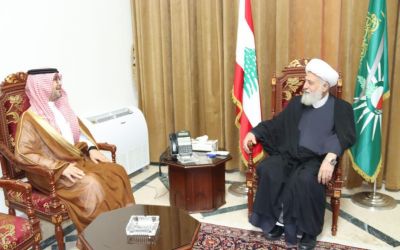
But Sunni political circles are closely monitoring the movements and statements of Saudi Ambassador to Beirut Walid Boukhari. The latter seems to have chosen to entrust the reins of the Sunni community to Mufti Abdellatif Derian precisely to avoid having to choose among the various players.
It is in this context that the ambassador visited Sheikh Ali al-Khatib, vice president of the Higher Shiite Islamic Council (close to Amal and Hezbollah) and made remarks emphasizing that the kingdom holds no animosity towards this Lebanese component.
Turkey, meanwhile, has in recent years increased its influence among Lebanon’s Sunni community, particularly in the North — in Tripoli, Dinnieh and Akkar, notably.
This influence has grown with the Gaza war and support for Hamas, as well as with the fall of the Assad Syrian regime and the rise to power of Ahmad al-Sharaa.
For now, the rivalry between Turkey and Saudi Arabia on the Lebanese Sunni scene is not playing out on the ground. But with the decline in Iranian influence in Lebanon, this rivalry could also affect the course of the next parliamentary elections, should they be held as scheduled.
This article was translated from L'Orient-Le Jour.

 7 p.m. recap: Netanyahu seeks mastermind behind Flydubai incident; Washington sanctions 2 French nationals; Ben Gvir's 'I want to kill you' threat