


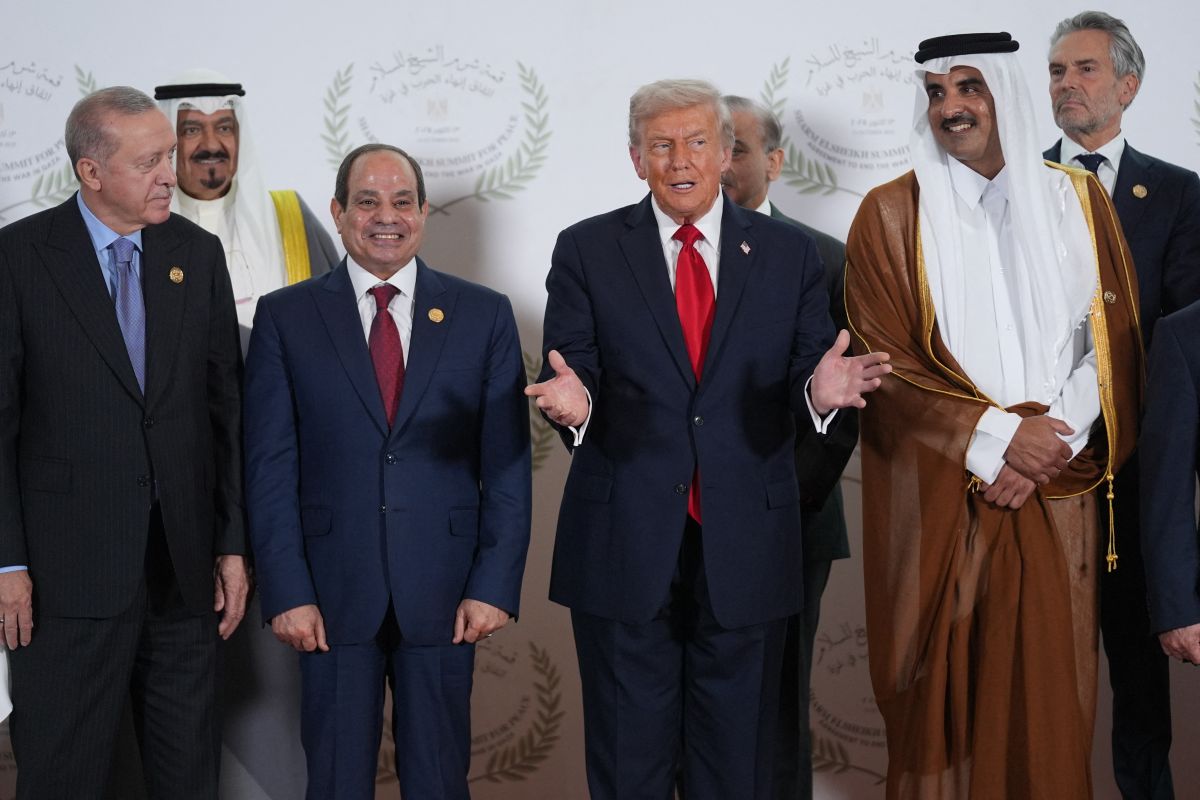
From left to right: Turkish President Recep Tayyip Erdogan, Egyptian President Abdel Fattah al-Sissi, U.S. President Donald Trump, Qatari Emir Sheikh Tamim bin Hamad al-Thani, and other leaders pose for a family photo during the summit on Gaza in Sharm al-Sheikh on Oct. 13, 2025. (Credit: AFP Photo)






From the Knesset to the Red Sea resort of Sharm al-Sheikh, Donald Trump’s style speaks volumes about his vision for U.S. foreign policy. Over his two presidential terms, Trump has positioned himself as the architect of a “peace through strength” policy, a phrase first used by Neville Chamberlain in a failed attempt to prevent World War II. With Trump, this strategy takes on an economic logic: applying pressure to impose peace through investment. In one example Trump’s economic zone in south Lebanon: Trap or opportunity? Strictly speaking, there is no Trump doctrine — nor has any American president since the post-Cold War era truly had one. A doctrine implies guiding principles and strategic vision. Trump’s foreign policy, by contrast, is driven first and foremost by presidential ego, often sidelining America’s long-term interests....
From the Knesset to the Red Sea resort of Sharm al-Sheikh, Donald Trump’s style speaks volumes about his vision for U.S. foreign policy. Over his two presidential terms, Trump has positioned himself as the architect of a “peace through strength” policy, a phrase first used by Neville Chamberlain in a failed attempt to prevent World War II. With Trump, this strategy takes on an economic logic: applying pressure to impose peace through investment. In one example Trump’s economic zone in south Lebanon: Trap or opportunity? Strictly speaking, there is no Trump doctrine — nor has any American president since the post-Cold War era truly had one. A doctrine implies guiding principles and strategic vision. Trump’s foreign policy, by contrast, is driven first and foremost by presidential ego, often sidelining America’s...
 7 p.m. recap: Flames, smoke reported near Aramco site near Riyadh; Houthis accuse Saudi Arabia of 56 strikes on Sanaa