





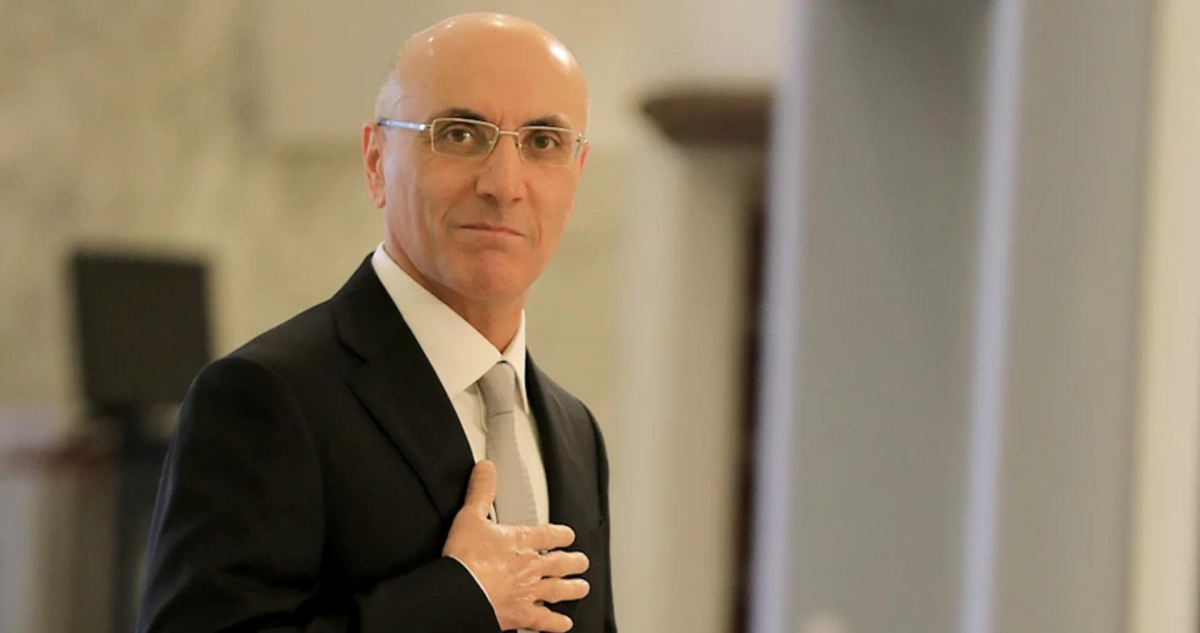
Interior Minister Ahmad Hajjar. (Photo taken from NNA)






BEIRUT — During the inauguration of a new Civil Defense center in Barja (Shouf), Lebanese Interior Minister Ahmad Hajjar assured Thursday that his ministry is committed to holding the legislative elections on their constitutional date, in May 2026, and has already launched the necessary preparations.
In his speech, Hajjar emphasized that the elections will be held "in accordance with the highest standards of transparency, impartiality, and integrity." He expressed hope that "this long-awaited milestone will be a unifying national celebration and the starting point for a new and bright future for Lebanon."
His remarks came as the months-long battle over the issue of expatriate voting has polarized the political scene and raised fears of a possible postponement of the elections.
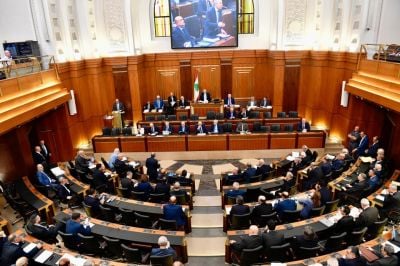
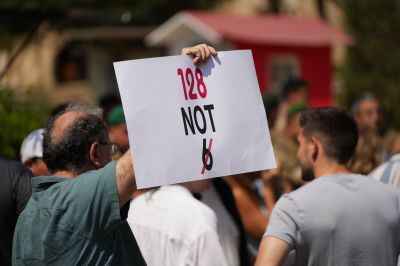
Like many civil society organizations in Lebanon and abroad, some parties want to amend the 2017 electoral law to ensure that Lebanese expatriates have the right to vote, in their country of residence, for all 128 deputies of the capital, each in their district of origin.
Other groups, chiefly the Amal-Hezbollah duo, oppose this, preferring to keep article 112 as it is, which provides for the creation of a special district for expatriates, consisting of six seats, that would be added to the current 128. Since the adoption of the electoral law, this arrangement has never been implemented, and the law was amended to temporarily suspend article 112.
Hajjar also affirmed that "the government is determined to reaffirm the authority and sovereignty of the state over the entire national territory, exclusively by its own means." He further stated that "Lebanon is working, by all possible diplomatic means and channels, to obtain the withdrawal of the Israeli enemy from the last inch of our cherished land in the South, to put an end to its daily aggressions, and to bring the prisoners back into the embrace of the homeland."
The government decided, in a measure taken at the beginning of August, to restore the state's monopoly over arms and tasked the army with developing and implementing a disarmament plan.
Hezbollah, which in late November 2024 agreed to a ceasefire with Israel ending 13 months of fighting, refuses to hand over its weapons — at least as long as the Israeli army still occupies six points it deems "strategic" along the border, continues near-daily strikes on the country, and detains several people abducted in the South.

 7 p.m. recap: Iran warns Egypt, Israeli soldiers vote in south Lebanon, Haret Hreik responds to Kataeb