






Interior Minister Ahmad Hajjar (right) visiting the city of Tripoli on Oct. 14, 2025. (Credit: Michel Hallak/L'Orient Today)






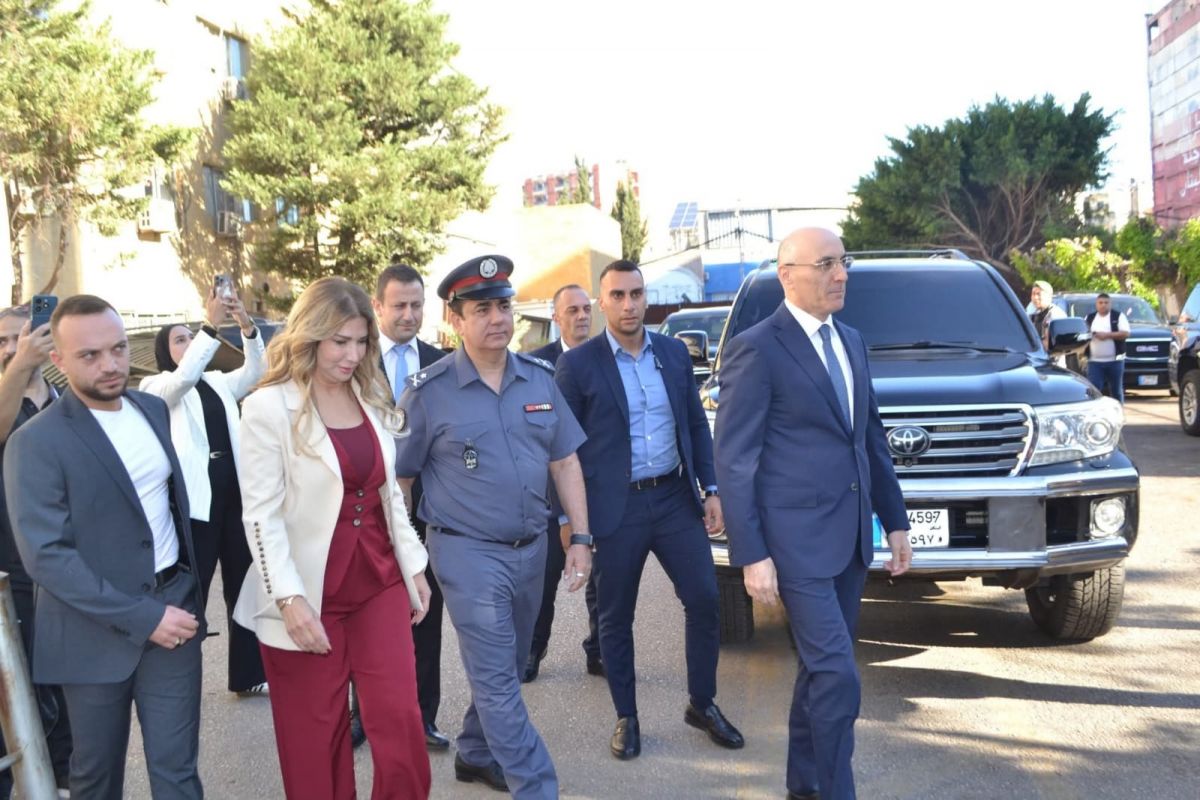
During a visit to Tripoli on Tuesday, Interior Minister Ahmad Hajjar reaffirmed the Lebanese government's commitment to holding parliamentary elections on time and strengthening security across the country.
His remarks came during a high-level meeting of the Sub-Security Council at the Tripoli Serail, attended by senior security officials from the North, L'Orient Today's correspondent in the North reported.
Hajjar emphasized the "importance of maintaining security and stability and intensifying efforts to meet the needs of citizens."
He stressed that “issues are addressed based on data collected by specialized agencies and through ongoing collaboration and coordination among them.”
He affirmed that “security is a right for citizens and a duty for the state,” adding: “I will personally and closely follow up — both from the Ministry and through field visits — on all security and service-related files that concern Tripoli, the North and all of Lebanon.”
"State is continuously working to ensure the safety and stability of all Lebanese regions," he added.
He clarified that his visit is part of "ongoing efforts to follow up on security and public service issues, and to enhance coordination between various agencies and official institutions."
Tripoli, the poorest city in Lebanon, has been struggling with economic instability and an alleged rising crime rate.
During the tenure of former Interior Minister Bassam Mawlawi, specific security plans were devised for northern Lebanon, including increased security apparatus patrols, to contain the situation in the region.
Parliamentary elections to be held on time is 'national demand'
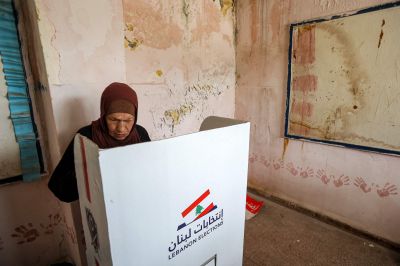
Hajjar also stressed the "importance of holding the parliamentary elections on time," describing this "constitutional entitlement as a unifying national demand that must be respected."
"People want the parliamentary elections to take place on schedule in May 2026.” He pointed out that “the Interior and Municipalities Ministry is working diligently to implement the existing law strictly and adhere to all legal deadlines to ensure that the elections are held under the best circumstances and with full transparency.”
He added: “This matter enjoys national consensus, and has been affirmed by the president, the prime minister and the parliament speaker, as it is a public demand that we are obliged to fulfill.”
He noted that cooperation between the Interior Ministry and the Parliament is essential to overcoming any obstacles that might hinder the electoral process and to ensure its "integrity and transparency."
The elections are set to take place in a context marked by a war-weakened Hezbollah and a sharp polarization over its arsenal, compounded by the ongoing disagreements over the current electoral law, including the expatriates’ voting mechanism.
Regarding the issue of prisons and inmates, Hajjar stated that the Ministry is working to accelerate trials and improve conditions inside prisons, in coordination with the judiciary and relevant authorities.
“We are working in cooperation with the prime minister and his deputy, who is tasked with the file of Syrian detainees, as well as with the justice and defense ministers, to address this critical issue. Over the next two days, meetings will be held to discuss the conditions of all prisoners. Coordination with the Syrian government is underway regarding convicted and detained Syrians, based on agreements that are being reactivated.”
He added: “At the same time, we are not overlooking Lebanese prisoners — they are our responsibility. A meeting will also be held at the Grand Serail with relevant ministers to address their conditions and apply the same procedures as those applied to Syrian prisoners. Although prison administration is legally the responsibility of the Justice Ministry, we at the Interior Ministry will not abandon our responsibilities. We will continue to work with the Justice Ministry and the judiciary to expedite trials and reduce overcrowding, especially after the opening of the Roumieh Prison Court, which has now started operating effectively.”
He also noted that the recent visit by the Syrian Foreign Minister, Assaad al-Shaibani, to Lebanon, and the discussions it included regarding the situation of Syrian inmates, helped push this issue toward more serious handling.
According to information obtained by L’Orient-Le Jour, Syria has requested the release of all its nationals detained in Lebanon.
Lebanese authorities responded that this was not immediately possible for judicial reasons and that the procedure had to follow legal channels.
The Lebanese justice minister insisted on the need for a joint judicial agreement requiring a law passed by Parliament, while the prime minister proposed a quick mechanism not requiring parliamentary approval.
Shaibani again stressed the urgency of releasing the detainees in the coming days, or if not, at least 500 of them.
Lebanon specified, however, that it could not release such a number at once and that the process should go forward in phases, in smaller groups, following the mandatory judicial process.
A Lebanese judicial official who requested anonymity told AFP that around 2,250 Syrians are detained in Lebanon’s overcrowded prisons. Lebanon, meanwhile, has asked the new Syrian authorities for information on the many political assassinations attributed to Damascus during its tutelage over Lebanon and after the withdrawal of its troops in 2005, said Nassar to AFP.
Hajjar concluded his visit by emphasizing the need for ongoing coordination between security agencies and the exchange of information to address emerging challenges. He affirmed that the security and stability of Tripoli are a top priority for his Ministry.
Reporting contributed by Michel Hallak

