





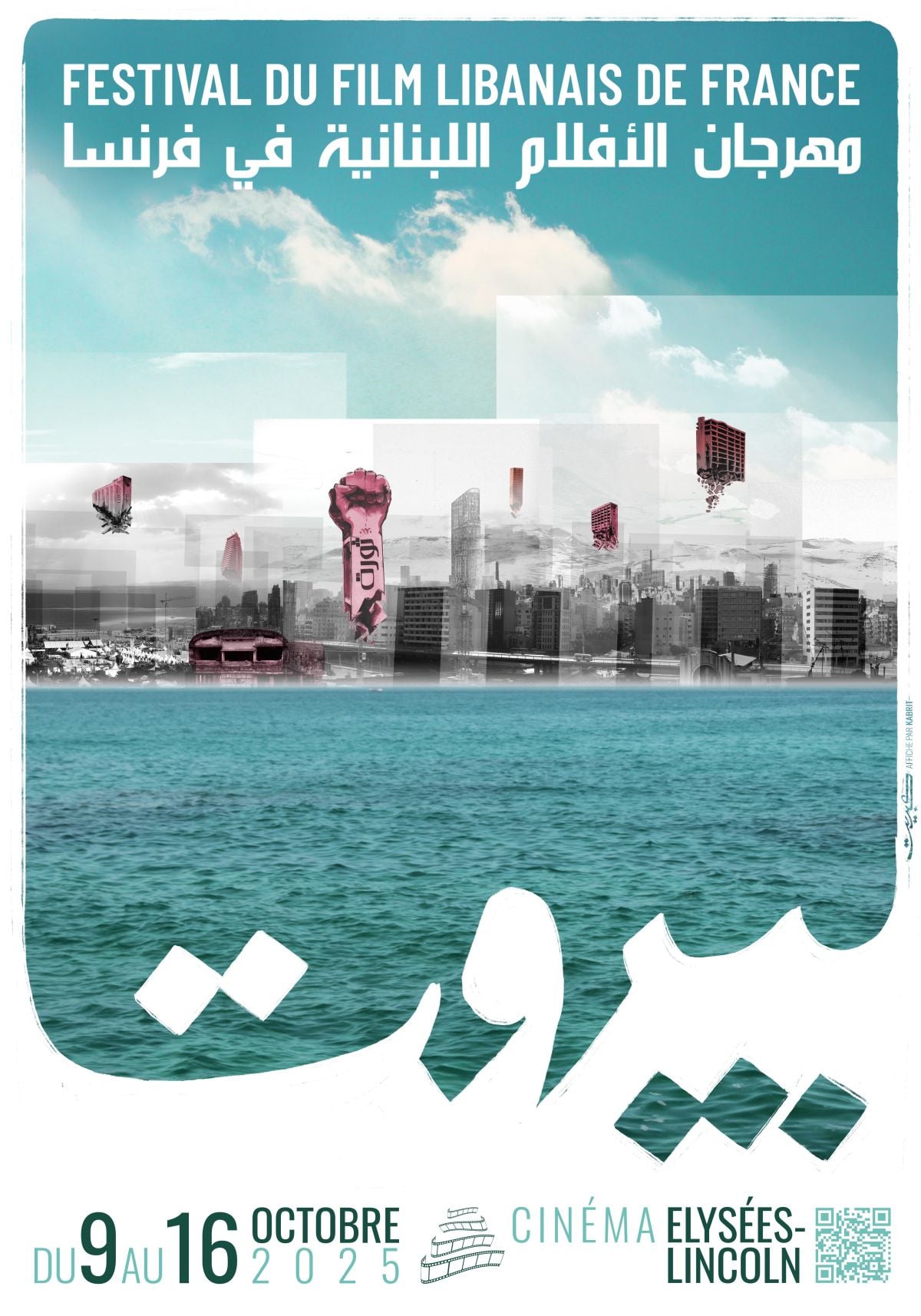
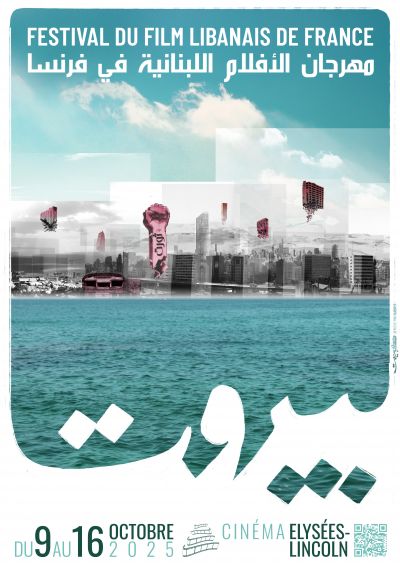
The poster for the 5th edition of the Lebanese Film Festival in France. Photo sent to L'OLJ.






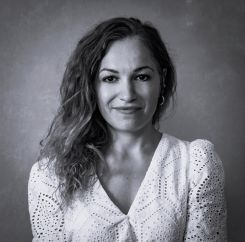
Sarah Hajjar did not come to this project by chance.
When she founded the festival in 2019, she already carried years of experience. After working at UNESCO and Amnesty International France — where she directed the organization’s film festival — she joined Europa Cinemas. Today, she works as a consultant in cultural programming and project management.
“I created this festival with a small team, and now we’re about 20 active volunteers year-round, including ambitious young programmers such as Yorgo Scheib and Mourane Matar, who joined Michel Tabbal, Joseph Ferec, Christophe Nassif, Aurélie Châtelard, Louise Ferron, Héloïse Abbosh and many other talented members of the team,” she said enthusiastically.
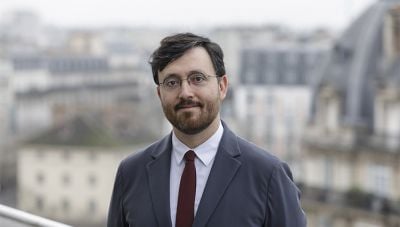
One of the festival’s cornerstones is the short film competition, orchestrated this year by Matar.
“We use the FilmFreeway platform, which allows filmmakers to submit their work, and we’re constantly scouting at other festivals. We distinguish between student creations and other productions, with many of the former coming from universities in Lebanon and beyond. The filmmakers are Lebanese, and some are part of the French, Italian or Portuguese diaspora,” Hajjar explained.
This year, the diversity of themes stands out: gender and queer identities, feminism, single mothers, biodiversity and environmental destruction. “Topics that were not necessarily seen before, moving away from the usual scope of war and exile,” she noted.
About 60 short films were submitted to the committee; 24 were selected, 14 of them by students.
The jury president and patron of this fifth edition is Wissam Charaf. “He is a pivotal figure in contemporary Lebanese cinema, regularly featured. Last year, his film Et si le soleil plongeait dans l’océan des nues won the festival award for best short film,” Hajjar recalled.
The jury also includes producer Georges Schoucair, producer and distributor Katia Kazakh, Bernard Payen, programmer at the Cinémathèque française, director Romy Choueiri — who won the audience award at the 2024 edition — Tunisian actress and programmer Sabrine Ghannoudi, and director-artist Mohamad Abdouni, known for exploring queer themes.
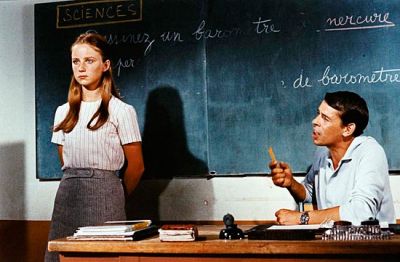
“The richest and most ambitious edition”
Twenty-four additional films will screen out of competition. “It’s the richest and most ambitious edition we’ve ever prepared,” Hajjar said.
The opening will feature Un monde fragile et merveilleux by Cyril Aris, who will attend the French premiere of his film. The work, which won the audience award at Venice’s Authors’ Week in 2025, will represent Lebanon at the 2026 Oscars.
After a 2023 edition centered on mental health and a 2024 program focused on depictions of war, the 2025 edition takes a new direction, structured around society and memory.
The memory theme is split into four parts: the occupation of south Lebanon, Gaza as seen from Lebanon, the 50th anniversary of the Lebanese Civil War, and the history of Lebanese cinema.
A “heritage” screening will honor Maroun Bagdadi’s Tous pour la patrie, while a “matrimony” screening will feature Jocelyne Saab’s Sud-Liban: histoire d’un village assiégé.
Another highlight is Maabar – Ils gardèrent le silence, by Anthony Tawil and Cédric Kayem. “It’s an audiofilm, a sound immersion carried by the voices of war witnesses. The filmmakers created a unique 40-minute version for our festival, bringing together several episodes,” Hajjar said.
Also on the program: Un cœur perdu et autres rêves de Beyrouth by Maya Abdul-Malak, nominated for the 2025 César for best short documentary, and Les Ombres de Beyrouth by Garry Keane and Stephen Gerard Kelly, a co-production that represented Ireland at the 2024 Oscars in the best international feature category, with its first French screening here.
The society section also promises new discoveries, beginning with La Force du coquelicot, the first documentary by Mona Hammoud, dedicated to Lebanese stand-up comedy. “Many women filmmakers are emerging, exploring alternative themes and experimenting with new styles. I regret that comedy isn’t more represented, even though dark humor and the absurd are handled well. Last year, the Grand Jury Prize went to an animated film, Crow Man by Yohann Abdelnour. We don’t receive many animated films, but the ones we did get this year are high quality,” Hajjar pointed out.
The festival also aims to be a space for dialogue: most filmmakers will attend to interact with audiences, and a coproduction meeting is scheduled for professionals, in partnership with the Festival des 3 Continents. This annual gathering is supported by La Vallée Village, the City of Paris, IMA, Élysées Lincoln cinema and the Institut français de Beyrouth, and works in partnership with the Ligue de l’enseignement to reach young French audiences.
Many artists collaborate each year: Rust, the Lebanese electro-tarab duo who composed the trailer music produced by Yorgo Scheib, and the artist Kabrit, who designed the poster for this fifth edition. “We are lucky to have so much talent supporting us,” Hajjar said.
Program and tickets here.
The screening schedule is here.

 Midday recap: Hebron attack sparks Israeli crackdown, international meeting in Istanbul for regional 'de-escalation'