






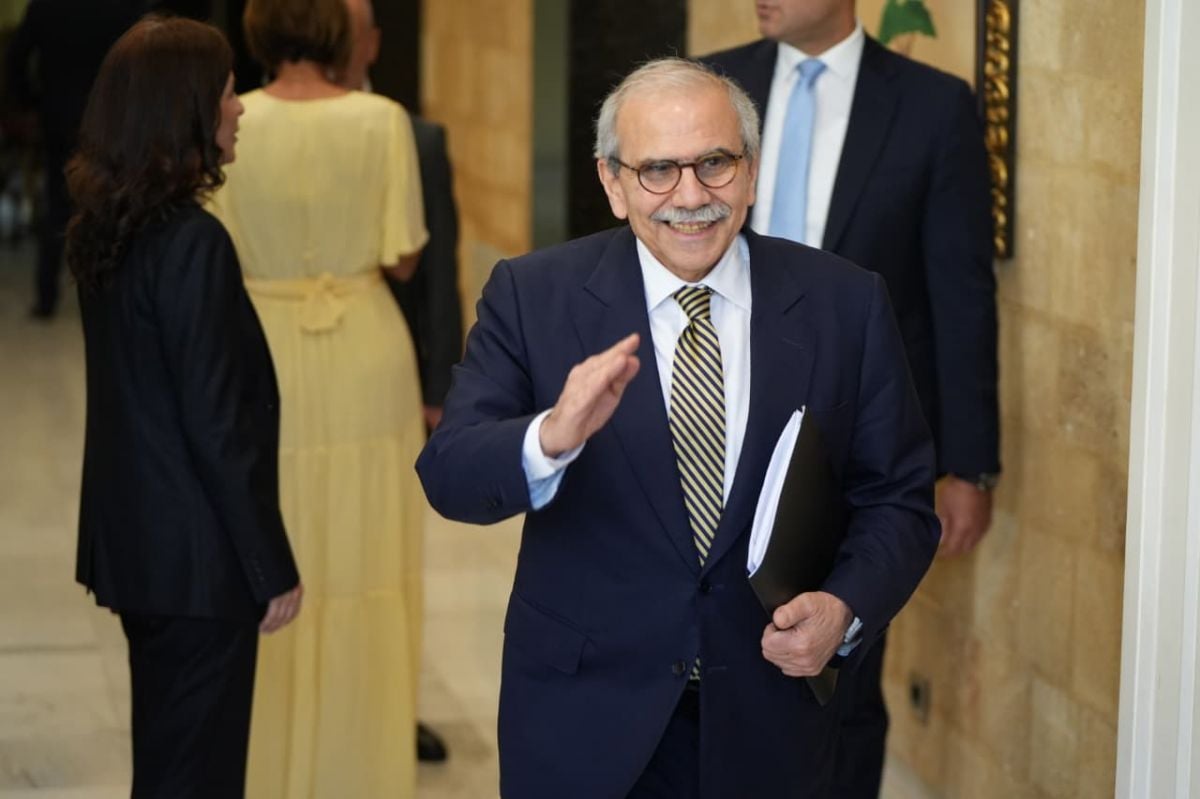
Lebanese Prime Minister Nawaf Salam, in August 2025. (Credit: Mohammad Yassin/L'Orient-Le Jour)






Lebanese Prime Minister Nawaf Salam reacted Thursday to the incident that occurred last week in Raouche, when thousands of protesters defied his decision and that of Beirut Governor Marwan Abboud regarding the display of portraits of Hezbollah leaders, stating that "the greatest loser in what happened is the credibility of the organizer and those who support him, because they failed to live up to their commitments."
"The greatest loser in what happened at Raouche is the credibility of the organizer and those who support him, because they failed to live up to their commitments," Salam said. "Restoring state authority requires the application of the law and responsible behavior by those who did not honor their commitments."
According to the head of government, this event will have consequences and "the Raouche affair is not closed." "The prosecutor general has already begun summoning people for investigation and has issued search warrants against those who did not present themselves," he added. The Prosecutor General at the Court of Cassation, Jamal Hajjar, questioned two individuals on Thursday as part of the investigation and summoned three others to be questioned on Friday.
The Raouche incident dates back to Sept. 25, when thousands of Hezbollah supporters defied a decision by the prime minister and the governor of Beirut by blocking the road along the city's corniche and projecting images of the party's two former secretary generals, Hassan Nasrallah and Hachem Safieddine, onto the rock. Critics of the pro-Iranian party interpreted this demonstration as an act of defiance against state authority, at a time when the fate of Hezbollah's weapons is the subject of a government decision.
On the issue of weapons monopoly, Salam emphasized: "The guarantee of security and safety depends on the state's monopoly over arms." "Citizens cannot feel equal as long as some parties retain weapons," he added.
The prime minister recalled that, at the start of next week, it will be one month since the Sept. 5 decision regarding the plan to disarm militias, especially Hezbollah, and that the government will review the first report from the army on this subject. "Some parties will oppose it, but we have no other choice if we want a country for ourselves and for our children. Our children need institutions and reforms. I have not and will not choose any other path: one state, one law, one army," he said.
The Lebanese Army's plan to disarm Hezbollah, approved by the Cabinet on Sept. 5, requires the army to inform the government each month of all weapons shipments seized and positions dismantled. The first part of this plan stipulates that "disarmament will be completed south of the Litani," about 30 kilometers from the Israeli border, within "three months," meaning by the end of 2025.
